



- Home
- /
- High Courts
- /
- Kerala High Court
- /
- Kerala High Court Reserves Verdict...
Kerala High Court Reserves Verdict In Suo Motu Case On Exorbitant Pricing Of Life-Saving Patented Drugs
K. Salma Jennath
16 Sept 2026 5:38 PM IST
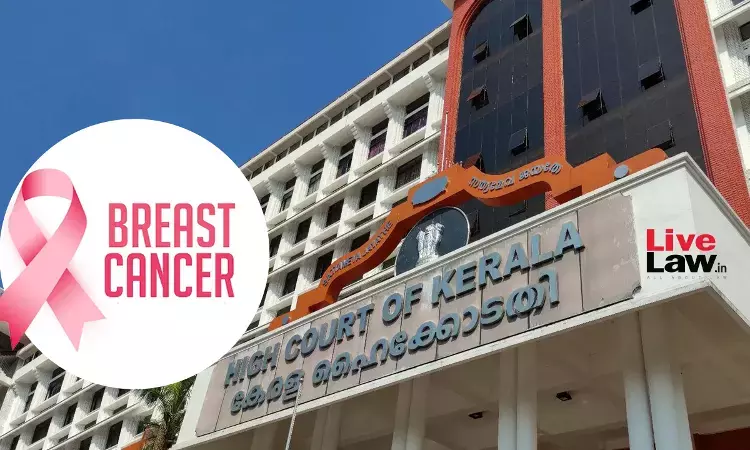
The Kerala High Court on Wednesday (September 16) reserved its verdict in the suo motu petition relating to exorbitant pricing of patented life-saving drugs.Justice Harisankar V. Menon heard detailed arguments by amicus curiae Maitreyi Sachidananda Hegde, Advocates Joseph Kodianthra (Sr.) and Hemant Singh for Novartis, G. Shrikumar (Sr.) and Praveen Anand for Eli Lily Pvt. Ltd., Rahul Bajaj...
This is a premium content
Available exclusively to
Our subscribers
Subscribe Premium 
INR 1099+GST
Your support helps us to bring you more content at
an affordable subscription scheme !!!
All payment options available
The Kerala High Court on Wednesday (September 16) reserved its verdict in the suo motu petition relating to exorbitant pricing of patented life-saving drugs.
Justice Harisankar V. Menon heard detailed arguments by amicus curiae Maitreyi Sachidananda Hegde, Advocates Joseph Kodianthra (Sr.) and Hemant Singh for Novartis, G. Shrikumar (Sr.) and Praveen Anand for Eli Lily Pvt. Ltd., Rahul Bajaj who appeared in person as intervenor, K.M. Gopakumar for party respondents as well as ASGI P. Sreekumar and DSGI O.M. Shalina for the Centre.
Noting that the matter was pending since 2022, the Apex Court had requested expeditious hearing of the plea.
The plea was originally filed by a breast cancer patient, who was being treated with patented Ribociclib, seeking an intervention by the Central government invoking the provisions of the Patent Act. She sought the Court's intervention so as to make the drug, priced at around Rs. 75000 per month, more affordable. After she passed during pendency of the case, the Court had decided to convert the case into a suo motu petition.
The Court had earlier sought expert opinion as to whether Palbociclib, a cheaper drug that is no longer under patent and is also locally manufactured, can be used as a substitute to patented Ribociclib and Abemaciclib, for treating breast cancer.
Amicus curiae's submissions
The amicus curiae pointed out that Palbociclib is not a substitute of patented Ribociclib and Abemaciclib due to varying toxicity profiles. She submitted that Ribociclib, and not Palbociclib, is the medicine prescribed in early stage while the latter may be used in metastic stages. Since early intervention reduces chances of death, un-affordability of the patented medicine blocks the right to health of patients in early stages, it was stated.
Adv. Maitreyi submitted that the medicine is only 36% of the total treatment costs, which includes chemotherapy, operation, etc. It was stated that in most cases, the prices are met through borrowing or pledging. It was also pointed out that there is no systemic or scientific study on the number of diagnoses and deaths reported in each type of cancer.
It was submitted that there is an aspect of gender discrimination as well since women's health takes a backseat in India as they are expected to make the sacrifices. Moreover, in the case of the newly impleaded patient also, she is able to afford the medicine due to insurance and that her insurance was rejected 3 times before it was accepted and it is unsure if the insurance would be renewed also.
Referring to "government purposes" under Section 100 of Patent Act, she submitted that the same is for non-commercial sale. Taking the whole purpose of the Act and the public health aspect, the central government is duty bound to intervene, it was submitted. It was also pointed out two local companies have obtain CDSCO [Central Drugs Standard Control Organisation] approval to manufacture the drugs but they have not applied for compulsory licensing under the Act.
Arguments advanced by Novartis and Eli Lily Pvt. Ltd.
Novartis is the company manufacturing patented Ribociclib and Eli Lily Pvt. Ltd. is manufacturing patented Abemaciclib.
The arguments on behalf of Novartis was that Section 100 cannot be invoked without first adverting to compulsory licensing [Sections 84 and 92]. It was pointed out that the medicine Ribociclib is already made available under a capped price, i.e., 30% of the trade margin is capped. It was also pointed out that invoking S.100 would leave the patent holder high and dry since it invests billions into R&D to create the drug. It was contended that such a move, based on the arguments by 2-3 persons that the medicine is unaffordable, would not warrant an interference by the Court.
Novartis also argued that grant of patent itself is in public interest as at the end of the patent period, the process would be revealed. If patents are not granted, businesses would have no incentive to reveal the same and would keep it as a trade secret.
Eli Lilly Pvt. Ltd. contended that there is no national emergency where the three medicines, which are substitutable, are unavailable. It was also pointed out that the co also provides schemes where patients are given the medicine for free in certain situations. Moreover, cancer centres also give the medicines are affordable prices.
It was argued that only the government can take a decision in this matter. It pointed out that the drug discovery process, which takes over 10 years and investment of billions of dollars, is overlooked. He told the Court that though patent was applied for in 2008, it was granted only in 2018, thereby cutting 50% of the period that the legislature intended for a patent holder. It was contended that there is a public interest in enforcing the Patent Act and the integrity of patents.
It was also pointed out that the Patent Act is a self-contained legislation, which adequately balances right to property and right to health.
Union's arguments
On behalf of the Union, it was argued that there is a system working in the field of manufacture and that there is a mandate to ensure benefits and profits to the patent holder, even under compulsory licensing. Considering the wide scope of the suo motu petition, viz, exorbitant pricing of life-saving drugs, then all companies manufacturing such drugs have to be heard, it was contended.
It was further contended that the medicines have to be made affordable, to the patient as well as the manufacturer. There is no single research/data that a particular price would be the affordable one or that it would become affordable when manufactured under compulsory licensing. Only competitive manufacturing would be the solution to bring down the prices, which would need invocation of S. 92 or 100 and the same is not warranted in the present circumstances.
It was also pointed on behalf of the dept of pharmaceuticals that there are financial repercussions also like setting up factories, procuring machinery, raw materials, and expertise to manufacture the medicine as the same is not being done in India. Moreover, there are central government schemes that give financial incentive of Rs. 15 lakhs or procure free medicine if applied by the persons, it was submitted.
Contentions raised by other party respondents
The counsel appearing for the husband of the original petitioner and the newly impleaded cancer patient pointed out the actual costs of the medicines, which come to Rs. 7 lakhs to 10.8 lakhs per annum. In the face of no affordable alternatives, government has a duty to invoke Patent Act provisions, it was argued.
Intervenor's suggestions
Advocate Rahul Bajaj, the intervenor appearing in person, made certain suggestions. It was suggested that Ministry of Health and Family Welfare may be asked to develop a mechanism to monitor and evaluate how many cases are there where people do not have access to life-saving patented medicines.
He pointed out that the language employed in Section 100 regarding "government use" indicates public, non-commercial use as well. The patent holder would be adequately compensated in case of compulsory manufacture or in procurement for non-commercial use also. Finally, it was pointed out that though a patent holder has right to property, in a clash with right to health, the balance should be made giving weightage to the latter.
Case Title: In Re Exorbitant Pricing of Life Saving Patented Medicines
Amicus curiae: Maitreyi Sachidananda Hegde
Counsel for the respondents: P. Sreekumar - ASGI, O.M. Shalina - DSGI, Joseph Kodianthra (Sr.), Hemant Singh, G. Shrikumar (Sr.), Praveen Anand, Rahul Bajaj - party in person, K.M.Gopakumar, P. Arun Kumar, T.C.Krishna
Tags
K. Salma Jennath
Salma Jennath is a Principal Correspondent with LiveLaw, covering Kerala High Court

