Kerala High Court Amends Internship Policy, Restricts Eligibility To Law Students In Final Two Years
K. Salma Jennath
26 Oct 2026 11:10 AM IST
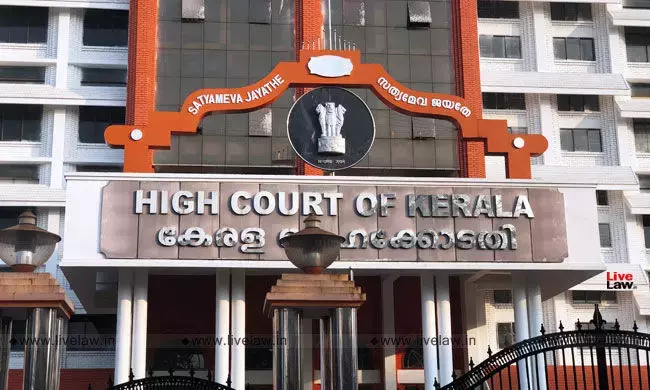
The Kerala High Court has notified a new, amended internship policy for law students undergoing internship at the Court.
The Internship Policy for the High Court of Kerala, 2026 (Amended) would supersede the earlier policy notified earlier this year. The policy lays down the procedure and manner of applying and intake for internships, dress codes for interns, actions that would be construed as misconduct, etc.
Applicability of the policy
The policy is applicable to law students, who are undertaking internship at the High Court under the Judges and Sections of the High Court as well as with stakeholders, including the Advocate General. Additional Solicitor General of India, Director General of Prosecution, Deputy Solicitor General, Kerala State Legal Services Authority (KeLSA), Mediation Centre, Bar Council of Kerala, Advocates, etc. and, those who visit the chambers of the Judges, Courts, and offices located inside the Court.


Exemption
The policy would not be applicable to internship programmes under the IT Directorate, at the Kerala Judicial Academy (KJA) and in association with NUALS or other institutions.
Application for internship
- Only students in the last two years of their courses shall be eligible to undergo internship in the High Court with an exemption given to students interning under the Judges.
- Applications for internship shall be submitted through the online module developed for internship and these shall be forwarded through the Principal or Head of the Academic institution where the applicant is enrolled.
- Applications under stakeholders are to be forwarded through the Principal/Head of institution/stakeholders concerned.
- Incomplete applications and those not forwarded through proper channels would not be considered.
Permission and intake
Detailed procedure regarding intake of interns has been laid down with applications routed through the PRO. An online module is also contemplated for the same.
Fixed slots would be allotted to interns so as to maintain a proportionate allocation. Maximum number of interns that would be accommodated is decided by the Registrar General.
Only the interns, who applied through the online module, would be allotted entry passes by the PRO.
Preferred period of internship
Internships are conducted during the working days of the Court and duration is specified by the Judge/office concerned, which may be extended on submission of fresh application.
Pre-induction briefing
A pre-induction briefing is mandated and only those who attended the same shall be permitted to submit applications.
Post-induction briefing
The PS of the Judges concerned would give the post-induction briefing in case of internships with the Judges.
In case of other internships, the Registrar (Judicial) or the officer concerned shall allot a designated court for the students and instruct them to report to the court officer or such other officer designated.
Attendance
The PRO is to be maintain a daily attendance record for all internships in various offices and the interns must sign in and sign out every day of their internship.
Discipline during internship
- The interns are to confine themselves to the list of places given by the Court's Public Relations Officer.
- They must strictly abide by the working hours and office timing rules of the Court.
- The interns are to conduct themselves in a manner befitting the dignity of the Court and they are not to shout, speak in high volumes or disturb the Court proceedings.
- The interns are prohibited from using mobile phones, cameras or any other recording devices inside the courtroom and sensitive areas. The phones, if carried, are to be switched off. Any recording, photography compromising the security of the Court would result in immediate termination of internship.
- The interns are not allowed inside the canteens, dining areas and other rest spaces allotted for Advocates. Seating inside the courtrooms are prioritised for advocates and interns would be accommodated only if there are sufficient spaces.
- Interns are prohibited from loitering, unauthorised unauthorised group activities and misuse of court hours.
- They are also to maintain the confidentiality of the information of the office/organisation concerned.
Dress code
- Interns are to follow the dress code stipulated in the Bar Council of India rules as per Section 49(1)(gg) of the Advocates Act, except coat, bands and gown.
- Jeans, t-shirts, sneakers, flashy accessories or unkempt appearance is prohibited.
- The interns are to carry the academic institution's ID card at all times inside the High Court premises.
Consequences for failure to maintain discipline, misconduct
Consequences of failure to maintain disciplinary rules include pre-termination of internship. Such interns would not be issued with internship certificates.
In case of misconduct by intern, the concerned education institution shall be notified and in case of repeated misconduct from any particular institution may result in temporary suspension of internship permissions for the students of that institution.
Certificate and feedback
Interns working under the Judges/Sections of the Court would be issued with certificates signed by the Judges concerned or Registrar concerned. In the case of internships at other offices in the High Court, the certificates would be issued by the officer designated by that office in case there is no complaint raised against the intern.
In case of absences, the certificate issued shall only be for the actual days of attendance.
Feedbacks of the interns may be elicited, if necessary, to improve the system.
Objection by lawyers' body
In response to the new policy, the All India Lawyers Union (AILU) High Court Committee has submitted a formal letter to the Chief Justice on October 22, 2026, strongly objecting to the amended policy and demanding its immediate withdrawal.
AILU has objected to the policy stating that the stringent restrictions were imposed without a meaningful consultation with principal stakeholders, including the Bar Council of Kerala and the Kerala High Court Advocates' Association (KHCAA).