



- Home
- /
- High Courts
- /
- Kerala High Court
- /
- Kerala High Court Suo Motu Impleads...
Kerala High Court Suo Motu Impleads Union, Forest & Wildlife Dept To Consider Improvement Of Kottiyoor Temple In Wayanad's Forest Area
K. Salma Jennath
24 Jun 2026 9:59 AM IST
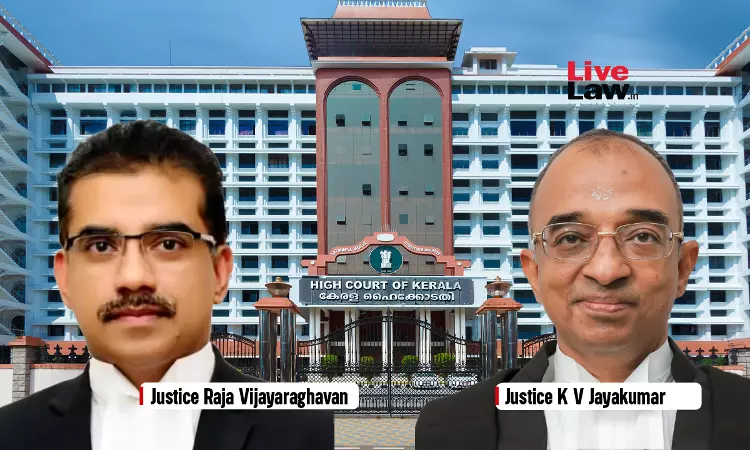
The Kerala High Court on Monday (June 22) suo motu impleaded the Union's Ministry of Environment, Forest and Climate Change (MoEFCC) as well as officials of the State Forests and Wildlife department, the Pollution Control Board and local authorities to consider the issues relating to the development of Kottiyoor Temple located in the forested area of Wayanad District.The Division Bench of...
This is a premium content
Available exclusively to
Our subscribers
Subscribe Premium 
INR 1099+GST
Your support helps us to bring you more content at
an affordable subscription scheme !!!
All payment options available
The Kerala High Court on Monday (June 22) suo motu impleaded the Union's Ministry of Environment, Forest and Climate Change (MoEFCC) as well as officials of the State Forests and Wildlife department, the Pollution Control Board and local authorities to consider the issues relating to the development of Kottiyoor Temple located in the forested area of Wayanad District.
The Division Bench of Justice Raja Vijayaraghavan V. and Justice K.V. Jayakumar was considering a plea for directions to provide adequate facilities for the pilgrims of the temple.
“We are of the view that the issues raised in the Writ Petition concern environmental protection, forest conservation, wildlife management, public infrastructure, crowd regulation, and pilgrimage administration, all of which require consideration by the various statutory authorities so that the issues faced by the devotees can be addressed before the ensuing festival season,” the Court remarked before ordering impleadment of the afore officials as respondents.
After completion of pleadings and hearing the parties, the Court had reserved its verdict but later, felt that the matter required further consideration. In its interim order, the Court has noted that the temple is surrounded by dense forests, river streams and hilly terrain, a unique landscape where religious practices and ecology co-exists harmoniously.
It was further noticed that during the annual pilgrimage season, the throng of devotees are accommodated in temporary and eco-sensitive structures so as to preserve the fragile ecosystem.
The Court has taken note of several issues and challenges posed, including traffic congestion caused due to narrow roads, management of crowds, proper waste generation within the 80-acre sacred grove, safety of devotees navigating the Bavali River during monsoons when the festival is conducted, traditional rights of the local population nearby, insufficiency of parking facilities, movement of differently-abled devotees, etc.
While considering the case, a report submitted by the National Institute of Technology on 'Sustainable Development and Ecotourism Management of Kottiyoor' was perused by the Court. The report had recommended that around 40 acres of Government land that is unutilized at present can be used for parking facilities.
Other proposals have also been made relating to erection of temporary structures keeping in mind “sustainability, cultural appropriateness and reversibility”. Instalment of bio-toilets and composting facilities as well as construction of temporary rope bridges to help pilgrims cross the river during monsoons.
Additionally, recommendations are made to have organized parking, separate drop-off zones and erection of bamboo or timber fences temporarily for crowd management. A virtual queue system and assessment of the temple's carrying capacity is contemplated.
Noting that a coordinated effort of official authorities is required to address the issues faced by the devotees, the Court directed the ASGI (Additional Solicitor General of India) and the government pleader to get instructions regarding the measures that can be adopted.
"We also take note of the fact that the area was previously governed by the Malabar Private Forest Act, 1948. However, new laws have been enacted, which include the Wildlife (Protection) Act, 1972, the Forest (Conservation) Act, 1980, the Indian Forest Act, 1927, the Eco-Sensitive Zone (ESZ) Guidelines, 2011, issued by the Ministry of Environment, Forest and Climate Change, and the relevant guidelines of the Kerala Forest Department," it added.
The case is posted on July 3 for further consideration along with connected matter (WP(C) 20262/2026).
WP(C) 20262/2026 has highlighted an issue of vloggers and content creators, engaged in live-streaming and reel-making in the temple premises, affecting the fundamental right to worship guaranteed to him. The petitioner therein had sought for the interference of the High Court to issue directions to the Devasom Board officials to restraint such activities.
The petition is moved by Advocates K.R. Arun Krishnan, Deepa K. Radhakrishnan, Ashalatha K., and Adithya V.M.
Case No: WP(C) No. 14541 of 2026
Case Title: K.K.N. Kurup and Anr. v. State of Kerala and Ors.
Tags

K. Salma Jennath
Salma Jennath is a Principal Correspondent with LiveLaw, covering Kerala High Court

