



- Home
- /
- High Courts
- /
- Kerala High Court
- /
- High Court Asks Kerala Water...
High Court Asks Kerala Water Authority, Travancore Devaswom Board To Streamline Water Supply In Sabarimala, Resolve Billing Dispute
K. Salma Jennath
13 Nov 2025 3:48 PM IST
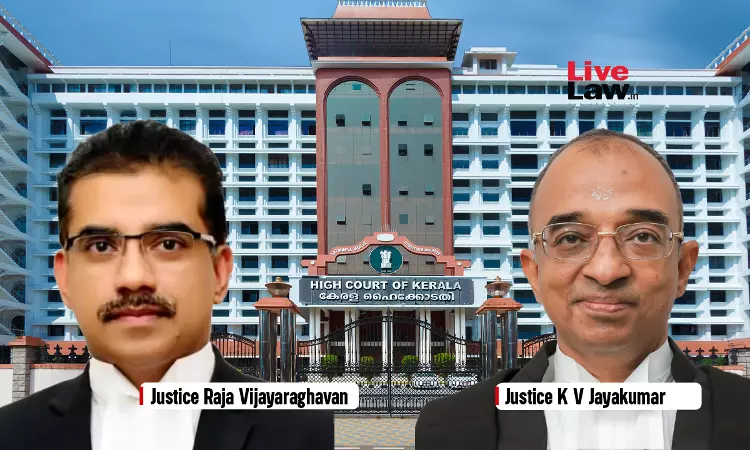
The Kerala High Court on Wednesday (November 12) directed the reconstitution of a committee formed by the officials of Kerala Water Authority (KWA) and the Travancore Devaswom Board (TDB) to resolve the billing dispute between the two regarding water supplied by KWA to the TDB.The Division Bench comprising Justice Raja Vijayaraghavan V. and Justice K.V. Jayakumar directed for the inclusion...
This is a premium content
Available exclusively to
Our subscribers
Subscribe Premium 
INR 1099+GST
Your support helps us to bring you more content at
an affordable subscription scheme !!!
All payment options available
The Kerala High Court on Wednesday (November 12) directed the reconstitution of a committee formed by the officials of Kerala Water Authority (KWA) and the Travancore Devaswom Board (TDB) to resolve the billing dispute between the two regarding water supplied by KWA to the TDB.
The Division Bench comprising Justice Raja Vijayaraghavan V. and Justice K.V. Jayakumar directed for the inclusion of Chief Engineer, Superintending Engineer, and Executive Engineer of both the institutions to the committee already constituted, which included the Assistant Engineer of Pamba, the Executive Engineers, and the Administrative Officers of TDB and KWA.
The Court was considering a petition based on the Audit Report submitted by the Joint Director of the Kerala State Audit Department relating to water distribution at Sabarimala, Nilakkal, Pamba, and along the route to Sannidhanam (Sharana Patha), by the KWA. The report pointed to issues related to the tariff rates, billing practices, quantity, transparency, internal controls, etc. regarding the water supplied.
In the order dated 07.11.2025, the Bench had recorded the auditor's observation that exorbitant tariff rates charged by the KWA and the financial burden was owing to failure of the TDB to seek reclassification as a bulk purchaser. The report had also highlighted discrepancies regarding the quantity of water supplied.
The order also recorded that the Audit department had suggested finding a permanent solution to overcome the water scarcity at Nilakkal by completing a 2015 pipeline project to bring water from Seethathodu to Nilakkal. There were also recommendations regarding fitting water meters, replenishment of water sources by rainwater harvesting, installation of push-button taps at drinking water kiosks, prohibition of cleaning vehicles, etc.
According to the KWA's affidavit, there were no complaints regarding excessive billing and that tariffs approved by the government are being levied. It also submitted that the pipeline project has been completed and is ready for commissioning. KWA submitted that all that is remaining to be done is for the TDB to submit a formal request to obtain water through the same. Noting that no request had been made till date, the Court had suo motu impleaded TDB's Chief and Executive Engineers and directed them to appear in person.
Complying with the said direction, on Wednesday, TDB's Chief Engineer and Executive Engineer along with the KWA's Superintending Engineer and Executive Engineer had appeared in person before it.
After interacting with them, the Court noted that during the Mandalam–Makaravilakku season, water is transported from Pamba to Nilakkal in tanker lorries and that the average expenditure per season is approximately Rs. 5 crores. KWA also told the Court that a total payment of Rs. 13 crores is outstanding from the TDB, which was disputed by the TDB.
The Court also recorded that the water supply project from Nilakkal became operational last month and that the TDB had also submitted applications for non-domestic connections, which have been sanctioned. This move is expected to reduce the expenditure from 5 crores to 60 lakhs, according to the Superintending Engineer.
Regarding changing TDB from non-domestic user to a bulk consumer, the Superintending Engineer had noted that though this is generally meant for local-self government institutions, TDB can also be made one if appropriate government orders are issued. However, this comes with a disadvantage that bulk consumers would have to carry out maintenance and operational activities on their own, which have been done till date by the KWA.
Next, considering the billing dispute between the two entities, the Court asked for reconstitution of the committee and observed:
“We direct the reconstitution of the Committee forthwith. In order to sort out the billing issues and streamline the water supply, we direct the TDB to convene a meeting of the Committee within ten days from today and to make earnest efforts to resolve the monetary disputes between the Kerala Water Authority and the Travancore Devaswom Board… the TDB shall, in the first meeting itself, take a decision to transfer at least 1/3rd of the admitted dues to the Kerala Water Authority to enable it to continue its essential operations. The Committee shall also stipulate a time frame, within which the outstanding amounts can be cleared.”
The Court further noted that the Check Dam at Nilakkal was in a dilapidated condition even though more than 60 lakh rupees was expended to construct the same.
It further observed:
“The Check Dam, constructed at a cost of ₹61,14,026/-, has now become unsafe due to such leakage. Random rubble masonry was used to regulate the flow of water, however, seepage occurs through gaps between the rocks. It is further reported that if the accumulated silt is removed and a concrete bund is constructed across the water channel, a considerable volume of water could be effectively stored in the Check Dam. We are given to understand that the services of a Consultant has been obtained to iron out the issues.”
It then direct the TDB's Chief Engineer to submit a comprehensive report detailing the measures need to repair the leakage and to improve efficient water usage at Nilakkal. The case is next posted on November 26.
Case No: DBAR No. 1 of 2025
Case Title: Joint Director v. The Secretary, TDB and Ors.
Tags
K. Salma Jennath
Salma Jennath is a Principal Correspondent with LiveLaw, covering Kerala High Court

