Kerala High Court Denies Judge's Plea To Engage Lawyer In Disciplinary Inquiry, Says He Can Take Assistance Of Another Judge
K. Salma Jennath
27 Oct 2026 9:55 AM IST
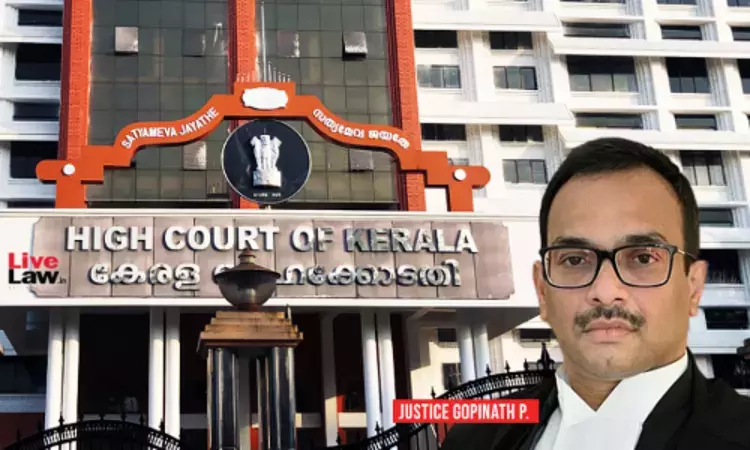
The Kerala High Court recently upheld the denial of a serving Additional District Judge's request to engage a lawyer in disciplinary proceedings against him, holding that he could take the assistance of another judicial officer to defend himself. The Court noted that the charges, though serious, were not complicated. [2026 LiveLaw (Ker) 600]
Justice P. Gopinath observed:
“the charges against the petitioner may be serious. However, they are not complicated in themselves. The petitioner, with the assistance of another officer in the cadre of District Judge, can very well defend those charges.”
The petitioner is a serving Additional District and Sessions Judge, who is presently facing a disciplinary proceedings as per the Kerala Civil Services (Classification, Control and Appeal) Rules, 1960. He approached the Court challenging the revised memo of charges issued to him as well as the order denying his request to engage a lawyer to represent him in the disciplinary proceedings. He also sought a direction to the Inquiry Authority to continue the enquiry with the original memo of charges.


The petitioner argued that issuing a revised memo of charges after the examination of some witnesses, including the complainant, was not correct. It was submitted that if the memo of charges is permitted to be modified, the petitioner would be put serious prejudice, injury and hardship. Moreover, the new memo of charges practically alters the entire case against him, it was argued.
The petitioner had obtained the assistance of another District Judge to represent him in the proceedings but since the Inquiring Authority is a High Court judge, he wanted to engage a lawyer. It was pointed out that the Inquiring Authority had initially permitted his request for engagement of lawyer but thereafter, the permission was withdrawn when an application was made by the Presenting Officer.
The stand taken by the respondents, including the High Court, the Inquiry Authority and the Registrar (District Judiciary), was that Rule 15(3) specifically authorises the Authority to amend and modify the charges at any stage of the enquiry. Since the petitioner would get full opportunity to defend the modified charges, he would not be caused any prejudice, it was argued.
The respondents pointed out that the petitioner can apply for recalling witnesses if he wishes to do so. However, there is no legal backing to say that charges cannot be modified after examination of certain witnesses, it was submitted.
With respect to the issue of engagement of lawyer, it was pointed out that Rule 15(6) prohibits engagement of a legal practitioner during the course of the enquiry.
After hearing the parties, the Court opined that the Rules do not say that charges cannot be altered or modified after any particular stage of enquiry. It was added that since there is no challenge to the rule permitting alteration of charges, the modified charges in the present case cannot be considered to be illegal:
“Sub-Rule (3) of Rule 15 of the 1960 Rules specifically authorises the Inquiring Authority to amend, alter or modify the charges framed against the delinquent employee, and there is nothing in that Rule which would suggest that such amendment, alteration or modification to the memo of charges must be done at any particular stage of the enquiry. In the absence of any challenge to Sub-Rule (3) of Rule 15 of the 1960 Rules, I hold that the amendment, alteration or modification to the memo of charges cannot, in the facts of this case, be declared illegal in any manner.”
To decide on the contention for representation by a lawyer, the Court relied on Board of Trustees of the Port of Bombay v. Dilipkumar Raghavendranath Nadkarni and Ors. (1983), Ramesh Chandra v. Delhi University (2015) and Dinesh Chandra Pandey v. High Court of Madhya Pradesh and Anr. (2010). In Dinesh Chandra Pandey, the Apex Court had found that the delinquent employee had no right to engage a lawyer to defend him in the disciplinary proceedings.
The Court noted that in Dinesh Chandra Pandey, the facts were similar since the Inquiring Authority was a High Court judge, the Presenting Officer was a District Judge, the delinquent employee was also an Additional District Judge and another District Judge was engaged for representation. It was further noticed that the Rules on engagement of lawyer in disciplinary proceedings were also pari materia and the only factual distinguishment in the present case was that the challenge against denial of lawyer was made before the conclusion of the disciplinary proceedings.
Since the petitioner had engaged another judicial officer and had participated in the proceedings after his request for legal practitioner was rejected, the Court was of the view that he cannot insist on engaging a lawyer:
“the order of the Inquiring Authority rejecting the request of the petitioner for engaging a legal practitioner was passed on 17.11.2025 and the petitioner had taken part in the proceedings thereafter, after seeking the assistance of another judicial officer of his choice. Therefore, I find that the petitioner cannot insist that he must be permitted to engage a legal practitioner to defend him in the proceedings before the Inquiring Authority.”
Thus, it dismissed the plea. The Court, however, made it clear that the petitioner can seek further time to reply to the altered charges and can request for recalling already examined witnesses.
Counsel for the petitioner: S. Sreekumar (Sr.), P. Martin Jose, P. Prijith, Thomas P. Kuruvilla, Ajay Ben Jose, Manjunath Menon, Harikrishnan S., Anavadya Sanil Kumar, Anjali Krishna, Adarsh V. Manoj, Abhinav P.S.
Counsel for the respondents: Shajna M. – Standing Counsel