



- Home
- /
- High Courts
- /
- Kerala High Court
- /
- Kerala High Court Directs Addition...
Kerala High Court Directs Addition Of Father's Name In Birth Certificate Of Child Conceived Through IVF When Parents Were Living Together
K. Salma Jennath
5 Jun 2026 5:30 PM IST
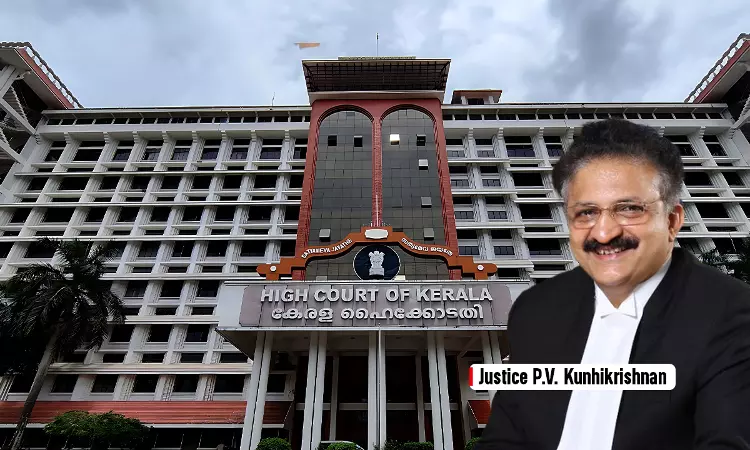
In an exercise of its extraordinary powers under Article 226 of the Constitution of India, the Kerala High Court recently ordered for the addition of father's name in the birth certificate of a child born when parents were living together.Justice P.V. Kunhikrishnan was considering a plea by the parents of the child, whose birth certificate recorded only the mother's name but left the...
This is a premium content
Available exclusively to
Our subscribers
Subscribe Premium 
INR 1099+GST
Your support helps us to bring you more content at
an affordable subscription scheme !!!
All payment options available
In an exercise of its extraordinary powers under Article 226 of the Constitution of India, the Kerala High Court recently ordered for the addition of father's name in the birth certificate of a child born when parents were living together.
Justice P.V. Kunhikrishnan was considering a plea by the parents of the child, whose birth certificate recorded only the mother's name but left the father's name as 'blank'.
Even though there was no provision in the Registration of Births and Deaths Act, 1969 that provides that father's name can be subsequently added, the Court stepped in to give relief to the petitioners:
“It is true that there is no provision in the Act of 1969 to correct the name of the child or to add the father's name to a child born to a single mother. But this Court can exercise its extraordinary jurisdiction under Article 226 of the Constitution of India in appropriate cases. This is an appropriate case in which the child wants her father's name on the birth certificate, and the father and mother want to add the father's name to the birth certificate. They also want to add the father's name along with the child's name. In such a situation, this Court should step in and redress the grievance of the petitioners”
The petitioners were living together when the second petitioner donated his sperm to the first petitioner. At the time of the child's birth, there was some misunderstanding between the petitioners when the first petitioner decided to be a single mother and father's name was not mentioned in the birth certificate.
The petitioners subsequently got married and had a second child, whose birth certificate recorded both parents' names. Thereafter, they approached the local authorities to add the father's name but their request was rejected citing there is no legal provision permitting the same. It was at this juncture that they approached the High Court invoking writ jurisdiction.
While considering the plea, the Court remarked that the child's trauma was equivalent to that of Mahabharata's Karna:
“I considered the psychological trauma of a child born to an unwed mother, from the angle of the character “Karna” in the ancient epic “Mahabharata”… Here, in the present case, both parents want to declare to the world that the second petitioner is the child's father, but the law does not permit it. Viewing from another angle to the story of “Mahabharata”, it can be said that “Karna” is not alone; his parents also want to declare his paternity to the world.”
The Court raised the question whether law can act as barrier when both parents want to declare that the child was born to them:
“Can a technicality arising from an adult conflict arising at the time of birth of the child lead to denying a child the fundamental right to identity guaranteed under Article 21 of the Constitution of India? Can a Birth Register become a permanent scar on a citizen's record, which is the very first public document in his life? A blank space in the birth register can wound deeper than words to the first child, especially when the second child's father's name is correctly shown…Can the law be a barrier in front of these loving parents and the first child whose father's name is not in the Birth Register?”
Quoting a reference by a character in Charles Dickens's Oliver Twist that “law is an ass”, the Court as of the view that absence of legal provision does not stand in the way of its exercise of extraordinary jurisdiction.
The Court also took note of a plea before the Family Court instituted to declare the paternity of the first child. In the mediation before the Family Court, the petitioners settled their disputes and entered into an agreement wherein it was mentioned that they were the parents of the first child.
The Aadhar card of the child also shows the 2nd petitioner's name as the father. However, even though these documents were also produced before the Registrar of Births, while applying to add the father's name, their application was rejected.
Since the local authority's stand was merely procedural, the Court was of the view that the rejection can be set aside. It opined:
“The family's plea is psychological, and the child's unspoken claim is dignity. In such circumstances, while entertaining a writ petition under Article 226 of the Constitution of India, this Court does not sit to count commas, full-stops, or blanks in the Rules and statutes. This Court sits to ensure that the law does not become the last instrument of psychological cruelty to a child who was never at fault. The law is meant to record life, not to resist it. In this case, life has moved on, but the law has refused to keep pace… But the Panchayat says that a wrong entry in a birth certificate is like something frozen in the past, and it cannot be melted now. In other words, the Panchayat says that its hands are tied by the intricacies of law. But this Court's hands are not tied like that when a genuine claim is raised by a party.”
Thus, the Court allowed the plea and directed the local authorities to change the child's name to include her father's name as well as to add his name in her birth certificate. It was directed that the new birth certificate be issued within one month.
Case Title: XXX and Anr. v. State of Kerala and Ors.
Citation: 2026 LiveLaw (Ker) 313
Counsel for the petitioners: Julia Priya Reshmy, T. Sajayan Jacob, Abhitha Khan
Counsel for the respondents: Vidya Kuriakose – Sr. Government Pleader, K. Shaj – SC – Pallickal Grama Panchayat, Pathanamthitta
Tags

K. Salma Jennath
Salma Jennath is a Principal Correspondent with LiveLaw, covering Kerala High Court

