



- Home
- /
- High Courts
- /
- Kerala High Court
- /
- Low IQ Or Intellectual Disability...
Low IQ Or Intellectual Disability Won't Make Accused Unfit For Trial If He Can Understand & Participate In Proceedings: Kerala High Court
K. Salma Jennath
6 Oct 2026 12:38 PM IST
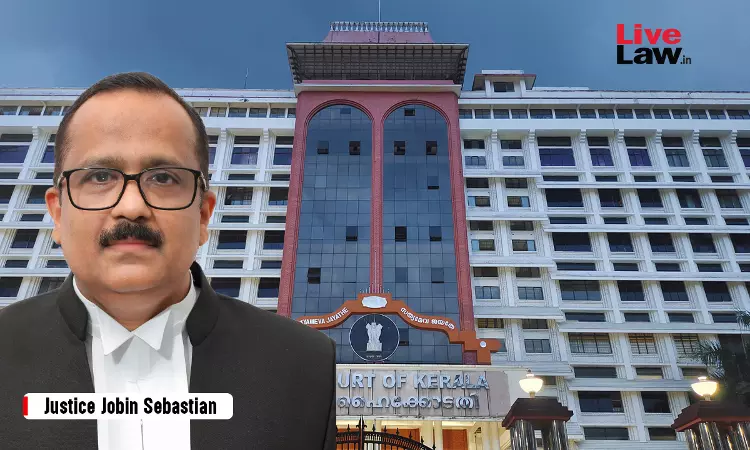
The Kerala High Court recently held that low IQ or intellectual disability would not make an accused unfit for trial if he has the functional capacity to understand and participate in proceedings. [2026 LiveLaw (Ker) 550]Justice Jobin Sebastian referred to Section 368 [Procedure in case of person with mental illness tried before Court] of the Bharatiya Nagarik Suraksha Sanhita (BNSS)...
This is a premium content
Available exclusively to
Our subscribers
Subscribe Premium 
INR 1099+GST
Your support helps us to bring you more content at
an affordable subscription scheme !!!
All payment options available
The Kerala High Court recently held that low IQ or intellectual disability would not make an accused unfit for trial if he has the functional capacity to understand and participate in proceedings. [2026 LiveLaw (Ker) 550]
Justice Jobin Sebastian referred to Section 368 [Procedure in case of person with mental illness tried before Court] of the Bharatiya Nagarik Suraksha Sanhita (BNSS) and observed:
“It is significant that the mere fact that an accused has a low IQ or suffers from intellectual disability does not, by itself, render him incapable of making his defence or unfit to stand trial. The statutory test is whether the disability or mental condition is of such a nature as to render the accused incapable of entering upon his defence. Therefore, the existence of an intellectual disability has to be considered in the context of the actual functional capacity of the accused to understand and participate in the proceedings. If the mere existence of intellectual disability or a low IQ were sufficient to render an accused incapable of standing trial, every person suffering from such disability would, irrespective of the degree of functional capacity possessed by him, be excluded from criminal proceedings.”
The petitioner before the Court is the sole accused in a POCSO case. He contended before thr trial court that he suffers from intellectual disability rendering him incapable of making his defence and thus, he sought to postpone the proceedings as per Section 368 BNSS. The trial judge conducted a detailed enquiry as per the provision and found that the petitioner was fit to stand trial. Aggrieved, he approached the High Court.
The petitioner contended that the trial court's finding was made without application of mind and without appreciating the medical evidence. He referred to the Medical Board report, which had opined that he has an IQ of 35, as well as the report of the psychiatrist, wherein it was stated that he has a social age of only 10 years.
He submitted that the Medical Board's opinion that he was fit to stand trial is inconsistent with its factual findings regarding his lifelong developmental impairment and lack of adaptive functioning.
After hearing the petitioner, the Court remarked that as per Section 368, if an accused raises a plea of unsoundness of mind, the trial court is required to conduct an enquiry into the mental condition of the accused as well as his capacity to make defence and if found to be incapable, the proceedings are to be postponed as per the provision.
The trial court has to then refer the accused to a psychiatrist or a clinical psychologist for evaluation and these experts are to furnish a report and in case the accused is aggrieved by the report, he can prefer an appeal before the Medical Board, it noted.
“the enquiry is directed towards determining whether the accused possesses the requisite capacity to understand the nature and substance of the proceedings, comprehend the accusation against him and meaningfully participate in his defence. The relevant indicators of such capacity include the ability to understand the nature of the proceedings and the substance of the accusation, to comprehend questions put to him, to provide relevant and coherent answers, and to communicate relevant facts and instructions to his advocate,” it added.
The Court then adverted to the case at hand and noted that both the psychiatrist as well as the Medical Board, in appeal, had opined that the petitioner/accused was fit to stand trial and defend himself. It was found that the accused could communicate with his advocate, understand court proceedings, was able to comprehend the questions put to him and, provide relevant and coherent answers.
The Court also found that the trial court had conducted the enquiry as contemplated under Section 368 and had relied on the afore opinions. It was of the view that the trial court's finding was based on proper application of mind and on appreciation of medical evidence.
It thus dismissed the petition.
Counsel for the petitioner: Harikrishnan M.S., Shakthi Prakash, K. Dhruv Kumar
Counsel for the respondent: V.R. Ramlal – Public prosecutor
Tags

K. Salma Jennath
Salma Jennath is a Principal Correspondent with LiveLaw, covering Kerala High Court

