



- Home
- /
- High Courts
- /
- Kerala High Court
- /
- 'Malikhana' Distinct From 'Privy...
'Malikhana' Distinct From 'Privy Purse': Kerala High Court Rejects Challenge To Zamorin Raja's Allowance; Cites Article 363 Bar
Preet Luthra
30 Jan 2026 8:31 AM IST
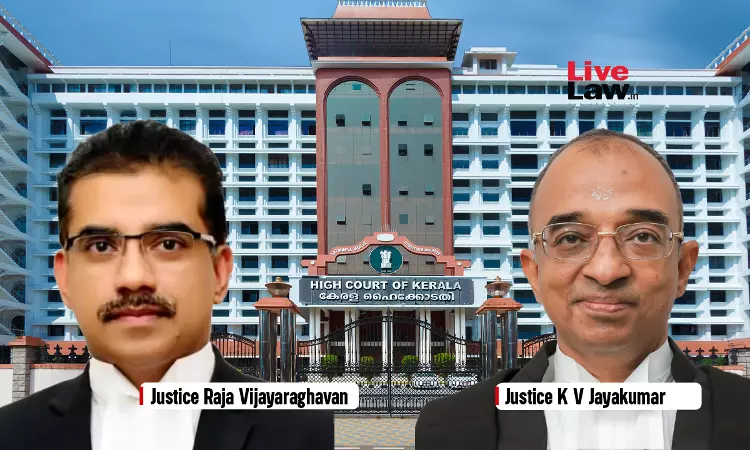
The Kerala High Court has dismissed a writ petition challenging the grant of Malikhana allowance to a member of the Zamorin royal family, holding that disputes relating to rights arising from pre-Constitution covenants are barred from judicial scrutiny under Article 363 of the Constitution Of India.A Division Bench comprising Justice Raja Vijayaraghavan V and Justice KV Jayakumar further...
This is a premium content
Available exclusively to
Our subscribers
Subscribe Premium 
INR 1099+GST
Your support helps us to bring you more content at
an affordable subscription scheme !!!
All payment options available
The Kerala High Court has dismissed a writ petition challenging the grant of Malikhana allowance to a member of the Zamorin royal family, holding that disputes relating to rights arising from pre-Constitution covenants are barred from judicial scrutiny under Article 363 of the Constitution Of India.
A Division Bench comprising Justice Raja Vijayaraghavan V and Justice KV Jayakumar further held that the petitioner lacked locus standi to maintain such a challenge and that none of the reliefs sought could be granted in the exercise of extraordinary writ jurisdiction. The Court accordingly dismissed the petition with costs of ₹10,000.
The petition was filed by a person claiming to be a devotee of Sree Valayanadu Devi Temple and an alumnus of Zamorin's Guruvayurappan College, who questioned an order issued by the Kozhikode District Collector granting Malikhana allowance to the former Zamorin, late KC Ramachandran Raja.
According to the petitioner, the allowance represented a hereditary political pension granted during the British period and stood abolished following the Constitution (Twenty-Sixth Amendment) Act, 1971, which abolished privy purses.
He further alleged that the eighth respondent [PK Kerala Varma (the current Zamorin Raja)] was financially and legally unfit to hold hereditary or fiduciary positions owing to pending liabilities of ₹82.95 Crores to the State Bank of India and proceedings by the Employees' Provident Fund Organisation.
On this basis, the petitioner sought quashing of the Collector's order, an enquiry into the antecedents of the eighth respondent, restraint against the exercise of authority over temples and educational institutions associated with the Zamorin Kovilakam, and declarations that Malikhana allowance itself stood abolished.
In considering the challenge, the Court first addressed the maintainability of the writ petition itself in light of Article 363 of the Constitution, which bars courts from adjudicating disputes arising from treaties, agreements, or covenants entered into by rulers of Indian States with the Dominion of India or its predecessors.
The Bench noted that the non obstante clause in Article 363(1) specifically bars courts from adjudicating disputes arising out of any provision of a treaty, agreement, covenant, engagement, or sanad entered into by Rulers of Indian States before the commencement of the Constitution.
The Court observed that the entitlement claimed by the Zamorin family arose from a Covenant executed with the East India Company on November 15, 1806, and that payments continued to be made through the Union of India. Consequently, any dispute regarding entitlement to such allowance falls squarely within the constitutional bar and is not maintainable.
The Court then examined the petitioner's argument that the Constitution (Twenty-Sixth Amendment) abolished the Malikhana allowance along with the privy purses. Rejecting this contention, the Bench held that the amendment abolished privy purses but did not extinguish rights based on Covenants/Treaties, noting that Article 363 continued to operate.
Distinguishing the two, the Court observed thus:
"Therefore, we hold that the Privy Purse and Malikhana allowance are distinct and separate claims and operate in different spheres. We are of the considered opinion that the Constitution (26th Amendment) Act, 1971, would never affect a claim of a ruler of an Indian State based on a Covenant, agreement or a treaty. We find no merit in the argument advanced by the learned counsel for the writ petitioner that by virtue of the 26th Amendment of the Constitution, the erstwhile rulers of Indian States have no legal right to claim the benefit of Malikhana."
On the contention over whether the Petitioner had any local standi to maintain such a petition against the Zamorian family, the Court found that the petitioner failed to establish any personal or legal interest in the allowance or in the hereditary rights of the Zamorin family.
Merely being a devotee of a temple or an alumnus of institutions historically associated with the Zamorin family did not confer locus standi to challenge payments arising from historical covenants or allowances liable to senior members of the Royal Family, the Court noted.
The Bench also declined to grant the writ of prohibition sought against the eighth respondent, observing that such relief can be issued only in rare and exceptional circumstances. The Court found that there was no cogent or strong error to justify such intervention.
Additionally, the Court noted that the Union of India, which was responsible for paying the allowance, had not even been made a party to the proceedings, thereby further undermining the maintainability of the petition.
In view of these findings, the High Court concluded that the writ petition was barred under Article 363, that the petitioner lacked locus standi, and that none of the reliefs sought could be granted. The petition was accordingly dismissed, with costs of ₹10,000 directed to be paid to the High Court Mediation Centre.
Case No: WP(C) No. 39974 of 2025
Case Title: Sanoop V.V. v. State of Kerala and Ors.
Citation: 2026 LiveLaw (Ker) 56
Counsel for the petitioner: C.R. Sivakumar, Anjali C., Subhaja P., Vipin Kumar K.P.
Counsel for the respondents: K.P. Sudheer, S. Rajmohan - Sr PP, R. Renjanie – Sc – MD, Amal George, P.C. Sasidharan – SC - Calicut University, Sajeev Kumar K. Gopal, Arundhati Nair, O.M. Shalina - Deputy Solicitor General Of India
Tags


