



- Home
- /
- High Courts
- /
- Kerala High Court
- /
- Ship Can't Be Arrested For Crew...
Ship Can't Be Arrested For Crew Wage Dues Of Other Vessels Merely Because They Share Same Manager: Kerala High Court
Anamika MJ
19 Nov 2026 10:20 AM IST
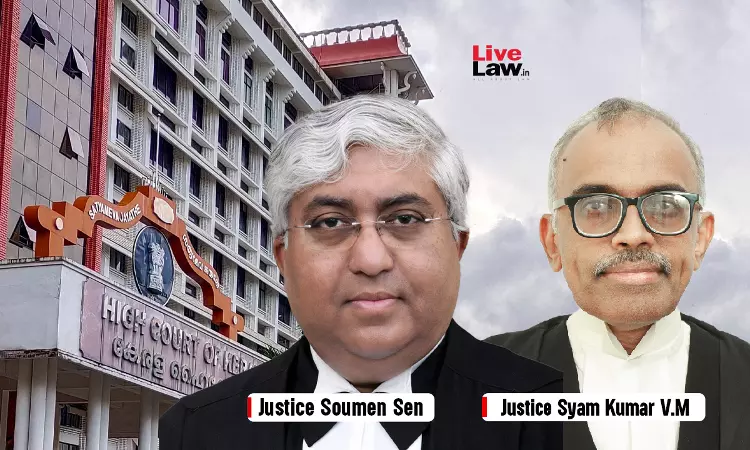
The Kerala High Court has dismissed an appeal seeking to sustain the arrest of a vessel for alleged unpaid crew wages relating to three other vessels, holding that a manning agent cannot seek the arrest of a third-party vessel merely because the ship manager of that vessel was also contractually associated with the agent. [ 2026 LiveLaw (Ker) 634]A Division Bench comprising Chief Justice...
This is a premium content
Available exclusively to
Our subscribers
Subscribe Premium 
INR 1099+GST
Your support helps us to bring you more content at
an affordable subscription scheme !!!
All payment options available
The Kerala High Court has dismissed an appeal seeking to sustain the arrest of a vessel for alleged unpaid crew wages relating to three other vessels, holding that a manning agent cannot seek the arrest of a third-party vessel merely because the ship manager of that vessel was also contractually associated with the agent. [ 2026 LiveLaw (Ker) 634]
A Division Bench comprising Chief Justice Soumen Sen and Justice Syam Kumar V.M., upheld the order of the Single Judge allowing an application for vacating the arrest of MT Ocean Faye.
The Single Bench has held that the appellant had failed to establish the requisite ownership nexus or commonality of interest to invoke the arrest jurisdiction under the Admiralty (Jurisdiction and Settlement of Maritime Claims) Act, 2017.
The appellant, Light House Marine Service India Pvt. Ltd., had entered into a manning agency agreement with Star Voyages Shipping Services LLC, the second respondent, with effect from June 10, 2023.
Under the agreement, the second respondent was responsible for paying the wages of officers and ratings engaged on its vessels. However, where the second respondent was unable to make such payments, the appellant was required to advance the wages on its behalf, with the corresponding amount being reimbursed by the second respondent.
The appellant alleged that, at the request of the second respondent, it had paid the wages of crew members serving on three vessels, namely, MT Eastern Pearl, MT Fast Kathy and MT Sea Fidelity for June 2023. Despite repeated demands, the second respondent allegedly failed to reimburse the amounts advanced.
According to the appellant, financial sanctions imposed on the second respondent by various countries, including the United Kingdom, for transporting Russian oil resulted in the transfer of its vessels to the third respondent, One Moon Marine Services LLC.
The appellant subsequently sought to recover the amounts allegedly due by initiating admiralty proceedings against MT Ocean Faye, a vessel lying at the Cochin Port and Harbour.
An ex parte order of arrest was passed against the vessel on May 31, 2024. The vessel was subsequently released upon furnishing security by an order dated June 6, 2024.
The respondents thereafter approached the Single Judge seeking, among other reliefs, to vacate the arrest, refund of the security furnished with accrued interest and dismissal of the suit on the ground that the arrest and invocation of admiralty jurisdiction were wrongful.
The Single Judge allowed the application, holding that common ownership was necessary to invoke the sister-vessel arrest jurisdiction under Section 5(1)(a) and that common management by a ship manager was insufficient. The Single Judge also held that a maritime lien for wages under Section 9(1)(a) had to relate to the vessel on which the employment was undertaken.
Aggrieved by the order, the appellant preferred the present appeal.
Before the Division Bench, the appellant conceded that its claim was not founded on a maritime lien under Section 9 of the Admiralty Act, 2017.
It contended that its claim was maintainable as a maritime claim under Sections 4(1)(o) and 4(1)(p), read with Section 5(2) of the Act.
The appellant argued that the second respondent was also acting as the manager of MT Ocean Faye and that, notwithstanding the absence of contractual privity between the appellant and the first respondent, another vessel could be arrested to secure a maritime claim arising in connection with vessels managed by the same entity.
Reliance was placed on Siem Offshore Redri AS v. Altus Uber [2018 SCC OnLine Bom 2730], where the Court had drawn distinction between the vessels which can be classified as the contract vessel and any other vessel, namely, the securing vessel.
In Siem Offshore Redri, it was held that in an appropriate case, the securing vessel can be arrested for the purpose of providing security in respect of the maritime claim of the plaintiff.
The respondents contended that the appellant had no contractual relationship with the owner of MT Ocean Faye and that the alleged wage payments related exclusively to three other vessels.
Reliance was placed on the Supreme Court's decision in Sunil B. Naik v. Geowave Commander [(2018) 5 SCC 505], wherein the distinction between beneficial ownership and charter arrangements was considered in the context of maritime claims and vessel arrest.
The respondents argued that a vessel belonging to a person who was not liable for the underlying maritime claim could not be arrested merely to secure the recovery of dues arising out of transactions concerning other vessels.
The Division Bench referred to Section 4(1)(o), which recognises claims by a master or crew member for wages and other employment-related dues, including claims arising under a manning and crew agreement relating to a vessel.
The Court also considered Section 4(1)(p), which recognises claims relating to disbursements incurred on behalf of a vessel or its owners.
The Bench observed that a plain reading of Section 4(1)(o) indicates that the relevant crew agreement must relate to the vessel on which the crew members are employed. Similarly, disbursements under Section 4(1)(p) must relate to the vessel in respect of which the expenditure was incurred.
The Court thus found that the wage claims related to three vessels, none of which was MT Ocean Faye.
“There is no averment in the plaint that the owners of the said three vessels have any commonality of interest with Defendant No. 1. Moreover, the owners of those vessels have not been impleaded as parties to the suit. In our view, this constitutes a fatal defect and leaves little room for a proper and fair adjudication of the dispute and for the plaintiff to succeed.” the Court said.
The Court then examined the scope of Section 5(2) of the Admiralty Act. The Court relied on the Supreme Court's decision in Owners and Parties Interested in M.V. Nereus Progress v. Om Freight Forwarders Ltd. [2026 SCC Online SC 2007], which clarified that Section 5(2) permits the arrest of another vessel in lieu of the vessel against which the maritime claim has arisen, but remains subject to the statutory requirements under Section 5(1).
The Supreme Court had held that the jurisdictional preconditions under Section 5(1)(b) must independently be satisfied in relation to the vessel sought to be arrested.
The Division Bench thus reiterated that Section 5(2) cannot be treated as a standalone provision or an independent source of arrest jurisdiction disconnected from Section 5(1).
The Bench also considered Sunil B. Naik v. Geowave Commander and Polestar Maritime Ltd. v. M.V. Qi Lin Men [2008 SCC Online Bom 1634], observing that the arrest of another vessel in connection with a maritime claim against one vessel is subject to legally recognised ownership and charter-related conditions.
The Court rejected the appellants reliance on authorities concerning demise and bareboat charters, the Court drew a distinction between a ship manager, a manning agent and a demise charterer.
“The appellant is neither a bareboat charterer nor a demise charterer and is only a manning agent or crew supplier who claims to have entered into an agreement to supply crew to the vessels managed by the second defendant.” the court said.
The Court noted that a bareboat or demise charter involves the transfer of possession and control of the entire vessel to the charterer, who assumes control over its navigation and becomes the employer of the master and crew during the charter period.
By contrast, the appellant was merely a manning agent or crew supplier claiming to have entered into an agreement with the ship manager for supplying crew to vessels managed by it.
"A manning agent who has a contractual arrangement with Ship's Manager does not stand on similar footing as a demise charter or bareboat charter qua the owner of the vessel." the Court observed.
It further held that the appellant was far removed from the shipowner and its vessel and could not, in law, seek to arrest the vessel for disputes and claims arising out of its contractual dealings with the ship manager.
The Bench also noted that the appellant had not contended that MT Ocean Faye was taken on a demise or bareboat charter.
The Court further observed that for the High Court to exercise jurisdiction under Section 5(2) in respect of another vessel, there must be prima facie satisfaction regarding the existence of commonality of interest between the shipowners and a clear intention to defraud the creditor.
The Court added that, in an appropriate case, the principle of lifting the corporate veil could also be applied to ascertain the real owners of a vessel and fasten liability under Section 5(2) of the Admiralty Act.
However, in the present case, the appellant had failed to establish the crucial ownership test against the first respondent.
The Court thus concluded that the appellant had failed to establish the necessary statutory and ownership requirements for sustaining the arrest of MT Ocean Faye, hence held that the Single Judge was justified in allowing the interlocutory application filed by the respondents.
Accordingly, the First Appeal (Admiralty) was dismissed.
Counsel for Appellant: P. Viswanathan (Sr.), Ajith Viswanathan, Shibu Joseph, Vrindha Babu, Sayed Mansoor Bafakhy Thangal, M. Sriram
Counsel for Respondent: Santhosh Mathew (Sr.), Jikku Seban George, Latha Anand, Joy Thattil Ittoop, Deepti Susan George, Anjana Wilson, Bijish B. Tom, Baby Sonia, A.G. Aditya Shenoy, Nevis Cassandra L Caxton Loretta, Giving Vijayakumaran Nair, Karn Mahesh, Agnes Sabu, K.S. Aravind, Sreelakshmi Shibu, Roshni Manuel, Krishnan Kumar T.K
Tags

Anamika MJ
Anamika MJ is a Correspondent with LiveLaw, covering Kerala High Court

