



- Home
- /
- High Courts
- /
- Kerala High Court
- /
- Nuns Entitled To Share In Ancestral...
Nuns Entitled To Share In Ancestral Property As Well As Compensation Awarded Upon Its Acquisition: Kerala High Court
K. Salma Jennath
24 Nov 2026 10:10 AM IST
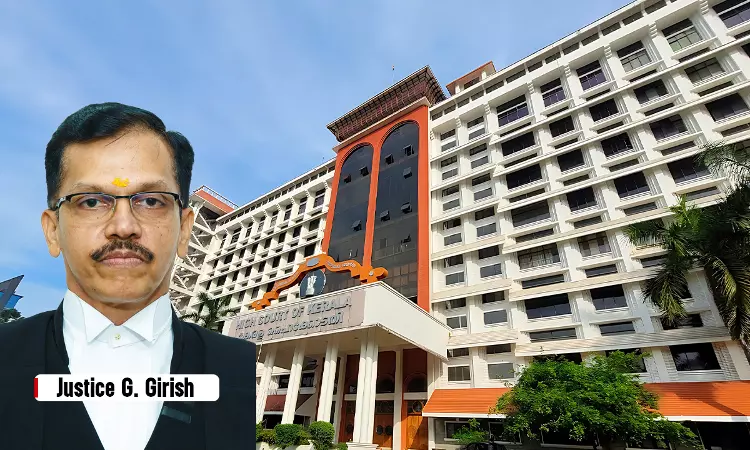
The Kerala High Court recently ruled that nuns are entitled to get the share of solatium or compensation awarded upon acquisition of ancestral property. [2026 LiveLaw (Ker) 643]Justice G. Girish relied on precedents, which held that merely entering into religious order and renouncing of worldly pleasures would not deprive a person of the property devolved upon him through intestate...
This is a premium content
Available exclusively to
Our subscribers
Subscribe Premium 
INR 1099+GST
Your support helps us to bring you more content at
an affordable subscription scheme !!!
All payment options available
The Kerala High Court recently ruled that nuns are entitled to get the share of solatium or compensation awarded upon acquisition of ancestral property. [2026 LiveLaw (Ker) 643]
Justice G. Girish relied on precedents, which held that merely entering into religious order and renouncing of worldly pleasures would not deprive a person of the property devolved upon him through intestate or testamentary succession, to reject the contention that a nun would not be entitled to share in ancestral property since she attains status of 'civil death'.
The petitioner and the party respondents (respondents 4 to 8) are siblings. Their father's property having an extent of 3.295 Acres was acquired and an amount of Rs. 3,74,24,449, including solatium, was deposited in accordance with the Right to Fair Compensation and Transparency in Land Acquisition, Rehabilitation and Resettlement Act, 2013 (LARR Act).
The petitioner contended that his siblings are not entitled to share in the solatium since they did not undergo any pain and suffering due to the acquisition. He pointed out that his brother had entered into a settlement agreement relinquishing right over the properties of his father. He added that one of his sisters, on becoming a nun, attained the status of 'civil death' and is not entitled to share of compensation. Rejecting these arguments, the Rehabilitation and Resettlement Authority passed a judgment directing release of the amount equally among the siblings. This judgment was challenged before the High Court.
The Court referred to the meaning of 'solatium' and noted that the same is intended to address non-pecuniary losses, such as the distress of being forced to leave one's property. Adverting to the present case, it observed that the acquired property was the ancestral property of the petitioner as well as the party respondents and that even though the latter had shifted away, their emotional attachment to the place would not necessarily be lost.
It opined that merely because the petitioner was residing near to the acquired property and was managing its affairs, it cannot be said that he suffered more suffering than his siblings. The Court added:
“the management and looking after of the property by the petitioner as a co-owner of the property could only be termed as an act done as a representative of all the co-owners of that property. There is no basis for the contention that the aforesaid act of the petitioner taking care of the ancestral property for and on behalf of the co-owners of that property would confer him any special right to have exclusive allotment of solatium.”
The contention that the petitioner's brother relinquished his rights over ancestral property by executing a settlement agreement was also rejected after finding that the agreement was legally invalid due to non-registration.
To dispel the argument that the petitioner's nun sister is not entitled to ancestral property or share in the land acquisition compensation, reliance was placed on Apex Court decision in Molly Joseph v. George Sebastian (1997) as well as High Court decisions in M.S.G.R Xavier Chullikkal and Others v. C.G.Raphel and Others (2017) and Mariyam @ Beatrice v. Fr.Joseph Mattam (Died) (2024).
The Court thus dismissed the plea.
Counsel for the petitioner: T.R.S. Kumar, K.M. Fathima Risa, Aswathy V.S., Vidhya Sugunan, Krishnaja Suresh R., Anitha Paul, Anjana Sasikumar, Sariga Ramachandran M., Riya Simon, Aleen P. Shams
Counsel for the respondents: George Sebastian, Aditya T.P., Nikhita Mariam Cibu, Sreehari Indukaladharan - Government Pleader
Tags

K. Salma Jennath
Salma Jennath is a Principal Correspondent with LiveLaw, covering Kerala High Court

