



- Home
- /
- High Courts
- /
- Kerala High Court
- /
- UAPA Convict Writes Book In Jail,...
UAPA Convict Writes Book In Jail, Kerala High Court Asks State To Expeditiously Decide If It Can Be Published
K. Salma Jennath
13 Nov 2025 6:26 PM IST
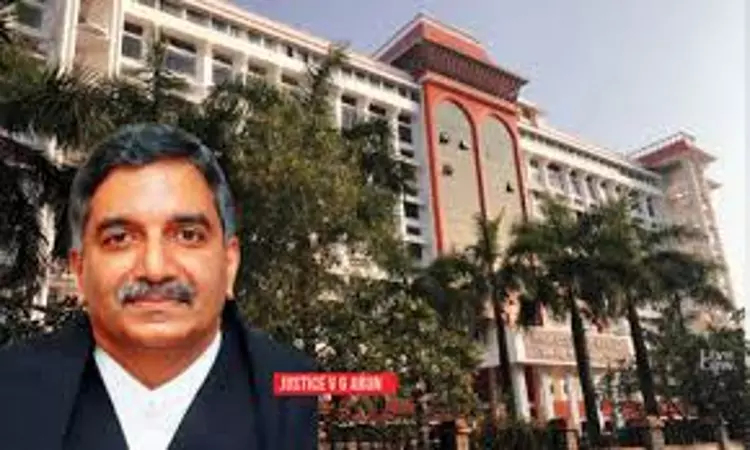
The Kerala High Court recently directed the State government to consider a prisoner's application for permission to publish his book and to communicate its decision to him, within 3 months.Justice V.G. Arun observed that incarceration or conviction does not take away the fundamental rights of a person completely and that the Kerala Prisons and Correctional Services (Management) Rules, 2014...
This is a premium content
Available exclusively to
Our subscribers
Subscribe Premium 
INR 1099+GST
Your support helps us to bring you more content at
an affordable subscription scheme !!!
All payment options available
The Kerala High Court recently directed the State government to consider a prisoner's application for permission to publish his book and to communicate its decision to him, within 3 months.
Justice V.G. Arun observed that incarceration or conviction does not take away the fundamental rights of a person completely and that the Kerala Prisons and Correctional Services (Management) Rules, 2014 does not curtail the prisoners' right to read and write.
The case before the Court was filed by a convict undergoing imprisonment for the offences under the Unlawful Activities (Prevention) Act, 1967 (UAPA) and the Indian Penal Code, 1860. After completing a Masters course in History from an open university, he was currently pursuing Masters in two other subjects, all while being incarcerated.
He also wrote a book titled 'Bandhitharude Ormakurippukal' (Memoirs of the Incarcerated) and had applied for permission to publish the book. The application along with the manuscript of the book were forwarded by the Superintendent of Prison to the Director General of Prisons and Correctional Services. However, he alleged undue delay in consideration of his request. Aggrieved, he moved the High Court.
The petitioner's counsel relied on the Apex Court decision in State of Maharashtra v. Prabhkar Pandurang Sanzgiri [AIR 1966 SC 424] to contend that rights of prisoner include the right to publish their works as long as there is no content against national interest or other deleterious material.
The government pleader, on the other hand, submitted that the State is not opposed to publishing the book but it has to ascertain whether the contents of the book contained any defamatory, derogatory or sensitive material warranting redaction. She stated that the government can take a decision only after a detailed scrutiny of the book, which would require at least three months.
While the Court agreed with the petitioner that fundamental rights of prisoners are not completely taken away, it also was of the opinion that the same can be subject to scrutiny.
“While on the issue regarding a prisoner's right to publish his literary book, it is essential to bear in mind that thoughts and dreams being internal and intangible, are beyond external control or curtailment. They are the ultimate realm of personal freedom, where imagination and reflection thrive without restriction. This inner sovereignty is a fundamental aspect of human dignity. When abstract thoughts get crystallised and sequenced, they take the shape of words and sentences. While some persons require serene locales to give shape to their thoughts, some may be able to do it in the midst of mayhem and a few within the confines of prison. The assimilated thoughts, when written or printed on paper, lose their ephemerality and become permanent and examinable. For prisoners like the petitioner, the examination can be stricter, but never an insurmountable obstacle,” the Court opined.
Thus, it gave a direction to the state government to consider the application within 3 months of receipt of the judgment and to communicate the same to the petitioner.
Case No: WP (C) No. 29891 of 2025
Case Title: Roopesh T.R. v. State of Kerala and Ors.
Citation: 2025 LiveLaw (Ker) 732
Counsel for the petitioner: Kaleeswaram Raj, Thulasi K. Raj, Aparna Narayan Menon, Chinnu Maria Antony, Tarun Philip, Saran Dev P.B.
Counsel for the respondents: Amminikutty – Sr. Government Pleader

K. Salma Jennath
Salma Jennath is a Principal Correspondent with LiveLaw, covering Kerala High Court

