Plea Against CM VD Satheesan's Clean Chit In Punarjani-FCRA Case Should Prima Facie Be Heard As PIL: Kerala High Court
K. Salma Jennath
16 Nov 2026 1:20 PM IST
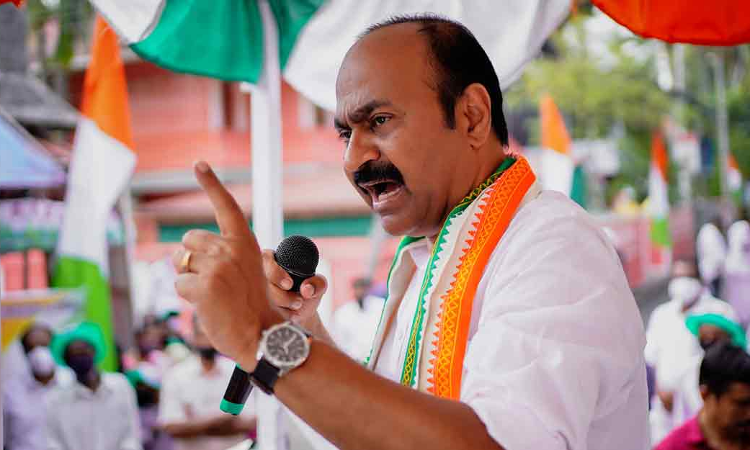
The Kerala High Court on Monday (November 16) came to a prima facie finding that the plea challenging the clean chit given to Chief Minister V.D. Satheesan and Manappat Foundation Chairman Ameer Ahamed in the Punarjani-FCRA Vigilance case must be heard as a public interest litigation (PIL).
The allegation is that Satheesan solicited foreign funds for the Punarjani Flood Rehabilitation Scheme and routed it through Manappat Foundation, in violation of the Foreign Contribution (Regulation) Act, 2010 (FCRA).
Justice C. Jayachandran today noted that one of the de facto complainants in the case had already preferred a writ petition, which was withdrawn to prefer a PIL and the same also came to be dismissed.
The Court was of the view that since the present plea is also preferred in similar circumstances by a person claiming to be a whistleblower, it has to be heard as a PIL by the Bench having jurisdiction to hear them:


"There is no dispute whatsoever that the petitioner is claiming the capacity of a whistleblower. In similar circumstances, one of the de facto complainants has already chosen to invoke the public interest jurisdiction for which reason, he got his writ petition withdrawn and in fact, pursued his public interest remedy before a Division Bench...There exists a strong prima facie indication that the writ petition, if at all liable to be considered on merits, partakes the character of a public interest litigation, liable to be considered by the Bench having jurisdiction as per roster; and not by this Court. If that is so, the petitioner's locus, which is very much part and parcel of the contentions raised in the writp as also by the respondents, should necessarily considered by the same Court."
The Court also raised a preliminary concern on two aspects - on the petitioner's locus and on the Bench's jurisdiction to hear the matter, in case the petitioner has locus. It opined that the same Bench has to consider locus as well as merits of the case and since it was of the prima facie view that the matter involves public interest, it requested the High Court Registry to place the matter before the Chief Justice for appropriate orders on which Bench has to hear the matter.
Petitioner's case
The plea states that Satheesan took a private trip to the UK in October 2018 to actively solicit foreign funds of £22,500. It is stated that then Vigilance and Anti-Corruption Bureau (VACB) Director recommended for a CBI enquiry after noting suspicious financial movements totalling over ₹1.22 crore distributed across the FCRA, current, and personal bank accounts of Ahammed. However, he was replaced and the preliminary report was closed claiming “no vigilance angle”. It is further stated that the corruption charges against Satheesan were dropped shortly after the 2026 Legislative Assembly election results were declared.
The petitioner stated that he is entitled to challenge the illegality in a vigilance case as a whistleblower and in his capacity as a citizen of India. Petitioner maintained that the locus standi of the complainant is a concept foreign to criminal jurisprudence and that any member of the public can file a statutory appeal since there is no victim in cases governed by the Prevention of Corruption Act. It was pointed out that Jason Panikulangara and P. Raju, on whose complainant the vigilance case arose, were no more.
State's contention
Advocate General K. Jaju Babu argued that the writ petition preferred by Jason Panikulangara in 2020 was withdrawn to prefer a PIL, which came to be dismissed by a Division Bench. The Division Bench had found that a CBI inquiry as sought for in the writ petition is not liable to be allowed and the petitioner was relegated to the remedies available under the Code of Criminal Procedure, he said.
It was pointed out that thereafter, neither of the de facto complainants chose to pursue the matter any further and it was brought to a logical conclusion. He argued that the petitioner, being a total stranger to the case, has no locus to prefer the present plea.
Counsel for the petitioner: V. Sethunath, Shamnas S.
Counsel for the respondents: K. Jaju Babu - Advocate General