Kerala High Court Refuses Interim Plea To Restrain Former Kerala Bar Council Chairman From Attending Legal Education Trust Function
Anamika MJ
31 Oct 2026 9:59 AM IST
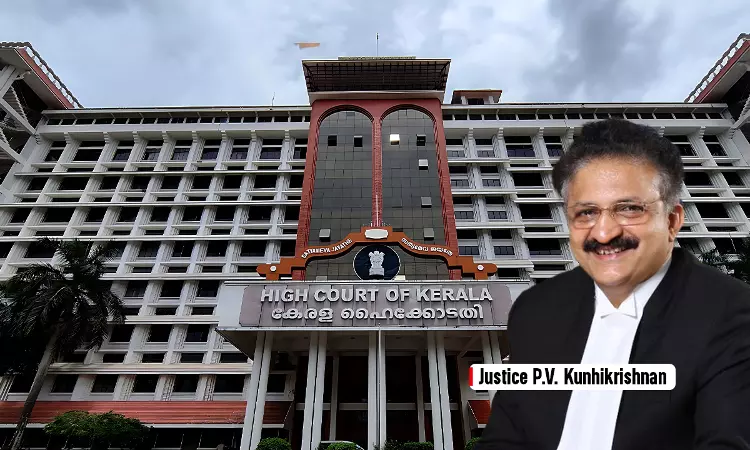
The Kerala High Court on Friday (30 October) dismissed an interlocutory application seeking to restrain Ajith T.S, the former Chairman of the Bar Council of Kerala, from holding himself out as the Executive Trustee of the Kerala Advocates Academy for Continuing Legal Education Trust attending a scheduled function in that capacity.
Justice P.V. Kunhikrishnan dismissed the interlocutory application.
The application was filed by advocate Yeshwanth Shenoy, in a plea pending before the High Court which has challenged a series of orders issued by the Chairman of the Bar Council of India (BCI), contending that the BCI has no statutory authority to continue exercising control over the affairs of the Bar Council of Kerala after the newly elected XIII Bar Council was constituted.
The Court had previously stayed the operation of an order issued by the Chairman of the Bar Council of India (BCI) constituting a Limited Interim Authority for the Bar Council of Kerala. It had held that the inclusion of a former Bar Council Chairman who was no longer an elected member prima facie violated the democratic scheme of the Advocates Act, 1961.


The writ petition was disposed of by the Court on the ground that the prayers did not survive since the State Bar Council had been constituted. The petitioner had submitted that the present writ must be retained, since a larger issue was to be decided in the case.
The petitioner submitted that the High Court had, by an order dated August 18, 2026, recorded the submission of the Bar Council of India and the Bar Council of Kerala that the fifth respondent, T.S. Ajith would not hold himself out as the Chairman of the Bar Council of Kerala.
According to the petitioner, the subsequent appearance of the fifth respondent as Executive Trustee of the Advocates Academy Trust raises a separate but related legal issue.
It was argued that the Advocates Academy contemplated under Section 2(ab) of the Kerala Advocates Welfare Fund Act, 1980, is an academy constituted by the Bar Council for providing training to advocates to enable them to deliver efficient legal services to the public.
The petitioner referred to a Trust Deed dated June 2, 2025, establishing the Bar Council of Kerala Advocates Academy for Continuing Legal Education Trust.
Clause 7 of the Trust Deed provides that the Chairman of the Bar Council of Kerala from time to time shall be the Executive Trustee of the Trust. It also contains a special provision stating that, for the initial ten-year period, the then Chairman of the Bar Council of Kerala would continue as Executive Trustee until the next Chairman assumes charge.
The petitioner questioned the legality of these arrangements, particularly the continuation of persons beyond their elected tenure and the relationship between the Trust's governing structure and the statutory composition of the Bar Council.
The petitioner has also raised allegation concerning financial transactions connected with the proposed construction of the Advocates Academy. He alleges that an advance of Rs. 1.5 crore was paid to a contractor even before construction and that approximately another Rs. 1 crore was subsequently disbursed over a period of nine months.
The Court noted that the writ petition primarily challenged the orders of the Chairman of the Bar Council of India, which were issued in violation of the Advocates Act, 1961. This order was subsequently stayed by the High Court.
The Court observed that the relief sought in the interlocutory application was not connected with the substantive prayers in the writ petition.
It further noted that the function scheduled for October 31 would be attended by several distinguished dignitaries, including the Chief Justice of India, the Chief Justice of the Kerala High Court, the Chief Justice of the Sikkim High Court, the Attorney General of India and the Advocate General of Kerala.
"At this belated stage, I am not inclined to pass any interim order in this case to change the scheduled programme." Court observed.
While dismissing the interlocutory application, the Court expressly clarified that all contentions raised by the petitioner in the application were left open and that he would be at liberty to agitate those issues separately in accordance with law.
Accordingly, the Court dismissed the interlocutory application, declining to interfere with the scheduled function.
Party-in-person