



- Home
- /
- High Courts
- /
- Kerala High Court
- /
- Crowd Cap, AI-Based Drone...
Crowd Cap, AI-Based Drone Surveillance: Kerala High Court Gives Detailed Suggestions To Improve Pilgrim Management At Sabarimala
K. Salma Jennath
6 April 2026 3:40 PM IST
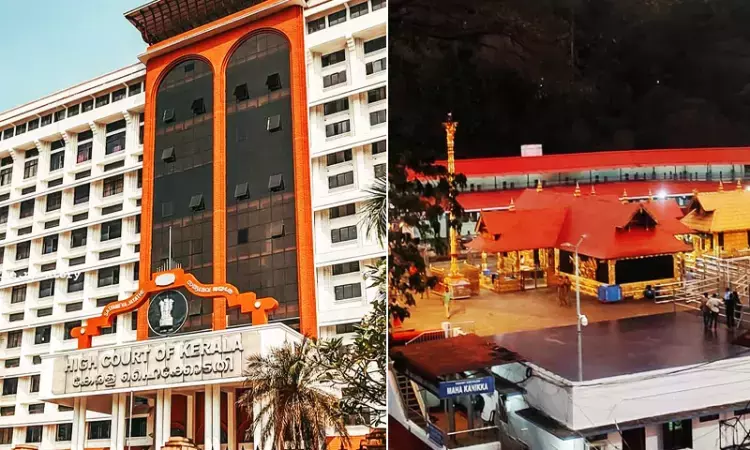
The Kerala High Court has given detailed suggestions for improving pilgrim management at Sabarimala during the 2026-2027 season, including setting a cap of pilgrim inflow at 80,000 devotees daily, setting up of an institutional framework, improved technology to manage crowds, online payment and booking systems, etc.The Division Bench of Justice Raja Vijayaraghavan V. and Justice K.V....
This is a premium content
Available exclusively to
Our subscribers
Subscribe Premium 
INR 1099+GST
Your support helps us to bring you more content at
an affordable subscription scheme !!!
All payment options available
The Kerala High Court has given detailed suggestions for improving pilgrim management at Sabarimala during the 2026-2027 season, including setting a cap of pilgrim inflow at 80,000 devotees daily, setting up of an institutional framework, improved technology to manage crowds, online payment and booking systems, etc.
The Division Bench of Justice Raja Vijayaraghavan V. and Justice K.V. Jayakumar was considering a suo motu petition registered for the purpose of continuous monitoring by the Court to ensure conduct of pilgrimage in a safe, orderly, environmentally responsible, and pilgrim-centric manner.
During the previous posting, the Travancore Devaswom Board (TDB) was directed to file a detailed statement after taking into consideration all the aspects highlighted by the Court during the previous season.
Accordingly, the TDB had set out the steps already taken and those proposed to be taken by it. Additionally, the Police had also submitted their inputs and pointed out the challenges in implementing the same.
Perusing the same, the Court expressed it satisfaction:
“We also note, with a degree of satisfaction, that the Board has approached the directions issued by this Court not as a mere formality, but with an open and constructive mindset, and with a clear intent to bring about meaningful and lasting improvements in the facilities and overall management at Sannidhanam, especially in the context of steadily increasing pilgrim inflow…Having carefully perused the statements filed by the respondents, we find them to be both exhaustive and thoughtfully structured. They reflect a conscious and coordinated effort on the part of the Board, in particular, as well as the Chief Coordinator and the State, to address the concerns highlighted by this Court.”
The Court particularly stressed upon the efforts made by the Board to bring about digitisation of all festival activities by November 2026. The Court also noted that the Board has formulated a new Vision for Sabarimala festival— prioritizing safety, cleanliness, improved services, ambience, etc.
Considering all the measures proposed, the Court went on to highlight them for detailed consideration and for ensuring implementation. These were split into separate heads:
- Institutional Framework and Governance;
- Crowd Management & Virtual Queue System;
- Technology & Integrated Command Systems;
- Traffic Management & Road Infrastructure;
- Infrastructure at Nilakkal (Base Camp), Pamba and Sannidhanam;
- Safety, Fire and Electrical Safety;
- Sanitation, Cleanliness and Waste Management;
- Medical and Health Services;
- Services to Pilgrims – Amenities and Welfare;
- Environmental Compliance;
- Appearance, Ambience and Communications;
- Personnel Training and Staffing; and
- Timelines for completion
Some of the major suggestions highlighted are as follows:
Sabarimala Infrastructure and Crowd Management Expert Committee
The Court has directed the constitution of a Sabarimala Infrastructure and Crowd Management Expert Committee which shall include specialists from the fields of Transport Engineering, Urban and Regional Planning, Civil Engineering, Disaster and Crowd Science, Environmental Science, Public Health, and IT/Data Analytics.
This Committee is to prepare a scientific plan for the upcoming season considering factors including carrying capacity, safety parameters, environmental concerns, pilgrim convenience, etc.
The State is to prepare a panel of officers before the Court by April 8 so as to finalise the appropriate composition for the Committee.
Other measures under institutional framework and governance
The Court has also directed the creation of a Coordination and Monitoring Task force to implement the decisions of the Expert Committee in a timely manner and the agencies responsible are the TDB, Police, KSRTC, Kerala Water Authority, Kerala State Electricity Board (KSEB), Forest Department and District Administration.
An IAS office is to be appointed by the State as Sabarimala ADM for inter-departmental coordination and for supervising sanitation related works.
A Sabarimala Festival Office is to be made functional at Pamba from April 15 and all Board meeting on Sabarimala matters are to be held there.
The Court has highlighted the need for a separate Sabarimala Festival Budget within the TDB Budget. All payments and receipts are now to be on online mode and a designated Chartered Accountant is to audit the account and publish the same within 3 weeks of Makaravilakku season.
New contracts on hotel/food stalls, toilet maintenance, commercial establishment are to be incorporate green protocols, food safety and cleanliness standards, safety norms, etc. The existing tender documents and contracts are to reviewed and revised within a month.
The State government is directed to convene review meetings before and during the pilgrimage season under the chairmanship of the Devaswom Ministers and other Ministers concerned.
The State is also to ensure that contingency funds are released to the District Administrations of Pathanamthitta, Kottayam and Idukki expeditiously for maintenance, cleaning, and infrastructural readiness of forest trekking paths within their jurisdiction.
Capping of Pilgrims, Virtual Queue System
The Court noted that the optimal carrying capacity being 80,000 per day, and therefore, the Virtual Q booking cap is to be fixed accordingly. The Virtual Q system is also to be upgraded with a more professional platform with real-time updates and cancellation options.
The number of pilgrims taking the traditional forest path are to be capped at 5,000 daily and are to be permitted to trek only after registering through Virtual Q or real-time registration.
Spot booking is also be strictly capped and regulated at the counters at Erumeli, Nilakkal, Pamba, Vandiperiyar, and Chengannur Railway Station, with aggregate at these counters not exceeding the daily limit fixed.
The Court has suggested that the TDB can consider converting the present Q complex into a two-storey building with one floor acting as a holding area for pilgrims awaiting darshan. The minimum total holding capacity at the Q complex is to be 24,000 pilgrims.
Refundable security deposit
The Court suggested that a nominal and refundable security deposit can be introduced with each reservation and the same can be refunded upon arrival or adjusted against prasadam purchased.
“If the devotee fails to arrive within the scheduled window, the booking amount may be forfeited, which would act as a deterrent against speculative bookings, slot-blocking, and last-minute crowd surges. This is required to improve the predictability of inflow and reduce peak-hour pressure in the holy shrine, which is located in the heart of the Periyar Tiger Reserve,” the Court added.
Technology & Integrated Command Systems
The Court has asked the Board to consider establishing an AI-based Integrated Command and Control Centre for effective inter-departmental coordination and scientific crowd management with AI-enabled CCTV surveillance, 3D crowd analytics enabling predictive crowd management, etc.
Kerala State Information Technology Infrastructure Ltd. (KITFRA) is to develop a dedicate Sabarimala website before the upcoming season in November.
The other suggestions include overhauling and expansion of the entire CCTV infrastructure, introducing AI-based drone for real-time crowd density and hazard detection, Automatic Number Plate Recognition system, use of Radio Frequency Identification (RFID) for tracking pilgrim movement, a comprehensive Digital Parking Management System, better communication systems for Police Control Room, digital payments at all counters, pre-booking and postal dispatch of Aravana (prasadam), etc.
The Court also noted that the accommodation provided are being misused and thereupon directed that the rooms be vacated and refurbished. It then directed that a transparent online booking system is to be introduced:
“We are given to understand that a substantial number of rooms are presently occupied by officials of various departments, and that such occupation has continued for extended periods without adequate justification. This practice, if allowed to persist, would seriously prejudice the availability of accommodation to genuine pilgrims. The Board shall, therefore, take immediate and effective steps to have all such rooms vacated, except where occupation is strictly necessary and duly authorised for official purposes. Upon such vacation, the Board shall ensure that the rooms are properly refurbished and furnished so as to make them fit for pilgrim use. The allocation and booking of all rooms at Sabarimala intended for pilgrims shall be fully computerised and integrated into a transparent online booking system.”
Traffic Management and Road Infrastructure
The Court suggested widening of Pamba-Triveni-KSRTC depote road area and Kochu Palam bridge, reconstruction of Chalakkayam-Pamba road and parking grounds at Nilakkal, construction of a new bridge at Nilakkal, development of emergency evacuation routes, development of parking at Pamba, setting up alternative tractor route for electricity and water line, etc.
Infrastructure improvements
The Court has suggested adding new toilet blocks and water kiosks at parking grounds, increasing seating capacity at Annadhanam Mandapam.
Further suggestions have been made to add incinerators, new STPs, construct resting places, etc. Suggestions were made with respect to Sannidhanam, Pamba and Nilakkal.
“A permanent information centre must be established near the KSRTC stand at Nilakkal, with multilingual personnel. Currently only a temporary centre functions during the season… All important boards and announcements must be in Malayalam, Tamil, Telugu, Kannada, and English, and occasionally in Hindi. Multi-language help desks must be created. The permanent information centre at Nilakkal must have multilingual personnel,” it added.
Safety, Sanitation and Cleanliness
The Court has directed that a comprehensive structural safety audit of all walkways, barricades, railings, stairways, and holding areas must be conducted. Suggestions for proper fire audit, electrical safety, disaster preparedness, etc. were also made.
The Court mandated a deep cleaning of all major spots before the next season, introduction of three coloured bins of standard dimension and designs, development of proper waste segregation and sanitation protocols, review of volunteer cleaning service.
Green protocol
The Court also reiterated that its earlier ban on use of plastic shampoo sachets and synthetic Kumkum would remain in force:
“Use of plastic, shampoo sachets, and synthetic kumkum would remain banned. Drug Inspectors will continue monitoring. Pilgrims undertaking the pilgrimage must be educated against dumping clothes or any waste into the River Pamba. Coordinators and staff must be stationed to prevent such practices.”
Medical and Health Services
It was noted that the medical facilities at Pamba and Sannidhanam were adequate bu the Court felt that there is a need to address the lack of medical support at Nilakkal.
The Court directed that the existing booth for Emergency Medical Care, Oxygen Parlours and Physiotherapy centres must be reviewed. Only professionally staffed facilities must be continued whereas unnecessary ones are to be discontinued.
“Cardiac arrests and suffocation incidents are common while trekking. Dedicated safe waiting/resting areas with medical aid at regular intervals along the trek route are required. Absence of these is one of the reasons devotees rush forward without adequate rest,” the Court added.
Services to pilgrims
The Court highlighted on the need to redesign water booths, and to ensure cleanliness in toilets by contracting regular and bio-toilets and charging pilgrims.
It was directed that prepaid counter systems for dolly services are to established and these must be periodically serviced and inspected. Additionally, a proper database must be there to avoid exploitation of aged, sick and disabled devotees.
The Court said that Annadhanam Fund must be utilized to feed as many pilgrims as possible. It was also directed that guidelines and decisions on Annadhanam must be taken early to avoid confusion.
Noting that the seating in the traditional trekking route is inadequate, the Court directed that new ones can be introduced:
“A large number of stone benches/seats must be provided on both sides of the trek route (existing ones are broken). Continuous shelters must be built along the trek route from Pamba to Sabaripeedom to protect pilgrims from sun and rain, designed to allow wildlife to cross. Trekking pilgrims from Erumeli must register before undertaking the route.”
The Court also suggested overhauling of the present system of non-stop announcements at Sannidhanam and Pamba and to limit the same to once in every 30-60 minutes.
Environmental Compliance
The Court reiterated that all planning must conform to ecological standards:
“All planning must strictly conform to the ecological sensitivities, statutory restrictions, and conservation norms of the Periyar Tiger Reserve, a UNESCO-recognised biodiversity hotspot.”
Appearance, Ambience & Communications
The Court suggested having a standard design, colour scheme and lettering style for hotels, shops and kiosks. The Devaswom buildings are also to follow an approved colour scheme.
Use of unauthorized banners and boards are banned. The Court was of the opinion that the Sreekovil is to be properly lit with professional quality lighting and the aesthetic of entry points is to be improved.
It was also suggested an outreach programme be undertaken in the States of Telengana, Andhra Pradesh, Tamil Nadu and Karnataka.
Personnel Training and Staffing
The Court opined that the number of daily wage staff is to be reduced and permanent workforce be professionalised.
It also remarked that the TDB employees are to undergo a training programme:
“All TDB employees and officers assigned to Sabarimala duty must undergo a mandatory training programme covering required skills and proper attitudes toward devotees. Training must begin from August and be completed by October.”
Police personnel
Noting the stress faced by the police deployed, the Court suggested:
“Police personnel at the Pathinettampadi (18 Holy Steps) undergo extreme physical stress, with duty rotations as short as 15 minutes during peak inflow. Short-duration rotation systems must continue and be supported by adequate accommodation and mess facilities at both Nilakkal and Pamba…Mess capacity at Pamba must be enhanced from the present 150 to at least 400 personnel at a time. Accommodation for approximately 1,000 police personnel is required at Pamba… Accommodation for approximately 1,250 police personnel is required at Nilakkal. The Police Control Room at Nilakkal needs substantial infrastructure and technology upgradation. The Board shall consider sprucing up the infrastructure for the police as their presence and intervention is indispensable for the smooth conduct of the pilgrimage.”
Timelines
The Court laid down timelines for completion of major works:
“All preparatory measures — contractual grants, infrastructure augmentation, Edathavalam management, route temple facilities, transport planning, and inter-departmental safety audits — must be completed at least two months before the commencement of the Mandala–Makaravilakku Season 2026–27. Key internal TDB deadlines include:
- KITFRA digitisation programming: Last week of April 2026
- Digitised systems for trial: First week of October 2026
- Tender documents reviewed and revised: Within one month
- Tendering for civil works completed: By 30 April 2026 (leaving 6 months for
- completion)
- All Sabarimala preparations complete: By 31 October 2026
- Employee and officer training: August to October 2026
- New website ready: Before November 2026 (onset of Festival)
- New Festival Office at Pamba: Functional from 15 April 2026”
The case is now posted on April 8 (Wednesday) for further consideration.
Case No: WP(C) No. 8529 of 2026
Case Title: Suo Motu v. State of Kerala and Ors.

K. Salma Jennath
Salma Jennath is a Principal Correspondent with LiveLaw, covering Kerala High Court

