



- Home
- /
- High Courts
- /
- Kerala High Court
- /
- Second DNA Test Can't Be Ordered...
Second DNA Test Can't Be Ordered Merely Because It Causes No Prejudice To Opposite Party: Kerala High Court
Anamika MJ
19 Nov 2026 5:29 PM IST
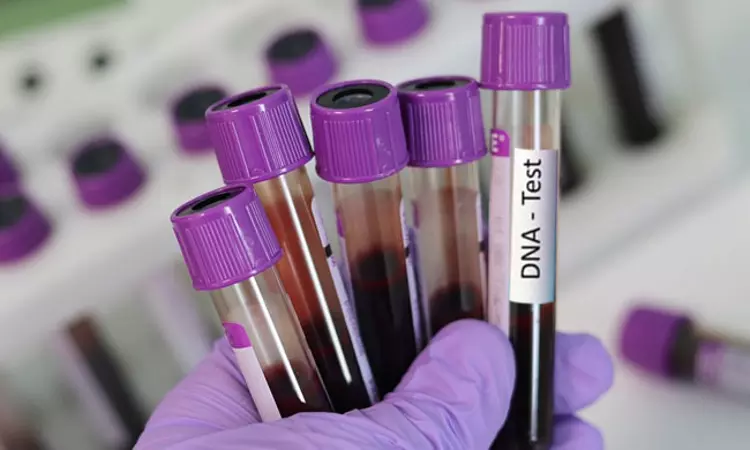
"Court must not adopt an approach that could favour bastardy."
The Kerala High Court has held that a second DNA test cannot be ordered merely on the ground that it would cause no prejudice to the opposite party. [2026 LiveLaw (Ker) 638]Justice Easwaran. S observed that a party seeking a fresh DNA examination must establish concrete and verifiable defects in the original testing process and cannot seek repeated expert opinions simply because the first...
This is a premium content
Available exclusively to
Our subscribers
Subscribe Premium 
INR 1099+GST
Your support helps us to bring you more content at
an affordable subscription scheme !!!
All payment options available
The Kerala High Court has held that a second DNA test cannot be ordered merely on the ground that it would cause no prejudice to the opposite party. [2026 LiveLaw (Ker) 638]
Justice Easwaran. S observed that a party seeking a fresh DNA examination must establish concrete and verifiable defects in the original testing process and cannot seek repeated expert opinions simply because the first report is unfavourable.
"The Court must not adopt an approach that could favour bastardy. The respondents may argue that the order should be upheld because remitting the matter to the DNA Fingerprinting and Diagnostics Centre, Hyderabad, would cause the plaintiff no prejudice. But that is not the question. The issue is whether the courts acted properly in ordering a second DNA test as matter of course, merely because the person against whom the report was made found it unacceptable. Court proceedings are governed by procedural law. A party challenging the accuracy of a scientific report must establish that it is materially flawed. Without proof of such defects, the court cannot order a fresh examination of the same subject."
The Court was considering an Original Petition, seeking to set aside an order passed by the Munsiff's Court Parappanangadi, which directed the parties to undergo a second DNA test at the Centre for DNA Fingerprinting and Diagnostics, Hyderabad.
The petitioner had instituted a suit before the Munsiff's Court, Parappanangadi, seeking a declaration that he was not the biological father of defendants 2 and 3, who were born to the first defendant on June 11, 2012.
The dispute arose from allegations made by the first defendant that the petitioner had sexually assaulted her in September 2011 and was the biological father of the children. Following a complaint alleging offences under Sections 376, 450 and 506 read with Section 34 of the Indian Penal Code, a criminal case was registered against the petitioner. He was also subjected to judicial custody and remand for 36 days before securing bail.
The same allegations were reiterated in proceedings relating to maintenance and divorce before the Family Court, Malappuram. The petitioner sought a declaration regarding the paternity of the children, contending that the allegations had adversely affected his reputation.
During the pendency of the civil suit, the petitioner filed an application seeking DNA profiling of the parties. The application was allowed, and the parties were referred to the Rajiv Gandhi Centre for Biotechnology, Thiruvananthapuram.
On November 7, 2016, the Centre submitted its report concluding that the petitioner was not the biological father of the minors.
The defendants subsequently challenged the report and sought a second DNA test at the Centre for DNA Fingerprinting and Diagnostics, Hyderabad. Their initial application was dismissed by the trial court on March 28, 2017.
The defendants challenged that decision before the High Court in an original petition. By judgment dated October 9, 2024, the High Court directed the trial court to reconsider the application, observing that the defendants had neither applied to set aside the original report nor taken steps to examine the expert or establish that the report was false.
The Trial Court reconsidered the application and the expert who had conducted the DNA profiling was examined. However, despite finding that the defendants had failed to establish any discrepancy in the original report, the trial court allowed their application and directed a fresh DNA test.
The plaintiff approached the High Court, aggrieved by the order of the Trial Court.
The question before the Court was whether a second DNA test could be ordered merely because it would not cause prejudice to the party opposing the application.
The petitioner contended that the trial court had committed an error in directing a second DNA test without identifying any defect in the original report.
It was argued that the defendants had neither challenged the original reference to the Rajiv Gandhi Centre for Biotechnology nor filed an application seeking to set aside its report. It was further submitted that since the defendants failed to establish any infirmity in the report, they could not seek another DNA examination merely because its conclusion was against them.
The petitioner further contended that the absence of prejudice to the opposite party could not, by itself, constitute a legal ground for ordering a second DNA test.
Reliance was placed on S. Veeralakshmi v. The Superintendent of Police and Others [2015 (2) MLJ (Crl.) 39], to contend that a second DNA test should not be ordered unless specific defects in the earlier examination are demonstrated.
The defendant argued that the dispute concerned the paternity of two children and that a second DNA test would not cause prejudice to the petitioner.
It was further contended that the scientist who conducted the original DNA examination possessed qualifications in Botany rather than Forensic Science and was therefore not competent to issue the report.
The High Court observed that the procedure governing scientific investigations through a commission is prescribed under Order XXVI Rule 10A of the Code of Civil Procedure, 1908. The provisions of Rule 10 apply to such proceedings, insofar as applicable.
Referring to Order XXVI Rule 10(2) and Rule 10(3), the Court observed that a Commissioner's report forms part of the record and, upon examination of its author, becomes part of the evidence. A party cannot routinely seek to have such a report set aside without establishing sufficient grounds.
The Court noted that the defendants had participated in the original DNA examination without raising any objection to the institution selected for conducting the test. The Court noted that even after the report was submitted, they failed to seek its setting aside on specific grounds.
The Court also recalled that in its earlier judgment in the original petition filed by the defendant challenging the first DNA report, the Court had merely permitted the defendants to adduce evidence in support of their objections. It had not conferred upon them an automatic right to undergo a second DNA test.
The Court further observed that, even after the expert was examined and extensively cross-examined, the defendants could not establish any discrepancy in the report or demonstrate that the examination had been conducted in violation of established procedures.
The Court added that, if the respondent had any objections or apprehension regarding the institution's capability, they should have raised it at an earliest opportunity.
“This Court cannot overlook that the Rajeev Gandhi Centre for Biotechnology, Thiruvananthapuram, is a premier government institution that conducts numerous DNA tests. If the respondents genuinely had any objection or apprehension regarding the institution's capability, they ought to have raised it at the earliest opportunity—when the order referring the party for DNA testing was passed.” Court noted.
The Court also rejected the contention that the scientist who conducted the DNA examination was unqualified because she possessed a Ph.D. in Botany.
The expert had deposed that her area of specialisation was Biotechnology and that she had been in charge of the Genome since 1997. She also explained that no separate qualification was required for DNA genome-related work.
The Court observed that neither Section 45 of the Indian Evidence Act, 1872, nor Section 39 of the Bharatiya Sakshya Adhiniyam, 2023, mandates that an expert must possess a specific degree, such as a Ph.D. in Forensic Science.
“Rather, anyone specially skilled in the relevant science and officially appointed at a premier national institute qualifies as a competent expert.” Court noted.
“Moreover, this Court cannot presume that a Government institution such as the Rajeev Gandhi Centre for Biotechnology, Thiruvananthapuram, would entrust DNA profile testing to an unqualified person. The quality of the evidence adduced by the respondents is insufficient for this Court to hold that the incumbent was unqualified to conduct the test.” the Court added.
The Court examined whether a second DNA test may be ordered merely because the opposing party has suffered no prejudice.
“The Supreme Court has repeatedly held that compelling a person to undergo DNA testing infringes their bodily autonomy and fundamental right to privacy under Article 21 of the Constitution of India.” Court noted.
The Court observed that where a DNA examination is conducted under judicial supervision at a government-accredited forensic laboratory, its scientific reliability cannot be casually questioned. It added that ordering repeated examinations merely because a party is dissatisfied with the outcome would undermine the finality of expert evidence.
The Court emphasised that an application seeking a second DNA test must be supported by specific and verifiable defects in the original examination.
The Court noted that credible evidence must indicate that the blood or buccal swab samples were mixed up, improperly sealed, or left unguarded in transit to the laboratory. It further added that a retest may also be ordered where a party presents prima facie evidence of fraud, impersonation during sample collection, or collusion involving officials or the testing facility.
“No such evidence has been presented here. Nor do the respondents contend that the sample was degraded or contaminated, produced an inconclusive result, or was tested in breach of mandatory forensic standards.” the Court noted.
The Court also placed reliance on the decision of the Madurai Bench of the Madras High Court in S. Veeralakshmi v. The Superintendent of Police and Others [2015 (2) MLJ (Crl.) 39], in which the Court had observed that merely because an expert opinion was unfavourable to a particular individual, that person could not continue seeking separate expert opinions until a favourable result was obtained.
The Court had held that a party seeking a second DNA test must first identify defects in the earlier examination and demonstrate that the existing expert opinion was affected by falsity, illegality or improper procedure.
“A party challenging the accuracy of a scientific report must establish that it is materially flawed. Without proof of such defects, the court cannot order a fresh examination of the same subject.” Court held.
The Court thus concluded that the defendants had failed to establish any material infirmity in the DNA report issued by the Rajiv Gandhi Centre for Biotechnology and held that the trial court ought not to have directed a second DNA examination.
Accordingly, the Original Petition was allowed. The order dated January 31, 2026, passed by the Munsiff's Court, Parappanangadi, in the original suit was set aside, and the application seeking a second DNA test was dismissed.
Counsel for Petitioner: K.P. Sudheer, Sherry M.V, Bhavana J. Menon, Arundhati Nair, P. Anirudhan, Sorya S. Shenoy
Counsel for Respondent: O.V. Maniprasad

Anamika MJ
Anamika MJ is a Correspondent with LiveLaw, covering Kerala High Court

