



- Home
- /
- High Courts
- /
- Kerala High Court
- /
- Judge Can't Usurp Powers Of...
Judge Can't Usurp Powers Of Prosecutor By Conducting Chief Examination: Kerala High Court Sets Aside Life Conviction After 14 Yrs Of Custody
Anamika MJ
15 Jan 2026 11:00 AM IST
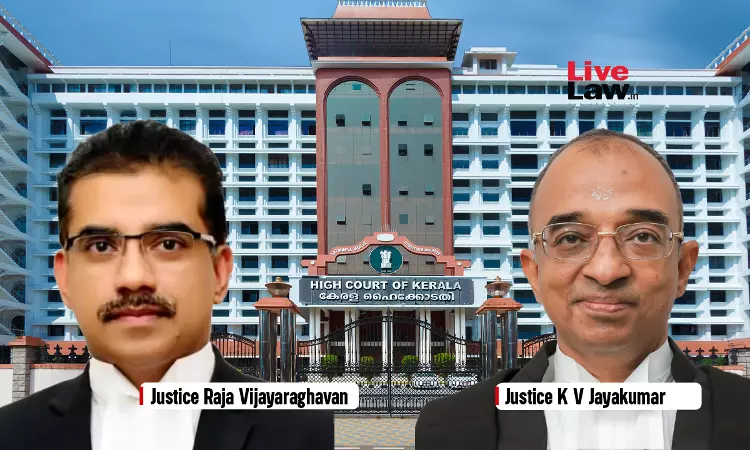
The Kerala High Court has recently (12 January) observed that a judge cannot assume the role of a Public Prosecutor by usurping into the counsel's powers.The observation was made by a division bench of Justice Raja Vijayaraghavan V and Justice K V Jayakumar while setting aside the life sentence imposed on an accused convicted of murder, holding that the entire trial stood vitiated due to...
This is a premium content
Available exclusively to
Our subscribers
Subscribe Premium 
INR 1099+GST
Your support helps us to bring you more content at
an affordable subscription scheme !!!
All payment options available
The Kerala High Court has recently (12 January) observed that a judge cannot assume the role of a Public Prosecutor by usurping into the counsel's powers.
The observation was made by a division bench of Justice Raja Vijayaraghavan V and Justice K V Jayakumar while setting aside the life sentence imposed on an accused convicted of murder, holding that the entire trial stood vitiated due to gross denial of the constitutional right to a fair trial.
It was further held that ineffective and inconsistent legal aid, prolonged delay, and trial judge's assumption of the role of the prosecutor struck at the root of due process guaranteed under Article 21 of the Constitution.
The bench delivered the judgment in an appeal preferred by the sole accused in a case for which the appellant stood for trial and was punished under Section 302 and 324 of the Indian Penal Code (IPC).
The prosecution case was that the appellant who was playing cards during the Onam Celebration of Royal King Arts and Sports Club, Kunnelpeedika, had stabbed a person in an altercation during the game. The incident took place in September, 2011 and the trial concluded in October 2019.
The Sessions Court convicted the appellant and sentenced him to life imprisonment and fine of Rs. 50,000.
The appeal was filed against the conviction alleging that the appellant was convicted without properly appreciating the evidence. It was also submitted that the accused was not represented by a competent lawyer for his defence and was allowed to cross-examine the crucial and material witness, thereby causing prejudice to him.
The Court also noted that the Sessions Judge examined certain witnesses in the absence of the Public Prosecutor.
“The approach of the learned Sessions Judge is illegal and unfair. It is a trite law that the court shall afford a fair opportunity to the prosecution and the defence to adduce evidence in order to substantiate their contentions. The learned Sessions Judge herself assumed the role of Public Prosecutor and took up the chief examination by herself and thereby exceeded the powers vested in the court.” Court noted.
The Court noted that by virtue of Section 165 of the Indian Evidence Act, a Judge can put questions to the witnesses to uncover the truth. "However, it is impermissible for a Judge to assume the role of a Public Prosecutor by usurping into the powers of a Public Prosecutor.” Court added.
Reliance was placed on Ram Chander v The State of Haryana [1981 KHC 626], were the Supreme Court has held that the Court must not assume the role of a prosecutor in putting questions.
The Court has also observed that the accused conducted the cross-examination without the assistance of a qualified and competent legal practitioner of either his own choice or a legal Aid Counsel appointed by the Court which has caused a great prejudice to the right of defence of the accused.
“The trial court has failed to ensure that the accused is represented by a competent lawyer to defend his case, discarding the directions issued by the Apex Court.” Court noted
The Court further noted that the Sessions Judge has recorded the evidence of the material witnesses in the absence of the accused which is in violation of Section 273 of CrPC which states that evidence must be taken in presence of the accused.
The Court has also examined the relevant provision of the Constitution of India which includes Articles 21, 22 and 39A of the Constitution and underlined the importance of the trial by a Court of Session as the Sessions Judge is empowered to impose a sentence of imprisonment for life or even capital punishment.
The Court highlighted the principles laid down by the Apex Court with respect to Fair Trial.
The Court observed that in Hussainara Khatoon and Others v Home Secretary, State of Bihar [AIR 1979 SC 1369], the Apex Court held that free legal aid is an essential and integral part of the 'reasonable, fair and just' procedure guaranteed under Article 21 of the Constitution. The Court noted that an accused person who is poor, indigent, or otherwise unable to secure legal assistance cannot be denied legal representation, when his personal liberty is at stake.
The Court further relied on other precedents including Dashwanth v State of Tamil Nadu [2025 SCC OnLine 2186], to reiterate the constitutional right afforded to an accused charged with an offence to defend himself is not illusory or imaginary and a reasonable and effective opportunity must be given to the accused to defend himself.
The Court then went on to examine the order sheet and other records of the case and noted that the case was committed to the Court of Sessions on 26.07.2012 and the judgment was pronounced on 16.10.2019. Throughout this period of more than 7 years, the accused remained in judicial custody.
Even though the proceedings dated 24.09.2012 indicated that bail was granted to the accused and the Sessions Judge ordered the issuance of the release order, the accused was produced before the Court in the subsequent date from judicial custody. There is no indication of the reason as to why he was not released from jail.
The Court has also noted that the matter was adjourned multiple times between 2012 and 2014.
It is further recorded that in July, 2014 the counsel appointed by the accused relinquished Vakalat and the accused expressed desire to conduct the case himself. Though appointment of a legal aid Counsel was offered by the Sessions Judge, it was refused by the accused.
In August 2014, a legal aid counsel was appointed by the Court who later withdrew from appearing for the accused in January, 2015. Despite the withdrawal of the counsel, summons were issued to the witness in February, 2015 without appointing a new Legal aid counsel.
The Court noted that the Sessions Judge turned down the request of the prosecution that the accused must be given competent counsel to defend the case stating that the accused repeatedly rejected the offer to appoint another Legal Aid Counsel.
The Court took note that the trial prolonged for several more years when the matter was transferred to Additional Sessions Judge - IV, Kottayam in 2016 whilst the accused continued to be in judicial custody which was extended from time to time and which finally concluded in 2019.
The Court observed that the instant case was a classic example of how a fair trial can be denied to an accused.
“The records would reveal that the accused has been in judicial custody for more than seven years in a Sessions Court as an under-trial prisoner. It is pertinent to note that he was not represented by a lawyer either of his choice or a Legal Aid Counsel during a substantial period of the said seven years…..However, the accused continued to be in judicial custody till the conclusion of the trial. The reason why the accused remained in judicial custody for more than seven years is not clear from the order sheet.” Court noted.
The Court also took note that the trial in the case was conducted in a piecemeal manner and took almost five years for the completion of trial. It observed that the objective of Section 309 Cr.PC which deals with power to postpone or adjourn proceedings is to ensure that once the trial is started, it is continued on a day-to-day basis without it being prolonged for months.
“In the instant case, the matter was adjourned for more than hundred times after the framing of charge. It appears that the reasons recorded by the learned Sessions Judge, on many occasions, are unjustifiable and not compelling.” Court noted.
Concluding that the cumulative effect of ineffective legal aid, prolonged custodial trial, and procedural improprieties rendered the conviction unsafe, the High Court set aside the judgment of the Sessions Court and ordered the immediate release of the accused.
“The accused had to face the prolonged custodial trial which was conducted in a piecemeal manner. The accused was not represented by a competent lawyer during a substantial period in the course of the trial. He had to cross examine the material witnesses (PWs.1 to 6) by himself. Numerous witnesses were examined in his absentia. The records would further reveal that the learned Sessions Judge has assumed the role of Public Prosecutor and conducted chief examination by herself in the absence of the Public Prosecutor.” Court noted.
Citing the extraordinary delay and prolonged incarceration already suffered by the accused for about fourteen years during the investigation, inquiry, trial and during the pendency of this appeal, the Court did not direct a 'denovo trial', noting that it may not be just fair and proper.
The Court thus allowed the criminal appeal by setting aside the judgment of the Additional Sessions Judge.
Case Title: Babu C G v State of Kerala
Case No: Crl. A 740/ 2020
Citation: 2026 LiveLaw (Ker) 27
Counsel for Appellant: V Vijitha
Counsel for Respondent: Neema T V (GP)
Click Here To Read/ Download Judgment
Tags

Anamika MJ
Anamika MJ is a Correspondent with LiveLaw, covering Kerala High Court

