Kerala High Court Seeks Clarification On Whether Vigilance Inquiries Against Officials Are Exempt From Disclosure Under RTI Act
Anamika MJ
28 Oct 2026 3:00 PM IST
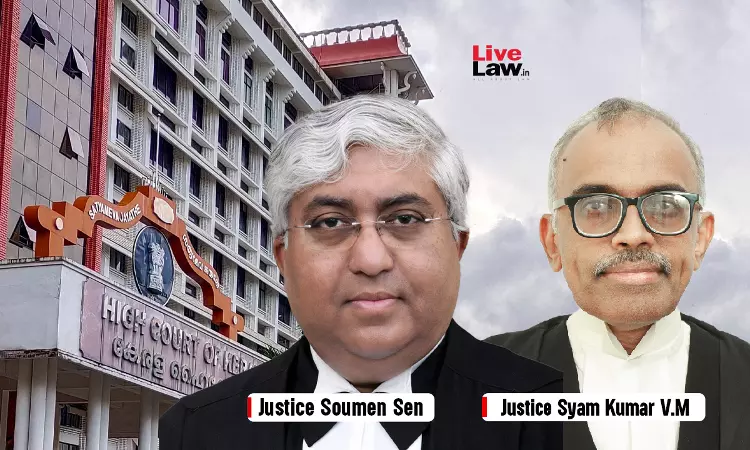
The Kerala High Court on Wednesday (28 October) sought clarification from the State on whether vigilance inquiries against officials are exempt from disclosure under RTI Act.
A Division Bench comprising Chief Justice Soumen Sen and Justice Syam Kumar V. M sought the clarification in a public interest litigation challenging the State Government's decision to bring the T1 and T2 sections of the Directorate of Vigilance and Anti-Corruption Bureau (VACB) within the ambit of an exemption from the Right to Information Act, 2005 (RTI Act).
The Section 24(4) of the RTI Act permits State Governments to exempt specified intelligence and security organisations through a notification in the Official Gazette.
By a notification dated 22 October, 2026, the State government added the T1 and T2 sections of the VACB to the list of exempted organisation under Section 24 (4) of the RTI Act.
The petitioner, in his plea submitted that the VACB is primarily a criminal investigation agency responsible for detecting, enquiring into and investigating offences under the Prevention of Corruption Act, 1988, and allied penal laws. Its principal function, according to the petition, is to investigate allegations of corruption involving public servants rather than undertake intelligence or security functions.


It is further submitted that the State Government cannot bring sections of an anti-corruption investigative agency within the exemption merely by administrative classification or nomenclature.
The petitioner also pointed out that the VACB was not included among the eight organisations originally notified as exempt under the government order dated February 7, 2006.
The petitioner has also alleged in the plea that Public Information Officers and First Appellate Authorities within the VACB have begun relying on the impugned notification to reject applications seeking information about vigilance enquiries, preliminary verifications, closure reports and sanctions for prosecution.
The petition contends that such refusals could create an excessive barrier to public scrutiny of the State's anti-corruption administration.
It argues that the RTI Act already contains specific exemptions under Section 8, including provisions protecting information whose disclosure could endanger individuals, impede an investigation or unjustifiably invade privacy.
The petitioner has thus prayed the High Court to quash the October 22 notification and declare that the T1 and T2 sections of the VACB do not qualify as intelligence and security organisations under Section 24(4) of the RTI Act.
Alternatively, the petition also seeks a declaration that the notification cannot be used to refuse information relating to the receipt, registration, verification, enquiry, investigation, closure, sanction for prosecution or outcome of complaints alleging corruption against public servants.
The petitioner has also sought directions requiring the State Government and the concerned authorities to continue treating the VACB, including its T1 and T2 sections, as subject to the RTI Act in relation to information that is not otherwise lawfully exempt from disclosure.
Further reliefs sought include directions to the Kerala State Information Commission to consider pending and future appeals and complaints concerning the VACB without relying on the impugned government order, as well as production of the administrative records and reasons underlying the government's decision.
Today, when the matter was taken up, the petitioner placed reliance on the decision of the Supreme Court in Special Police Establishment v Kamta Prasad Mishra and Ors [2026 LiveLaw (SC) 629] which held that the SPE which investigates corruption-related offences involving public servants, cannot be classified as an "intelligence and security organisation" under Section 24(4) of the RTI Act, 2005, and therefore cannot be granted blanket exemption from the Act.
The petitioners argued that the RTI exemption is applicable only for intelligence and security and not top secret branches.
It was also brought to the notice of the Court that a similar notification was rescinded by the State government in 2016 when the same was challenged before the High Court.
“As far as the vigilance enquiries against officials are concerned the public have a right to know that under the Right to Information Act. That is not something that needs to be kept in secret.” the petitioner argued.
The Court recorded the submissions and noted that the submissions show that the T1 and T2 sections are related to vigilance inquiries, intelligence inputs, and other information regarding the vigilance proceedings.
"However, at the same time, in WP(PIL) 216/ 2026 the paragraph stated that T1 and T2 sections related to vigilance inquiries, intelligence inputs, search reports and other information regarding vigilance proceedings and officials. The said averments show that a large part of it are sensitive and ….. However we need clarification from the government as to whether the information regarding Vigilance enquiry against officials comes under T1 and T2." the Court ordered.
The Court thus directed the State to file an affidavit disclosing the details of the categories coming under the section T1 and T2.
The matter is now posted after three weeks for further consideration.
Counsel for Petitioner: Amith Krishnan H, Anna Mary Mathew, Manavi Muraleedharan, Kavya K.P
Counsel for Petitioner in WP(PIL) 216/ 2026: JOse Abraham, Muraleedharan R, Sebastian JOseph A, Basil Jaison, Deepa Joseph
Counsel for Respondent: P. Sreekumar (ASGI), M. Ajay (SC - State Information Commn.)