



- Home
- /
- High Courts
- /
- Kerala High Court
- /
- Students' Right To Protest Can't Be...
Students' Right To Protest Can't Be Crushed By Punishment That Costs Them Their Academic Career: Kerala High Court
Anamika MJ
23 Nov 2026 1:10 PM IST
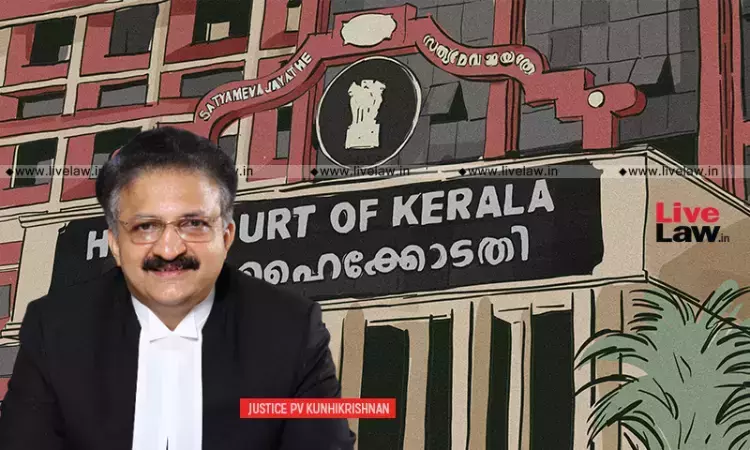
Court cited PM Modi's remarks favouring forgiveness over punishment, following recent student protests at Jantar Mantar in Delhi.
The Kerala High Court has observed that while universities may disagree with the cause of a student protest, the students' right to agitate should not be suppressed by imposing punishments that could jeopardise their academic careers.Invoking the Voltairean principle of freedom of expression, Justice P.V. Kunhikrishnan emphasised that disagreement with an opinion must be distinguished from...
This is a premium content
Available exclusively to
Our subscribers
Subscribe Premium 
INR 1099+GST
Your support helps us to bring you more content at
an affordable subscription scheme !!!
All payment options available
The Kerala High Court has observed that while universities may disagree with the cause of a student protest, the students' right to agitate should not be suppressed by imposing punishments that could jeopardise their academic careers.
Invoking the Voltairean principle of freedom of expression, Justice P.V. Kunhikrishnan emphasised that disagreement with an opinion must be distinguished from the right to express it.
The Court made these observations while disposing of a writ petition filed by 16 students of Sree Sankaracharya University of Sanskrit, Kalady, challenging their suspension following a campus protest.
"The cause of the agitation may not be acceptable to the University, but their right to agitate ought not be crushed by imposing punishment that will cost them their academic career, especially when the students have been under suspension for the last 84 days," the Court observed.
Referring to the Voltairean principle, "I disapprove of what you say, but I will defend to the death your right to say it," the Court further observed:
"You may reject an argument, criticise it rigorously or find it offensive while still opposing the suppression or persecution of the person expressing it."
The Court, however, clarified that violence has no place on university campuses and that authorities are entitled to restrict protests that turn violent.
The students had allegedly gathered on the university campus demanding an opportunity to meet the Vice-Chancellor and raise grievances concerning the functioning of the institution. Their demands reportedly included filling 27 vacant lecturer posts, providing basic infrastructure facilities, issuing printed certificates and disbursing fellowship amounts.
The protest allegedly resulted in a confrontation involving the students and police personnel, following which criminal cases were registered. The University subsequently suspended the students and initiated disciplinary proceedings against them
The Court observed that the University was entitled to take action if a protest turned violent, but the authorities should not be overly sensitive towards the slogans or opinions expressed by students.
“The students may agitate with different slogans. But it should not lead to violence. The University can definitely restrict it if it turns violent. But the authorities should not be sensitive about that.” the Court observed.
The Court acknowledged that the students might have committed mistakes. However, it emphasised that their age, status as students and future academic prospects must also be considered before imposing disciplinary consequences.
“The students might have committed mistakes. But after all, they are youngsters and students, and their future should also be considered,” the Court said.
The Court further observed that the University could disagree with the cause of the agitation, but that such disagreement could not become a justification for imposing punishment capable of destroying the students' academic careers.
The students had already remained under suspension for approximately 84 days. The Court observed that the suspension itself amounted to punishment and questioned whether that period was not sufficient.
Before concluding the judgment, Justice Kunhikrishnan referred to three instances involving political leaders to illustrate the importance of responding to student protests with restraint, understanding and forgiveness rather than punishment.
The first instance concerned former Prime Minister Dr. Manmohan Singh and a student protest at Jawaharlal Nehru University (JNU), New Delhi. Referring to a report in The Economic Times dated December 27, 2024, the Court recalled that students had raised slogans and disrupted a function attended by the then Prime Minister. Following the incident, the University issued show-cause notices to the students.
Dr. Manmohan Singh reportedly intervened and suggested that the then Vice-Chancellor adopt a lenient approach towards the students, invoking the Voltairean principle.
The second instance referred to a student protest at Jantar Mantar, Delhi, and a video uploaded by Prime Minister Narendra Modi on his official social media accounts on July 31, 2026.
The Court referred to the Prime Minister's response, in which he described the protesting students as misled children and expressed the view that showing them the right path was the responsibility of those in authority.
The third instance concerned former Kerala Chief Minister E.M.S. Namboodirippad.
Referring to an interview given by the present Speaker of the Kerala Legislative Assembly, Thiruvanchoor Radhakrishnan, the Court recounted an incident from student days of Thiruvanchoor, when a protest disrupted a function attended by the then Chief Minister, EMS at Kottayam.
The protest was so intense that the authorities reportedly had to demolish a compound wall to facilitate the Chief Minister's departure. Although the police took the protesting students into custody, E.M.S. directed them not to register a case against the students. Their grievance was reportedly resolved the following day through the Chief Minister's intervention.
Drawing attention to these instances, the Court observed that forgiveness was not a sign of weakness but an affirmation of human dignity.
“Forgiveness is not a sin; it is an affirmation of human dignity,” the Court observed.
While leaving it open to the University to initiate fresh disciplinary proceedings in accordance with law, the Court clarified that the students could not be suspended again pending any fresh enquiry, considering that they had already undergone suspension for approximately 84 days.
Further, if a fresh enquiry resulted in a finding of guilt and any punishment was contemplated, the University would have to take the earlier 84-day suspension into consideration while determining the appropriate punishment.
The Court also directed the University to conduct separate examinations for petitioners who had lost the opportunity to take their examinations owing to the suspension.
The examinations were directed to be conducted as expeditiously as possible and, in any event, within six weeks from the date of receipt of a certified copy of the judgment. The Court made it clear that any fresh disciplinary enquiry could not be cited as a reason to deny these examinations.
The Court had thus set aside the suspension order, the order constituting the enquiry committee, the enquiry report and the consequential punishment order and has directed that the petitioners be permitted to enter the University campus and attend regular classes forthwith.
Tags

Anamika MJ
Anamika MJ is a Correspondent with LiveLaw, covering Kerala High Court

