



- Home
- /
- High Courts
- /
- Kerala High Court
- /
- Kerala High Court Cancels Bail...
Kerala High Court Cancels Bail Granted To 8 Accused In Walayar Mob Lynching Case
K. Salma Jennath
21 March 2026 9:30 AM IST
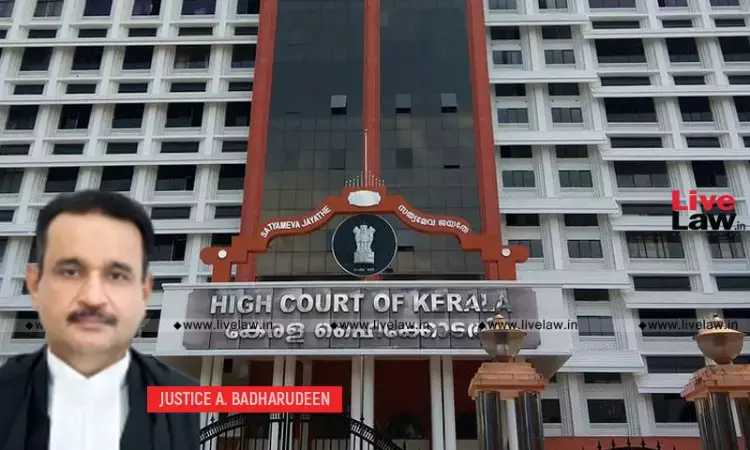
The Kerala High Court on Thursday (March 19) cancelled the bail awarded to all the accused in the Walayar mob lynching case in which Ram Narayan Bhagel, a native from Jharkhand belonging to a scheduled caste community, was brutally attacked and killed by 8 men on December 17, 2025.Justice A. Badharudeen allowed the State's appeal to cancel bail after hearing the accused, the State and the...
This is a premium content
Available exclusively to
Our subscribers
Subscribe Premium 
INR 1099+GST
Your support helps us to bring you more content at
an affordable subscription scheme !!!
All payment options available
The Kerala High Court on Thursday (March 19) cancelled the bail awarded to all the accused in the Walayar mob lynching case in which Ram Narayan Bhagel, a native from Jharkhand belonging to a scheduled caste community, was brutally attacked and killed by 8 men on December 17, 2025.
Justice A. Badharudeen allowed the State's appeal to cancel bail after hearing the accused, the State and the brother of the deceased.
The Court remarked that the Special Court granted them bail without taking note of the mandate under Section 15A of the SC/ST Prevention of Atrocities Act, which states that a victim or his dependent have a right to notice even in bail proceedings.
“issuance of notice under Section 15A(3) of the SC/ST (POA) Act, 2018, to the victim or his dependent, as the case may be, is mandatory. In the absence of notice and opportunity of hearing to the victim or his dependent, in such cases a Special Court or any other court is not empowered to take any decision in any proceedings under the SC/ST (POA) Act, 2018. However, it is shocking to note that the learned Special Judge when dealt with a serious case of murder of a member of Scheduled Caste community by mob lynching inattentively and thoughtlessly granted bail even without issuing notice to ensure mandatory hearing of the dependent of the victim in this case. This is a very serious lapse on the part of the Special Judge and the same should not have happened and the learned Special Judge shall be more vigilant hereinafter when dealing with cases of this nature,” the Court observed.
The accused are alleged to have committed the offences punishable under Section 103(2) of the BNS [Murder] and Section 3(2)(v) of the SC/ST Act [Commission of IPC offences punishable by ten years or more against a member of the SC/ST community or his property].
The Special Court had granted bail to the accused in a common order after noting that the Magistrate had already recorded the witness statements and that there is no likelihood of them being influenced at this stage of the investigation. The accused nos. 1 to 5 had completed only 43 days in custody whereas accused nos. 7 to 9 respectively completed 38 days, 35 days and 25 days in custody.
The prosecution argued that the grant of bail to the accused in a premature stage of investigation has adversely affected its progress and cancellation of bail is necessary to complete the same effectively. It was also pointed out that there was non-compliance of notice of hearing to victim's dependent as per Section 15A of the SC/ST Act.
Reliance was placed on Shobha Namdev Sonavane v. Samadhan Bajirao Sonvane wherein the Apex Court set aside the High Court order granting bail to the accused in a murder case involving offences under the SC/ST Act.
The prosecution further highlighted that six of the accused were habitual offenders, with one of them arrayed in around 15 crimes for various offences. The accused opposed the plea and contended that cancellation of bail was a harsh order especially when the order granting bail depicted reasons for the same.
The brother of the deceased also appeared and argued that the impugned order needs to be set aside since he was not given notice as per Section 15A.
The Court first considered the observation of the Special Judge and remarked the Special Judge took a view that there is no need to hear the victim or his dependent before granting bail. Therefore, it was opined that the impugned order was non-est in the eye of law and deserves to be quashed.
The Court referred to Tehseen S. Poonawalla v. Union of India and Others wherein the Supreme Court had made certain observations on the offence of mob lynching. It also considered the rigour of Section 103(2), the new provision under the BNS that replaced Section 302 IPC and observed:
“Section 103(2) of BNS, 2023 is a new provision introduced and the intent behind the legislation of this provision is to meet a situation when a murder is committed by a group of five or more persons acting in concert on the ground of race, caste or community, sex, place of birth, language, personal belief or any other similar ground each member of such group shall be punished with death or with imprisonment for life, and shall also be liable to fine. Thus the legislature intended to treat the offence under Section 103(2) of BNS, 2023 as more serious. The intention of the legislation is to avoid the peril of murder by mob lynching.”
It was further remarked that the grant of bail was done in a mechanical manner without considering the relevant legal provisions:
“It is relevant to note that the learned Special Judge granted bail, holding the view that their interrogation for the purpose of investigation is not required, in a mechanical manner, even ignoring the fact that, unlike the Code of Criminal Procedure, Section 187 of the Bharatiya Nagarik Suraksha Sanhita, 2023, provides that police custody can be given during the initial 60 days of detention in this case for the purpose of investigation. That apart, the learned Special Judge not considered the impact of Section 8(c) of the SC/ST (POA) Act, 2018, where a statutory presumption of the 'knowledge' regarding the caste identity of the victim has been specifically provided. The learned Special Judge should have provided an opportunity of hearing to the dependent of the victim and to give genuine reasons as to why the statutory provisions would not apply in the facts of this case. Thus, the learned Special Judge jumped into conclusion in a very mechanical manner, ignoring the statutory provisions, otherwise, the learned Special Judge lost sight of the statute and its provisions.”
Thus, the Court allowed the appeal and set aside the order granting bail to the accused. The bail therefore stood cancelled and the accused were directed to surrender before the jurisdictional court within three days. In the event of failure to surrender, the investigating officer is at liberty to arrest them and proceed in accordance with law, the Court clarified.
Further, it was observed that the accused can file fresh bail applications and the Special Judge can consider the same after taking into consideration the relevant statutory provisions, and providing opportunity of hearing to the dependent of the deceased.
Case No: Crl. A. 258 of 2026
Case Title: State of Kerala v. Anu and Ors.
Citation: 2026 LiveLaw (Ker) 160
Counsel for the appellant: Vipin Narayan – Sr. Public Prosecutor
Counsel for the respondents: Sooraj Krishnan K.V., C. Dheeraj Rajan, Mahesh V. Menon A.V. Ravi, E.A. Haris, Anand Kalyanakrishnan, Libin Varghese, M.A. Ahammad Saheer, Muhammed Yasil, Aagi Johny, Ifra Iqbal
Tags

K. Salma Jennath
Salma Jennath is a Principal Correspondent with LiveLaw, covering Kerala High Court

