



- Home
- /
- High Courts
- /
- Kerala High Court
- /
- 'Sheer Mockery': Kerala High Court...
'Sheer Mockery': Kerala High Court Questions Govt Failure To Curb Illegal Flags & Banners, Seeks Chief Secretary's Affidavit
Anamika MJ
1 Aug 2026 8:00 AM IST
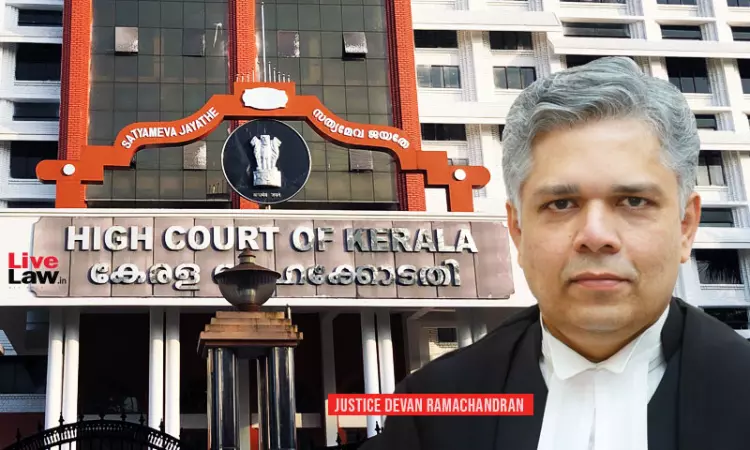
The Kerala High Court on Friday (July 31) questioned the State Government's failure to implement its directions against unauthorised flags, banners, hoardings and festoons in the State, observing that continued inaction by statutory authorities would reduce the rule of law to a "sheer mockery." Justice Devan Ramachandran thus directed the Chief Secretary to file an affidavit explaining the...
This is a premium content
Available exclusively to
Our subscribers
Subscribe Premium 
INR 1099+GST
Your support helps us to bring you more content at
an affordable subscription scheme !!!
All payment options available
The Kerala High Court on Friday (July 31) questioned the State Government's failure to implement its directions against unauthorised flags, banners, hoardings and festoons in the State, observing that continued inaction by statutory authorities would reduce the rule of law to a "sheer mockery."
Justice Devan Ramachandran thus directed the Chief Secretary to file an affidavit explaining the steps taken to ensure compliance with its previous judgment.
The Court had earlier disposed of the plea and gave directions declaring installation of unauthorized boards, banners, hoardings, flags, festoons as illegal and liable to fine and penal action.
The observations came after the Court considered a report dated 29 July 2026 submitted by learned amicus curiae Sri Harish Vasudevan, which documented extensive unauthorised installations across various parts of the State. According to the report, photographs revealed large-scale violations allegedly committed by several sections of society, including political parties, religious institutions, merchant associations and other organisations.
The Court noted that the report also referred to flags and boards erected in Kollam by the Kerala Forest Protection Staff Association, observing that such installations appeared to have been put up with a "perceived immunity."
Referring to measures adopted in neighbouring Tamil Nadu, the Court observed that the State Government there had already issued protocols, circulars and instructions to tackle similar issues. The Court remarked that it was difficult to understand why the Kerala Government had not evolved a comparable mechanism, particularly when the directions contained in the earlier judgment had been accepted in their entirety.
“This Court is aware that the Government of Tamil Nadu had already brought out protocol/ circular/ instructions .. planning on controlling the menace that we are now trying to address here. One wonders why this could not be thought out by the government particularly when the directions remain accepted in its full spirit.” Court observed.
The Court held that the matter required intervention at the highest administrative level, and hence directed the Chief Secretary to respond through an appropriate affidavit detailing the measures taken to implement the Court's directions effectively.
The Court also added that it proposed to proceed individually against Secretaries of Local Self Government Institutions, as contemplated in the original judgment, observing that continued inaction would reduce the authority of the law to "sheer mockery" if officials vested with statutory powers remained inactive despite clear obligations.
“As well as the Secretaries of the institutions are concerned, this Court proposes to initiate action against them individually as has been ordered in the judgment because otherwise, it will be sheer mockery that the authorities vested with the jurisdictions slumbers over their obligations and duties.” the Court said.
Noting that the amicus curiae's report indicated extensive violations even in Thiruvananthapuram, the State capital, the Court emphasised that the significance of the capital city made strict governmental intervention imperative.
The Court warned that stringent orders would become inevitable if violations continued in the manner presently reported.
The Court directed all Secretaries of Local Self Government Institutions to ensure that all unauthorised installations within their respective jurisdictions are removed before the next posting and to prevent any fresh installations by any class of persons in future. The Court made it clear that these directions were mandatory in nature and warned that any further violations would expose the officials concerned to proceedings, including action under the Contempt of Courts Act.
The Court also questioned the role of the Joint Directors of Urban Affairs, observing that despite specific directions in the earlier orders, widespread violations continued unabated. Remarking whether they were failing to notice the violations or were "turning a blind eye" to them, the Court cautioned that if the situation persisted, their personal presence before the Court would be required.
“That said, one wonders, in the midst of all this, what the Joint Directors of Urban Affairs are doing in spite of directions in the judgment. Is it that they are not seeing all this or are turning a blind eye to it, one wonders. They are notified that if such violations continue, their presence before this Court will be required. This is a caution without further chances.” the Court said.
With these directions, the Court adjourned the matter.
Case Title: Rahul K T v St. Stephen's Malankara Catholic Church
Case No: RP1394/ 2025 in WP(C) 22750/ 2018
Counsel for Respondents - George Varghese, A R Dileep, P J Joe Paul, Manu Sebastian, K V Sohan (State Attorney), Ashok M Cherian (Additional Advocate General), T S Shyamprasanth (Government Pleader), Vincent Joseph, Lal K Joseph, Babu Karukapadath, C N Prabhakaran, N Nandakumar Menon (Sr.), Suman Chakravarthy, M K Chandra Mohan Das, S Sreekumar, K K Chandran Pillai (Sr.), S Ambily, Namitha Nambiar, Saji Thomas, Vaniah Maria Dominic, M Meena John, Issac M Perumpillil, Santhosh P Poduval, Bindumol Joseph, B S Syamanthak, Anju Anilkumar, Prem Chand R Nair, Deepu Lal Mohan, Deepu Thankan
Amicus Curiae - Harish Vasudevan & Jacob Mathew
Tags

Anamika MJ
Anamika MJ is a Correspondent with LiveLaw, covering Kerala High Court

