



- Home
- /
- High Courts
- /
- Kerala High Court
- /
- State Must Adequately Compensate...
State Must Adequately Compensate Victims Of Wild Animal Attacks, 1980 Rules Don't Cap Quantum At ₹20K: Kerala High Court
K. Salma Jennath
31 Aug 2026 3:30 PM IST
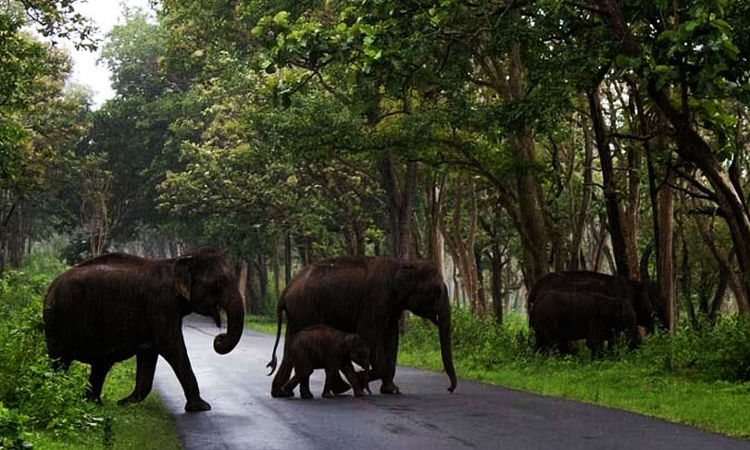
The Kerala High Court recently held that State is liable to give just compensation to victims of wild animal attacks and that the quantum of compensation payable is not limited to Rs. 20,000 as per the Kerala Rules for Payment of Compensation to Victims of Attack by Wild Animals, 1980. [2026 LiveLaw (Ker) 475]Justice Mohammed Nias C.P. dismissed a regular second appeal filed by the...
This is a premium content
Available exclusively to
Our subscribers
Subscribe Premium 
INR 1099+GST
Your support helps us to bring you more content at
an affordable subscription scheme !!!
All payment options available
The Kerala High Court recently held that State is liable to give just compensation to victims of wild animal attacks and that the quantum of compensation payable is not limited to Rs. 20,000 as per the Kerala Rules for Payment of Compensation to Victims of Attack by Wild Animals, 1980. [2026 LiveLaw (Ker) 475]
Justice Mohammed Nias C.P. dismissed a regular second appeal filed by the Forest department officials challenging concurrent findings of the courts below granting compensation in a suit for damages.
“The right to claim just and adequate compensation for such loss of life or injury is traceable to Article 21 of the Constitution and to the common law principle of strict liability. These are substantive rights which exist independent of any executive scheme. The quantum prescribed in the 1980 Rules is only the minimum payable by the State as ex gratia. It cannot fetter the power of the courts to determine or enhance the compensation to make it reasonable with the actual loss, pain and suffering of the claimant…The existence of the Rules only provides a floor. The courts are duty-bound to ensure that the compensation awarded is just, fair and reasonable and commensurate with the nature and extent of the injury suffered. The compensation must reflect the true value of the loss occasioned, for the worth of a human life cannot be reduced to a figure that fails to adequately recognise the magnitude of the loss,” the Court opined.
The Court further observed that State, being custodian of all wild animals, would be liable under strict liability principles in case of attacks:
“Even in the absence of negligence on the part of the State, it would be liable, as the liability is strict. Applying the principle of Strict liability, as the State is the deemed owner of wild animals, they will be liable for the injury or damage caused by the wild animal attack, as rightly found by this court in The State of Kerala and Ors. v. V. V. George (supra), that in the case of attack by wild animals, the liability on the part of the State and its officers is based on the doctrine of strict liability.”
The wife and children of a man who died due to a wild elephant attack at a panchayat road were the plaintiffs in a suit for damages. They contended that the negligence of the Forest department was the reason for the death of deceased, upon whose income they were fully dependent. They sought compensation of Rs. 2 lakhs but were only awarded 20,000 by the department, which led to file a suit for the balance amount.
The forest department officers opposed the suit and alleged that the incident happened to the careless of the deceased, who was intoxicated at the time. They also contended that they had taken sufficient precaution to prevent wild animals from entering private property.
The trial court found that the incident happened on a panchayat road, and not a forest road and that the death was caused due to the officers' negligence since they had not installed power fencing lines and trenches along the forest boundary. It awarded compensation of Rs. 1,78,000 after deducting Rs. 20,000 already paid.
The officers challenged the judgment before the first appellate court, which dismissed the appeal. Aggrieved, the second appeal was preferred before the High Court.
The Court noted that there was no material on record to support the submission that the deceased was walking on a forest road. It then remarked that the State is the deemed owner and custodian of wildlife and also had the duty to avoid human-wildlife conflict by taking appropriate steps.
“The State is deemed the owner and custodian of the wildlife…The State has the duty to take due care to avoid human-wildlife conflict. State has to take adequate measures to ensure that wild animals do not trespass into human habitations or agricultural properties. Therefore, it is reasonable to assert that if wild animals, being the property of the Government, cause harm to any citizen or farmers, it is the Government's duty to take responsibility for the loss, and this, in fact, is a failure of the State Government to protect the right to life guaranteed under Article 21 of the Constitution of India. Citizens are entitled to claim compensation for any damage caused by wild animals, whether or not such claims are specifically mentioned in existing Government Orders, schemes, or provisions,” it added.
Adverting to the facts of the case, the Court observed that the State breached its duty by not putting up forest fencing or trenches along the forest boundary to prevent wild animals from going inside private property. It remarked that if precautionary measures were taken, the death could have been avoided.
The Court was also of the view that the compensation awarded by the trial court was not exaggerated and the compensation could not be limited by the 1980 Rules. It thus dismissed the appeal.
Case No: R.S.A. No. 588/2011
Case Title: Wildlife Warden and Ors. v. Thadathil Saramma and Ors.
Citation: 2026 LiveLaw (Ker) 475
Counsel for the appellants: Kannan M. Nair – Government Pleader
Counsel for the respondents: P.V. Anoop, K.V. Sreeraj
Tags

K. Salma Jennath
Salma Jennath is a Principal Correspondent with LiveLaw, covering Kerala High Court

