



- Home
- /
- High Courts
- /
- Kerala High Court
- /
- Power Of Devaswom Board To Assume...
Power Of Devaswom Board To Assume Management Of A Religious Institution 'Not Unfettered': Kerala High Court
Anamika MJ
29 Aug 2026 11:00 AM IST
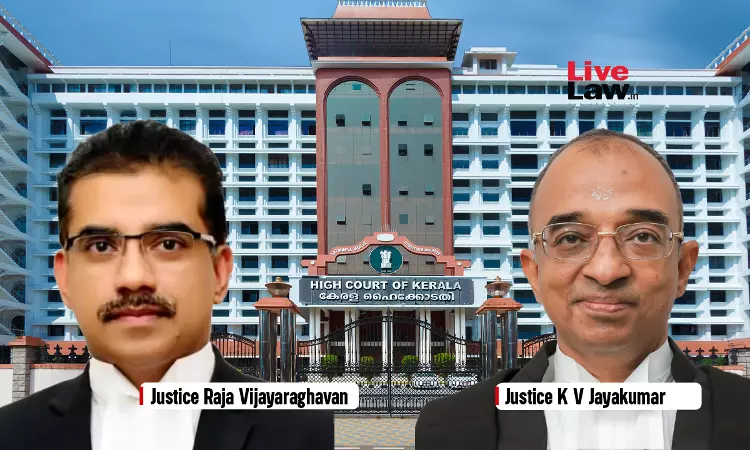
The Kerala High Court has held that the power of a Devaswom Board to assume the management of an institution under the Travancore Cochin Hindu Religious Institutions Act, 1950 is not an unfettered one and can be exercised only in the circumstances specifically contemplated in the Act.A Division Bench comprising Justice Raja Vijayaraghavan V. and Justice K. V. Jayakumar was delivering the...
This is a premium content
Available exclusively to
Our subscribers
Subscribe Premium 
INR 1099+GST
Your support helps us to bring you more content at
an affordable subscription scheme !!!
All payment options available
The Kerala High Court has held that the power of a Devaswom Board to assume the management of an institution under the Travancore Cochin Hindu Religious Institutions Act, 1950 is not an unfettered one and can be exercised only in the circumstances specifically contemplated in the Act.
A Division Bench comprising Justice Raja Vijayaraghavan V. and Justice K. V. Jayakumar was delivering the judgment in a petition challenging two communications issued by the Cochin Devaswom Board in February 2017.
By a communication dated February 28, 2017, the Deputy Secretary of the Board informed the Ernakulam Tirumala Devaswom's Managing Adhikari that a statutory enquiry would be conducted under the Travancore Cochin Hindu Religious Institutions Act and directed that the relevant records be kept ready for inspection.
The petitioner also challenged a February 21, 2017 proceeding of the Board informing it that proceedings had been initiated for taking over the management of the institution after conducting a statutory enquiry. The Devaswom sought, among other reliefs, to quash both communications and declare the proceedings unconstitutional, arbitrary and legally unsustainable.
Cochin Devasom Board maintained that the proceedings were not motivated by political considerations. It stated that a complaint submitted to the Chief Minister had been forwarded to the Revenue (Devaswom) Department and subsequently to the Cochin Devaswom Board for appropriate action. The Board also relied on a report of the Ombudsman for the Travancore and Cochin Devaswom Boards, which found no illegality or arbitrariness in the issuance of the impugned communications.
During the proceedings, the Cochin Devaswom Board's Standing Counsel submitted that the references to "assumption of management" in the 2017 communications did not mean that the Board had taken a final decision to take over the institution.
The Court was also informed that, on April 21, 2017, the President of the Cochin Devaswom Board had issued a public notice clarifying that the Board had no intention of assuming management of any institution by invoking Sections 98 and 99 of the Act.
The Board reiterated before the High Court that it did not presently intend to invoke those provisions to assume management of the Ernakulam Tirumala Devaswom.
The Division Bench observed that the Board's power to assume management of an institution could be exercised only in accordance with Sections 98A to 98E of the Act and subject to the statutory safeguards. Section 99 also contemplates an enquiry before any assumption of management.
According to the Court, the impugned communications appeared to have been issued without proper appreciation of the scope and object of Sections 98 and 99.
“The mere use of the expression "assumption of management" in the impugned communications, without reference to the statutory prerequisites, was capable of creating a genuine apprehension in the mind of the petitioner that the Board had already decided to take over the management of the institution.” the Court noted.
The Bench further pointed out that the Act provides a separate mechanism under Section 87 for conducting enquiries into the affairs of institutions. If the Board's intention was merely to conduct an enquiry, it ought to have proceeded under the appropriate statutory provision instead of issuing communications suggesting an impending takeover.
Taking note of the submission that the Board did not propose to invoke Sections 98 and 99 to assume management of the Devaswom, the Court held that the ends of justice would be served by quashing the two communications.
The Court, however, clarified that if the Cochin Devaswom Board proposes to initiate any proceedings against the Ernakulam Tirumala Devaswom in the future, such action must be strictly in accordance with the Travancore Cochin Hindu Religious Institutions Act, 1950, the statutory procedure and the law laid down by the High Court in applicable decisions.
The writ petition was accordingly disposed of.
Case Title: Ernakulam Thirumala Devaswom and Ors. v The Cochin Devaswom Board
Case No: WP(C) 14924/ 2012
Citation: 2026 LiveLaw (Ker) 466
Counsel for Petitioner: R.D. Shenoy (Sr.), R. Lakshmi Narayan (Sr.), M. Ashok Kini, R. Ranjanie
Counsel for Respondents: K.P. Sudheer, K. R Sunil (Spl. GP), Jency Susan Jose, O.V. Maniprasad, V. Sri Nath, K.R. Vinod
Tags

Anamika MJ
Anamika MJ is a Correspondent with LiveLaw, covering Kerala High Court

