



- Home
- /
- High Courts
- /
- Kerala High Court
- /
- Brothel Customer An 'Active...
Brothel Customer An 'Active Participant' In Commercial Sexual Exploitation, Liable Under Immoral Trafficking Act: Kerala High Court
K. Salma Jennath
1 Sept 2026 6:10 PM IST
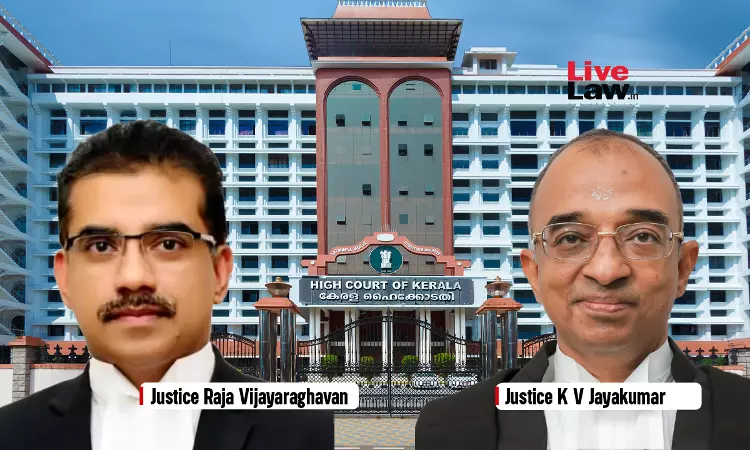
The Kerala High Court has held that a customer visiting a brothel would be criminally liable under Sections 5 and 7 of the Immoral Traffic (Prevention) Act, 1956. [2026 LiveLaw (Ker) 484]The Division Bench of Justice Raja Vijayaraghavan V. and Justice K.V. Jayakumar clarified the position of law while answering a reference made by a Single Bench in view of conflicting decisions by...
This is a premium content
Available exclusively to
Our subscribers
Subscribe Premium 
INR 1099+GST
Your support helps us to bring you more content at
an affordable subscription scheme !!!
All payment options available
The Kerala High Court has held that a customer visiting a brothel would be criminally liable under Sections 5 and 7 of the Immoral Traffic (Prevention) Act, 1956. [2026 LiveLaw (Ker) 484]
The Division Bench of Justice Raja Vijayaraghavan V. and Justice K.V. Jayakumar clarified the position of law while answering a reference made by a Single Bench in view of conflicting decisions by Single Benches.
“Sexual activity within a brothel necessarily involves two participants. While the brothel owner organises and profits from the enterprise, the customer sustains and perpetuates that enterprise by creating the demand for commercial sexual exploitation. In many cases, the sex worker is persuaded, induced, coerced or compelled by circumstances, by traffickers, or by those controlling the brothel, to continue in prostitution. The customer is therefore not entirely disconnected from the exploitative commercial activity that the statute seeks to eradicate…. The customer, by voluntarily entering the brothel and availing the services of a sex worker for consideration, becomes an active participant in the commercial transaction. The commercial exploitation sought to be prohibited by the Act is therefore sustained not merely by the brothel keeper but also by those who knowingly patronise it. In such circumstances, we find no justification to immunise one of the essential participants in the prohibited activity from criminal liability, if the statutory provisions, properly construed, bring such conduct within their ambit,” the Court reasoned.
The Division Bench observed that the decisions, including Mathew v. State of Kerala and XX v. State of Kerala, that held that the brothel customer would be liable under the Act laid down the correct legal position.
The Court, while considering the reference, looked into Sections 5 [Procuring, inducing or taking person for the sake of prostitution] and 7 [Prostitution in or in the vicinity of public places] of the Act as well as the conflicting decisions.
It then remarked that the Act is a social welfare legislation enacted to combat commercial sexual exploitation, suppress trafficking in persons for the purpose of prostitution, and prevent the commercialisation of the same.
“A brothel is not merely a place where sexual activity takes place. It is a commercial establishment created and maintained for the systematic exploitation of persons for financial gain. The sex worker is frequently reduced to an object of commerce, with the brothel keeper deriving profit from such exploitation. Equally, the commercial activity cannot exist in the absence of those who patronise it…The activities carried on in a brothel constitute commercial sexual exploitation. Such exploitation is sustained by two indispensable components, namely, the organiser who facilitates and profits from the activity, and the person who avails the services for consideration. The victim of this commercial arrangement is invariably the sex worker. If penal consequences are confined only to the brothel keeper or organiser while completely excluding the person whose demand fuels the commercial activity, the legislative object of suppressing commercial sexual exploitation would stand substantially diluted. An interpretation that weakens the efficacy of a beneficial social legislation ought to be avoided when the language of the statute reasonably admits of a construction that advances its purpose,” the Court added.
Read Also: Brothel Customer Can't Be Prosecuted Under Immoral Traffic Act: Allahabad High Court, 'No Inducement Of Prostitution': Kerala High Court Quashes Criminal Proceedings Against Brothel Customer
Case No: ICR (Crl.M.C.) No. 2 of 2026 in Crl. M.C. No. 8613 of 2022
Case Title: Noushad v. State of Kerala
Citation: 2026 LiveLaw (Ker) 484
Counsel for the petitioner: P.A. Mujeeb, Reshma R.,Roshni Philomina T.A., Athira Uthaman, Nandagopan M.C., Dhanya S. Nair
Counsel for the respondent: K. Rajeev - Senior Public Prosecutor
Tags

K. Salma Jennath
Salma Jennath is a Principal Correspondent with LiveLaw, covering Kerala High Court

