



- Home
- /
- High Courts
- /
- Madhya Pradesh High Court
- /
- Labour Legislations Are Beneficial...
Labour Legislations Are Beneficial Laws, Hyper-Technical View On Limitation Must Be Avoided: MP High Court
Srinjoy Das
3 Feb 2026 11:05 AM IST
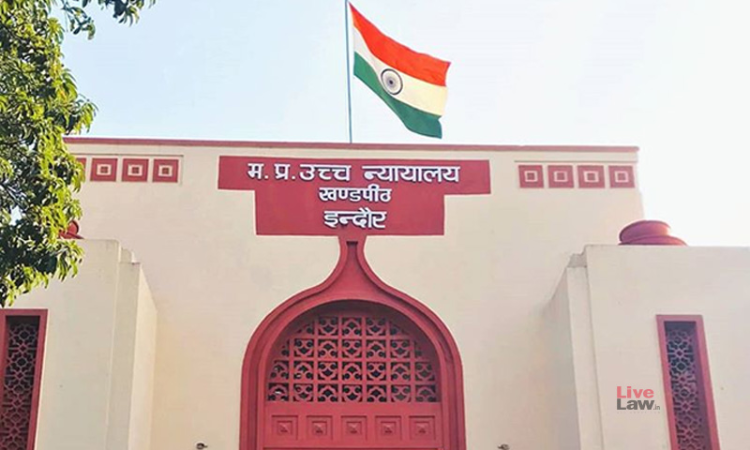
The Madhya Pradesh High Court has held that claims raised by workmen should not be dismissed on hyper-technical grounds of limitation, particularly when delays are attributable to the COVID-19 pandemic and lack of legal awareness. Emphasising the beneficial nature of labour welfare legislations, the Court dismissed a writ petition filed by Medicaps Limited challenging the remand order passed...
This is a premium content
Available exclusively to
Our subscribers
Subscribe Premium 
INR 1099+GST
Your support helps us to bring you more content at
an affordable subscription scheme !!!
All payment options available
The Madhya Pradesh High Court has held that claims raised by workmen should not be dismissed on hyper-technical grounds of limitation, particularly when delays are attributable to the COVID-19 pandemic and lack of legal awareness. Emphasising the beneficial nature of labour welfare legislations, the Court dismissed a writ petition filed by Medicaps Limited challenging the remand order passed by the Industrial Court, Indore.
The case arose from the closure of Medicaps Limited's industrial establishment on 22 November 2019. The employer contended that the closure was carried out after following due process under the Industrial Disputes Act, 1947 and the Madhya Pradesh Industrial Relations Act, 1960, and that all employees were paid their statutory dues. Certain workmen, however, challenged the closure by filing applications under the MPIR Act, which were dismissed by the Labour Court. The dismissal was later affirmed by the Industrial Court, holding the closure to be legal and valid.
Subsequently, the workmen filed a fresh application before the Labour Court claiming that their services were terminated on 22 November 2019. They pleaded that shortly thereafter the COVID-19 pandemic led to a nationwide lockdown, and that due to illiteracy and lack of legal knowledge, they were unable to pursue their remedies within the prescribed limitation period. An application seeking condonation of delay was therefore filed.
The Labour Court rejected the claim, holding that it was barred by limitation under Section 62 of the MPIR Act, which prescribes a period of one year for raising such disputes. Aggrieved by this order, the workmen approached the Industrial Court, which set aside the Labour Court's decision and condoned the delay by relying upon the Supreme Court's directions extending limitation during the COVID-19 period up to February 2022. The matter was remanded to the Labour Court for adjudication on merits.
Challenging the remand order, the employer approached the High Court contending that the delay was gross and unexplained, and that even after excluding the COVID-19 period, there remained an unexplained delay of nearly fifteen months. It was further argued that the issue of closure had already attained finality and could not be reopened indirectly.
Rejecting these submissions, the Division Bench comprising Justice Vijay Kumar Shukla and Justice Alok Awasthi observed that the Industrial Court had rightly taken a liberal view in the matter. The Court noted that the workmen had specifically pleaded illiteracy and lack of awareness of legal provisions, and that a substantial portion of the delay overlapped with the pandemic period.
The Bench reiterated that labour legislations are beneficial in nature and that courts should avoid adopting a hyper-technical approach while dealing with limitation in such cases. Reliance was placed on the Supreme Court's decision in Inder Singh v. State of Madhya Pradesh (2025 SCC OnLine SC 600), wherein it was held that a lenient view on limitation may be warranted to advance substantial justice.
Upholding the order of the Industrial Court, the High Court clarified that the employer would be at liberty to raise all available objections before the Labour Court during the fresh proceedings. The writ petition was accordingly dismissed, with no order as to costs.
Case: MEDICAPS LIMITED THROUGH FACTORY MANAGER Versus SMT. SANJU AND OTHERS
Case No: MISC. PETITION No. 315 of 2026

Srinjoy Das
Srinjoy Das is a Principal Correspondent with LiveLaw, covering the Calcutta High Court

