



- Home
- /
- High Courts
- /
- Madhya Pradesh High Court
- /
- MP High Court Dismisses PIL Against...
MP High Court Dismisses PIL Against Ladli Behna Yojana; Says Policy Decisions Cannot Be Interfered With Unless Arbitrary
Srinjoy Das
17 Feb 2026 3:15 PM IST
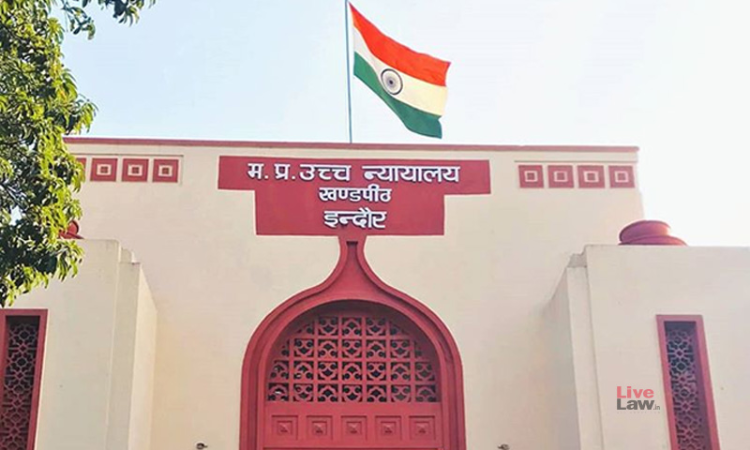
The High Court of Madhya Pradesh has dismissed a Public Interest Litigation challenging the alleged arbitrary implementation of the Mukhyamantri Ladli Behna Yojana, 2023, holding that executive policy decisions of the State are not amenable to judicial review unless shown to be unconstitutional, arbitrary, mala fide, or contrary to statute.A Division Bench comprising Justice Vijay Kumar...
This is a premium content
Available exclusively to
Our subscribers
Subscribe Premium 
INR 1099+GST
Your support helps us to bring you more content at
an affordable subscription scheme !!!
All payment options available
The High Court of Madhya Pradesh has dismissed a Public Interest Litigation challenging the alleged arbitrary implementation of the Mukhyamantri Ladli Behna Yojana, 2023, holding that executive policy decisions of the State are not amenable to judicial review unless shown to be unconstitutional, arbitrary, mala fide, or contrary to statute.
A Division Bench comprising Justice Vijay Kumar Shukla and Justice Alok Awasthi was hearing a PIL filed by Paras Saklecha assailing the stoppage of fresh registrations under the Mukhyamantri Ladli Behna Yojana with effect from 20 August 2023 and challenging the age criteria prescribed under the scheme.
The Mukhyamantri Ladli Behna Yojana was introduced on 1 March 2023 with the objective of women empowerment, improvement of health and nutrition, promotion of economic independence, and strengthening women's role in family decisions. Under Clause 6.1 of the policy, eligible women domiciled in Madhya Pradesh were entitled to receive ₹1,000 per month in their bank accounts, which was later enhanced to ₹1,250 through administrative orders. The eligibility criteria required beneficiaries to be married women (including widows, divorced and abandoned women) between 23 and 60 years of age. Subsequently, by order dated 19 July 2023, the minimum age was reduced to 21 years.
The petitioner contended that closure of online and offline registrations for newly eligible women, despite the scheme being of a continuing nature and having over 1.26 crore beneficiaries, was illegal, arbitrary, and discriminatory. It was argued that denying similarly placed women the benefit of the scheme amounted to hostile discrimination under Article 14 of the Constitution. The petitioner also challenged the fixation of the minimum age of 21 years and maximum age of 60 years as arbitrary and sought directions to reopen registration and extend benefits to all eligible women during the subsistence of the policy.
On the issue of maintainability, the State opposed the petition contending that the scheme was a pure policy decision and none of the aspirants or beneficiaries had approached the Court. It was argued that such executive decisions cannot be examined in a PIL.
The Court reiterated the settled principles governing judicial review of policy decisions, referring to precedents including Balco Employees Union v. Union of India, Narmada Bachao Andolan v. Union of India, State of M.P. v. Nandlal Jaiswal and Villinaur Iyarkkai Padukappu Maiyam v. Union of India. The Bench observed that courts do not interfere with economic or policy decisions merely on the ground of disagreement with their wisdom and that judicial review is confined to examining legality.
Relying on Delhi Development Authority v. Joint Action Committee, Allottee SFS Flats, the Court noted that policy decisions may be interfered with only if they are unconstitutional, dehors statutory provisions, beyond delegated powers, or contrary to statutory or larger policy.
Applying these principles, the Bench held that the decision to fix the date of commencement and closure of registrations under the scheme squarely falls within the domain of the State Government. The Court found no arbitrariness in the stoppage of fresh registrations. It further held that prescribing minimum and maximum age limits is also within the State's policy domain and, considering the nature of the scheme, did not suffer from arbitrariness.
As regards the grievance that the promised enhancement of the scheme amount was not implemented, the Court declined to examine the issue at the instance of the petitioner, who was admittedly neither an aspirant nor a beneficiary, holding that such a matter could not be agitated in a PIL.
Concluding that the case did not fall within the limited grounds warranting judicial interference with executive policy, the Court held that no case was made out for entertaining the PIL and accordingly dismissed the petition without costs.
Case Title: Paras Saklecha v. State of Madhya Pradesh & Ors.
Case Number: Writ Petition No. 49798 of 2025

Srinjoy Das
Srinjoy Das is a Principal Correspondent with LiveLaw, covering the Calcutta High Court

