



- Home
- /
- High Courts
- /
- Madhya Pradesh High Court
- /
- MP High Court Allows Consideration...
MP High Court Allows Consideration Of Subsequent Compassionate Appointment Application After Cancellation Of Family Member's Appointment
Srinjoy Das
5 Feb 2026 3:30 PM IST
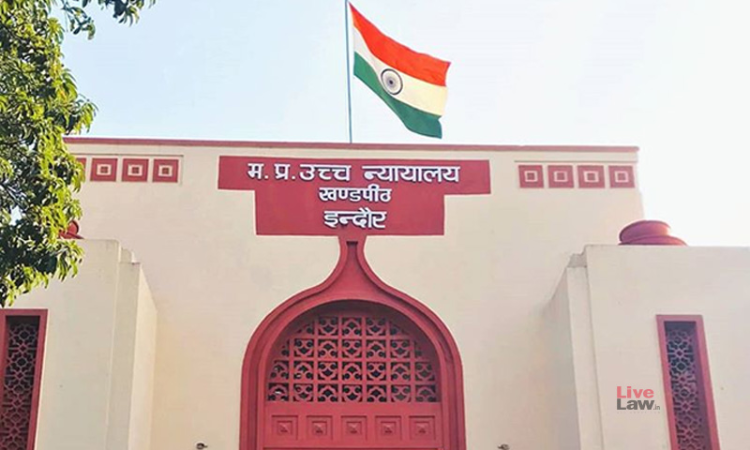
The Madhya Pradesh High Court, Indore, quashed an order rejecting the petitioner's claim for compassionate appointment and directed the competent authority to reconsider her application in accordance with the Compassionate Appointment Policy, 2008. The petitioner challenged the communication dated 30.10.2023, which had denied her claim on the grounds of alleged ineligibility under Clauses...
This is a premium content
Available exclusively to
Our subscribers
Subscribe Premium 
INR 1099+GST
Your support helps us to bring you more content at
an affordable subscription scheme !!!
All payment options available
The Madhya Pradesh High Court, Indore, quashed an order rejecting the petitioner's claim for compassionate appointment and directed the competent authority to reconsider her application in accordance with the Compassionate Appointment Policy, 2008. The petitioner challenged the communication dated 30.10.2023, which had denied her claim on the grounds of alleged ineligibility under Clauses 3, 13.1, and 13.2 of the policy. The Court observed that the rejection was arbitrary and legally unsustainable.
The factual matrix of the case shows that Priyanka's father, Late Shri Sitaram Pandey, was employed as a Revenue Inspector in the respondent department and died in service on 10.12.2010, leaving behind his widow, a son, and two daughters. Following his death, Priyanka's brother, Shri Sanjeev Pandey, applied for a compassionate appointment in January 2011 and submitted all relevant documents. After scrutiny, he was called for training for the post of Patwari in June 2014.
However, during the course of verification, two prior criminal cases under Section 13 of the Gambling Act from 2008 and 2009 were discovered against him, in which he had been held guilty and fined. Consequently, the authorities canceled his compassionate appointment through an order dated 08.01.2015. Shri Sanjeev Pandey then filed a writ petition challenging the cancellation, which remained pending for several years and was ultimately withdrawn on 02.05.2023. The withdrawal was made on the assurance that the petitioner's application for compassionate appointment would be considered by the authorities.
Subsequently, Priyanka Pandey submitted her own application for compassionate appointment on 01.10.2016. Despite her application being filed well within the seven-year period stipulated under Clause 3 of the policy, it was rejected through the impugned communication dated 30.10.2023. The authorities contended that Clauses 13.1 and 13.2 barred reappointment or transfer of compassionate appointments once such a post had already been granted to a family member. The petitioner argued that these provisions were inapplicable as no family member had ultimately been appointed, and the delay in consideration of her application was attributable solely to procedural lapses by the authorities.
The High Court held that the rejection was legally untenable. It emphasized that Clause 3 of the policy, which requires compassionate appointments to be considered within seven years from the death of the employee, was satisfied as Priyanka's application was filed well within the prescribed period. Clauses 13.1 and 13.2, which prevent reappointment or transfer of a compassionate post once granted, were clearly inapplicable in the present facts, as no appointment was ever finalized for her brother or any other family member. The Court noted that the procedural delay, including the failure to complete the mandatory police verification before deputing her brother for training, was attributable entirely to the authorities, not the petitioner or her family.
In reaching its decision, the Court relied on established Supreme Court precedents, including Sushma Gosain v. Union of India (1989), Umesh Kumar Nagpal v. State of Haryana (1994), and Haryana State Electricity Board v. Hakim Singh (1997), among others. The Court reiterated that compassionate appointment is intended to mitigate sudden financial hardship caused by the untimely death of a breadwinner and is not a source of recruitment or a vested right. It emphasized that claims cannot be denied on technical grounds when the purpose of the policy is to provide immediate relief to a family in distress.
Accordingly, the Court quashed the impugned communication dated 30.10.2023 and directed the competent authority to consider Priyanka Pandey's application afresh, strictly in accordance with the policy and in light of the observations made by the Court. Compliance with the order was directed to be completed within 60 days from the receipt of a certified copy of the judgment. The Court further clarified that the petitioner's claim must be adjudicated on merit, taking into account the immediate financial distress faced by the family.
Case: PRIYANKA PANDEY Versus THE STATE OF MADHYA PRADESH AND OTHERS
Case No: WRIT PETITION No.31332 of 2023

Srinjoy Das
Srinjoy Das is a Principal Correspondent with LiveLaw, covering the Calcutta High Court

