



- Home
- /
- High Courts
- /
- Madras High Court
- /
- Father Lacking Moral Support From...
Father Lacking Moral Support From Son Who Acquires His Property Can't Claim Maintenance U/S 125 CrPC Unless Destitute: Madras High Court
Upasana Sajeev
18 Sept 2026 10:00 AM IST
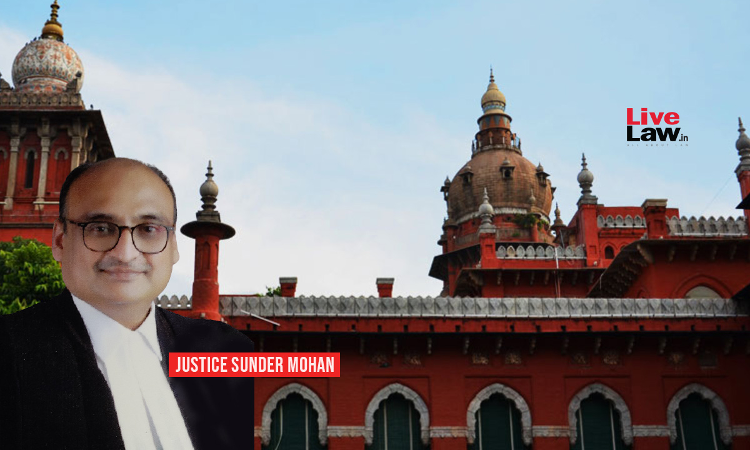
The Madras High Court recently held that a son failing to support his father after obtaining his self-acquired property by itself was not a ground to claim maintenance under Section 125 of CrPC when the father is not living in vagrancy or destitution. [2026 LiveLaw (Mad) 449] “This is certainly a hard case when the son is accused of obtaining the self-acquired property of a father by...
This is a premium content
Available exclusively to
Our subscribers
Subscribe Premium 
INR 1099+GST
Your support helps us to bring you more content at
an affordable subscription scheme !!!
All payment options available
The Madras High Court recently held that a son failing to support his father after obtaining his self-acquired property by itself was not a ground to claim maintenance under Section 125 of CrPC when the father is not living in vagrancy or destitution. [2026 LiveLaw (Mad) 449]
“This is certainly a hard case when the son is accused of obtaining the self-acquired property of a father by a settlement and had not given the father any moral support. But, that does not entitle the father to claim maintenance under Section 125 of the Cr.P.C. unless he satisfies the conditions provided…These statements in the affidavit have been made only to make a claim under Section 125 of the Cr.P.C., which cannot be countenanced,” the court observed.
Justice Sunder Mohan observed that though one might sympathise with the father for the broken relationship with the children, he could not claim maintenance under Section 125 of CrPC unless the conditions were satisfied. The court said that no amount to money could compensate for the lack of moral or family support that a person is entitled to in told age.
“Though one would sympathise with the respondent for whatever that has happened in his relationship with his children, this Court is unable to subscribe to the view taken by the Family Court that he has to be compensated financially for that purpose. No amount of money can compensate for the lack of moral or the family support that a person is entitled to at his old age. This Court only can hope and trust that the good sense prevails upon the parties and they sort out the issues to ensure that the relationship between the father and the son is maintained as it is supposed to be,” the court said.
The court was hearing a revision petition filed by the son against the order of the Family Court, directing him to pay a monthly maintenance of Rs 75,000 to the father.
The father had moved the family court seeking maintenance, claiming that he was 80 years old and unable to maintain himself. The father had submitted that he was involved in the business of manufacturing and sale of household appliances and goods, computers, etc and was running a successful business. He submitted that he had provided good education to the kids, including the son and had given 50% share in the business to the son.
The father had submitted that he had purchased a flat in Perambur and shifted there along with the son and his family. He alleged that the son, in collusion with his wife, had deceived him and made him execute a settlement deed, after which the son's attitude changed and, taking advantage of the father's sickness, the son defrauded him. It was argued that the son had stopped paying property tax, electricity bills, etc. of the apartment and since the father did not have any source of income, he was unable to maintain himself.
The son, on the other hand, had argued that the father had subjected the family to ill-treatment and had extra-marital affairs. He submitted that though the father had settled the property in the son's name, retaining a life interest, he later sought to cancel the deed and had approached the authorities under the Maintenance and Welfare of Parents and Senior Citizens Act. However, since he failed, he had filed the maintenance case as an afterthought.
The son also argued that the father earned substantial income from rent and proprietorship concerns. The son stated that the father had fixed deposits to the tune of Rs 10 Lakh. It was also pointed out that the father had gifted money to his grandchildren. Further, the son argued that the father's income tax challan would show that he had earned business income and paid income tax of Rs 52,728.
The son also pointed out that the father had filed two affidavits. In the first affidavit, he claimed that he did not have any property and had executed a will with respect to all properties. In the second affidavit, however, he had admitted that he received rental income but had not disclosed the income he was getting from commercial properties. He thus argued that the father had not approached the court with clean hands.
Ater going through the records, the court opined that the present plea was filed only because the father had failed in his attempt to cancel the settlement deed. The court also noted that the father was living in the flats in which he retained life interest. The court noted that the father was earning income from the shops owned by him, was earning business income and had even given substantial money to the grandchildren. The court thus concluded that the father was not living in vagrancy or destitution.
The court noted that though the facts in the case were disturbing, it was not a reason to interpret the law differently. The court highlighted that it had to administer justice according to law and not according to moral values, equitable principles and sentimental considerations.
Thus, the court noted that the ground on which the family court had granted maintenance could not be accepted. The court thus allowed the revision and set aside the family court's order. However, the court added that if any maintenance amount had been paid, the same shall not be recovered.
Counsel for Petitioner: Mr, P. R. Raman, Senior Counsel for Mr. M. Aravindan
Counsel for Respondent: M/s. Rohini Ravikumar
Case Title: Suraj Goyal v CM Goyal
Citation: 2026 LiveLaw (Mad) 449
Case No: CRL RC No. 97 of 2026
Upasana Sajeev
Upasana Sajeev is a Principal Correspondent with LiveLaw, covering Madras High Court

