



- Home
- /
- High Courts
- /
- Madras High Court
- /
- Madras High Court Disapproves Of...
Madras High Court Disapproves Of Tamil Nadu Police Claim That Accused May Abscond Because He's 'North Indian'
Upasana Sajeev
12 Oct 2026 7:36 PM IST
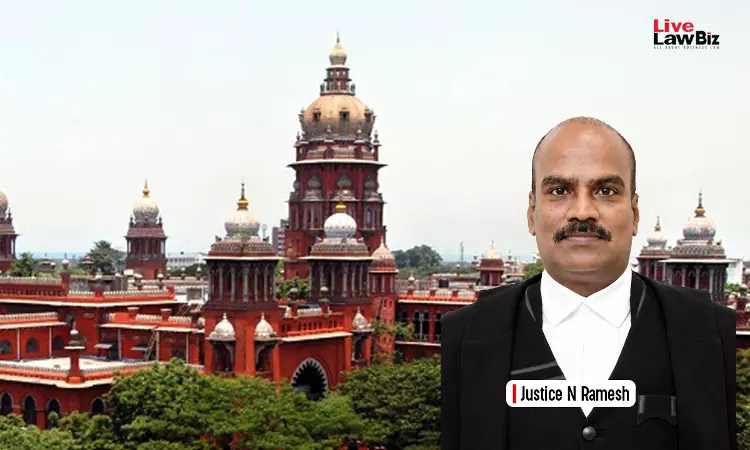
A person's place of origin is not a ground for apprehending that he will flee, Court said.
The Madras High Court recently remarked that the police cannot object to the bail of a person, arguing that he will abscond as he is a North Indian. [2026 LiveLaw (Mad) 497] Justice N Ramesh remarked that a person's place of origin is not a ground to apprehend that he would flee. “The averment that the petitioner is likely to abscond because he is "a North Indian" is not...
This is a premium content
Available exclusively to
Our subscribers
Subscribe Premium 
INR 1099+GST
Your support helps us to bring you more content at
an affordable subscription scheme !!!
All payment options available
The Madras High Court recently remarked that the police cannot object to the bail of a person, arguing that he will abscond as he is a North Indian. [2026 LiveLaw (Mad) 497]
Justice N Ramesh remarked that a person's place of origin is not a ground to apprehend that he would flee.
“The averment that the petitioner is likely to abscond because he is "a North Indian" is not appreciated. A person's place of origin is not a ground for apprehending that he will flee. The petitioner has lived and worked in Chennai for more than two decades. Such an averment ought not to appear in an affidavit sworn by a police officer,” the court observed.
The court was hearing the bail plea of a man booked in a cheating case.
FIITJEE Limited had conducted an integrated coaching for students preparing for JEE and NEET examinations in association with Suguna PIP School in Coimbatore. The parents had paid a refundable caution deposit of Rs 1,00,000 on the assurance that it would be returned within 60 days of completion of the course. Since the parents were not refunded the caution deposit, a case was registered based on a complaint by one of the parents. The case against the petitioner was that he had signed the agreement on behalf of FIITJEE with the school, as its Regional Managing Partner.
The petitioner argued that he was not named in the FIR. He argued that he was only an employee of FIITJEE and not its director or shareholder, and none of the money reached him. It was also argued that no grounds of arrest were furnished to him and only a printed arrest memo, in Tamil, was supplied to him, which he could not read. The petitioner also submitted that he was an amputee with 80% permanent disability and his prosthetics had been damaged in prison.
The State resisted the bail plea and submitted that the acts of the parties had caused Rs 2.62 crore loss to the parents. It was also submitted that the petitioner had signed on behalf of the company. It was also submitted that though the arrest memo was prepared in Tamil, its content had been explained in English, after which the petitioner had signed the same.
The State had also claimed that the investigation was at a budding stage and that the petitioner, being a north Indian, was likely to abscond.
The court disagreed with such a contention by the police and remarked that a person's original is not a ground to make such apprehension.
The court also noted that the man was not supplied with a written ground of arrest but only a printed proforma in Tamil, which did not contain the details of the allegations against him.
Thus, noting that the arrest, made without furnishing the grounds of arrest, was vitiated, the court was inclined to grant bail with conditions and ordered accordingly.

Upasana Sajeev
Upasana Sajeev is a Principal Correspondent with LiveLaw, covering Madras High Court

