



- Home
- /
- High Courts
- /
- Madras High Court
- /
- Can We Blame Citizens For Acting On...
Can We Blame Citizens For Acting On Their Own When Official Machinery Fails? Madras High Court On Villagers Removing Illegally Installed Pipes
Upasana Sajeev
10 Oct 2026 9:56 AM IST
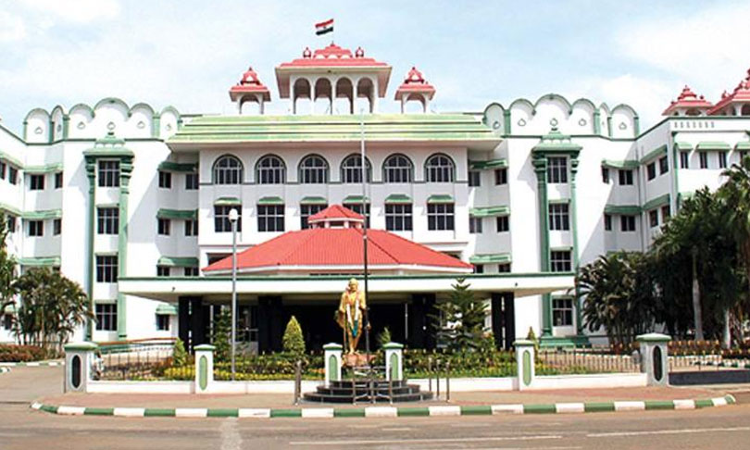
For how long should citizens wait, the Court asked.
The Madras High Court recently directed the trial court to consider the bail pleas of two men who had damaged a pipe that was illegally installed by a private entity, without any permission from any authority. The bench of Justice GR Swaminathan and Justice B Pugalendhi noted that the villagers had damaged an illegal installation when the administration had failed to take action. While...
This is a premium content
Available exclusively to
Our subscribers
Subscribe Premium 
INR 1099+GST
Your support helps us to bring you more content at
an affordable subscription scheme !!!
All payment options available
The Madras High Court recently directed the trial court to consider the bail pleas of two men who had damaged a pipe that was illegally installed by a private entity, without any permission from any authority.
The bench of Justice GR Swaminathan and Justice B Pugalendhi noted that the villagers had damaged an illegal installation when the administration had failed to take action. While the court admitted that the action of the villagers could not be condoned, it wondered how the villagers could be blamed for acting on their own when the official machinery failed to take action.
“The villagers wanted the administration to take action. It remained indifferent and silent. Left with no other option, the villagers themselves removed the culvert pipes on their own. We may not be able to condone the said act. But, for how long should they wait?. When the official machinery fails, can we blame the citizenry for acting on their own?” the court asked.
The court thus felt it was important to give relief to two individuals who were incarcerated for damaging the pipes.
The court held that though the villagers had taken law into their own hands, they had done it to stand up for the cause of ecology. Thus, the court remarked that if such persons are made to languish in jail on false allegations, it would stifle genuine activism.
“It is our duty to ensure that the system commands public confidence. The facts appearing before us necessitate invocation of our supervisory jurisdiction. Here, we find a group of rustic villagers espousing the cause of environment. They might have gone overboard. They might have taken the law in their own hands. But we cannot forget the fact that they had only damaged something that was illegally installed. We need persons with passion to stand up for the cause of ecology. If such persons are made to languish in jail on false allegations, that would stifle even genuine activism. People will hesitate to engage in field level confrontation which appears to be becoming necessary. They alone can stand between protection of ecology and corporate greed,” the court said.
The court was hearing a plea by the villagers seeking direction to the authorities to remove the encroachment made by the individual in the waterbody and to restore the natural flow of water.
It was the villagers' case that a commercial entity in the village had engaged the private respondent to install solar panels in 65 acres of patta land. In order to access the patta land, they had formed a mud road. The villagers' concern was that the mud road cuts across the water catchment area. The villagers also pointed out that the entity had installed cement pipes beneath the mud road, which was done to facilitate movement of vehicles.
The villagers pointed out that since the laying of the road and cement pipe was done without permission, they had agitated against the same for which a criminal case was registered, and two persons were arrested and put in jail.
The court enquired with the jurisdictional police and was informed that the cases had been registered for offences under Sections 191(2), 296(2), 395(2) of the BNS, 2023 and Section 3 of the Tamil Nadu Property (Prevention of Damage and Loss) Act, 1992. Two individuals were arrested and remanded to judicial custody, and their bail petition was also rejected.
The court noted that during the bail hearing, the Sessions Judge was made to believe that the two individuals had destroyed solar panels worth Rs 10 lakhs when, in fact, they had only damaged the cement pipes which were illegally installed. The court thus noted that the bail petitions were dismissed by projecting falsehood before the court.
The court thus directed the Sessions Judge to hold a special sitting on Saturday (October 10) and take up the bail plea of the individuals, and to dispose of it by afternoon. The court also directed the Assistant Public Prosecutor to make amends and place proper facts before the Sessions Court.
Counsel for Petitioners: Mr. K. Navaneetharaja
Counsel for Respondents: Ms. M. R. Priyanka Jothi Government Advocate, Mr. A. Shanmugam Government Advocate, Mr. S. Srinivasa Raghavan Government Advocate, Mr. I. Murugesan Government Advocate

Upasana Sajeev
Upasana Sajeev is a Principal Correspondent with LiveLaw, covering Madras High Court

