



- Home
- /
- High Courts
- /
- Madras High Court
- /
- DNA Test Can't Be Ordered To Prove...
DNA Test Can't Be Ordered To Prove Bigamy When Paternity Is Not Directly In Issue: Madras High Court
Upasana Sajeev
17 Aug 2026 2:21 PM IST
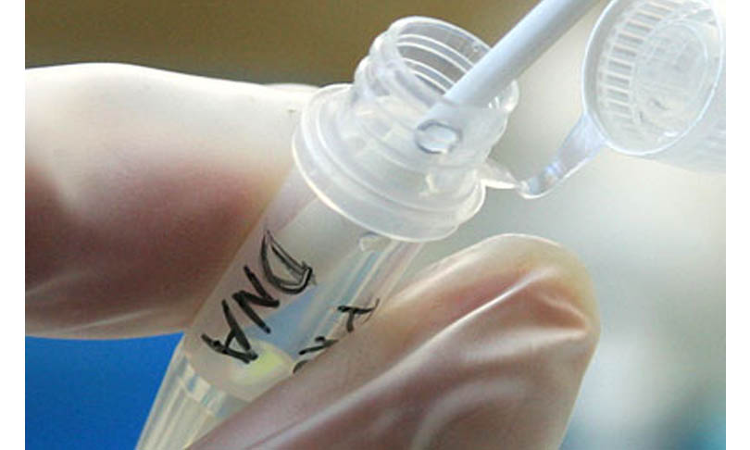
The Madras High Court recently held that a DNA test for paternity of the child does not have any bearing in determining the offence of bigamy. [2026 LiveLaw (Mad) 390] Justice Momhammed Shaffiq held that a DNA test could be ordered only when there is an eminent need for the same. The court added that the offence of bigamy was not one warranting a DNA analysis. “From a reading of...
This is a premium content
Available exclusively to
Our subscribers
Subscribe Premium 
INR 1099+GST
Your support helps us to bring you more content at
an affordable subscription scheme !!!
All payment options available
The Madras High Court recently held that a DNA test for paternity of the child does not have any bearing in determining the offence of bigamy. [2026 LiveLaw (Mad) 390]
Justice Momhammed Shaffiq held that a DNA test could be ordered only when there is an eminent need for the same. The court added that the offence of bigamy was not one warranting a DNA analysis.
“From a reading of the above judgment, it is clear that before a Court directs or orders a DNA test, it must be shown that the result of the DNA test is directly in issue and, more importantly, that there is an “eminent need” to order such a test. If the above test is applied to the case on hand, keeping in view the essential ingredients of Sections 494 and 495 of IPC, there is no doubt in my mind that the DNA test or the paternity of the child would have no bearing in determining the alleged offences under Sections 494 and 495 of IPC. Direction for DNA testing, by the Trial Courts rests upon the fundamental misapprehension of both statutory framework and constitutional safeguards. The offence alleged, falling under Sections 495 of IPC is neither of nature nor of a circumstance that warrant recourse to DNA analysis,” the court said.
The court was hearing a plea by a man challenging the order of the Additional Mahila Court allowing a petition by the prosecution/defacto complainant seeking to subject the man and their minor child to DNA testing.
The man had married the de facto complainant in January 2011 and through the wedlock, a male child was born on June 2012. Later, the de facto complainant came to know that the man had suppressed his subsisting first marriage and fraudulently induced her to marry him. The complainant thus filed a private complaint before the Magistrate alleging that the man had dishonestly obtained money and property from her.
Based on the Magistrate's directions, an FIR was registered for offences under Section 495, 420 read with Section 418 and 468 of the IPC. A final report was filed and the case was pending before the Additional Mahila Court.
During the trial, while cross-examining the complainant, the man alleged that he was not the biological father of the minor child and that the complainant woman had earlier married another man. Based on this, the prosecution filed an application to conduct a DNA test, which was allowed by the trial judge. Against this, the present criminal revision plea was filed.
The man argued that the trial judge's argument was without jurisdiction and mechanically passed. He argued that that the DNA test was sought based on some suggestions during cross-examination and such suggestions, by themselves, could not constitute sufficient grounds to compel an accused to undergo DNA testing.
The prosecution however argued that the DNA test had become necessary in view of the issues which arose during the cross-examination.
The court noted that for prove an offence under Section 495 of the IPC, it must be proved that the accused had committed the offence of bigamy and that the accused should have concealed the details of his former marriage from the person with whom he had contracted the subsequent marriage.
Discussing the decisions of the Supreme Court, the court noted that even in cases where DNA test was a mode to establish an essential element, it could be directed only after exhausting all other remedies and only as a last resort.
In the present case, the court noted that the offence was of bigamy and paternity was not an issue in the case. The court thus noted that the direction for DNA test suffered from misdirection of law.
Thus, noting that the order of the trial court was devoid of any merits, the court set aside the same.
Counsel for Petitioner: Mr. M. Mathan Karthick
Counsel for Respondent: Mr. A. Thiruvadi Kumar Additional Public Prosecutor
Case Title: M v Government of Tamil Nadu
Citation: 2026 LiveLaw (Mad) 390
Case No: Crl RC (MD) No.17 of 2026

Upasana Sajeev
Upasana Sajeev is a Principal Correspondent with LiveLaw, covering Madras High Court

