



- Home
- /
- High Courts
- /
- Madras High Court
- /
- Content Of Protest None Of Police's...
Content Of Protest None Of Police's Concern, Must Give Protection Unless It Falls Under Article 19(2) Restrictions: Madras High Court Remarks
Upasana Sajeev
17 Aug 2026 3:22 PM IST
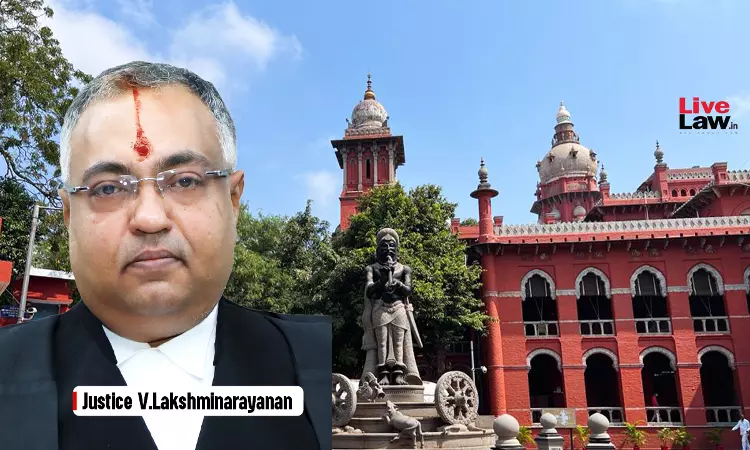
The Madras High Court, on Monday (August 17), orally remarked that the police should not be concerned with the content of a protest and are bound to protect it, as long as it doesn't fall under Article 19(2) of the Constitution, which permits reasonable restrictions. The comments were made by Justice V Lakshminarayanan while hearing a plea by the Dravida Kazhagam party, against the...
This is a premium content
Available exclusively to
Our subscribers
Subscribe Premium 
INR 1099+GST
Your support helps us to bring you more content at
an affordable subscription scheme !!!
All payment options available
The Madras High Court, on Monday (August 17), orally remarked that the police should not be concerned with the content of a protest and are bound to protect it, as long as it doesn't fall under Article 19(2) of the Constitution, which permits reasonable restrictions.
The comments were made by Justice V Lakshminarayanan while hearing a plea by the Dravida Kazhagam party, against the State's refusal to grant permission for a bike rally against the NEET and EWS reservations.
When the matter came up for hearing, State Public Prosecutor John Sathyan informed the court that the State was not against the principles for which the rally was being carried out. The prosecutor also informed the court that the State had even passed a resolution in the Assembly against NEET. However, when the prosecutor raised concern about the issue of EWS reservation being taken up by the party in the bike rally, the court orally remarked that the State should not be concerned with the content of the protest.
“Content of the protest is none of the police's concern. Tomorrow they might want to protest for Hormus. Your job is to give protection. As long as it doesn't fall under Article 19(2), you've to give permission,” the court orally remarked.
To this, the prosecutor submitted that the State stood by whatever the party was protesting for. He added that the State was only seeking details with respect to the venue of the rally, number of bikes involved, route details etc. The prosecutor submitted that such details were necessary to provide bandobast for the rally. He added that upon receiving a fresh application with these details, the state was willing to consider the same and grant permission.
The court then directed the party to furnish the details by tomorrow and adjourned the plea.
In the previous hearing, the court had questioned the State on why it could not permit the bike rally. The court had orally remarked that the organisation was only expressing its right by riding the bike and not indulging in any anti-social activities. When the State argued that there were chances of untoward incidents happening, the judge questioned if the mighty State was pleading helplessness. The court thus orally remarked that the State should permit the bike rally and not suppress the citizens.
The party had approached the court through its Vice President Kali Poongundran after the State police denied permission for conducting the bike rally. The party argued that it had a right of speech and expression to assemble peacefully and without arms under Article 19(1)(a) and 19(1)(b) of the Constitution. Thus, the party argued that the order of denial for propagating against NEET and EWS was against the Constitution.
The party submitted that in light of recent events, it had decided to campaign against NEET and the Economically Weaker Sections (EWS) reservation in Tamil Nadu, while also advocating for the abolition of NEET.
During the previous hearing, the court had orally asked the party why it was precipitating the NEET issue. The court orally remarked that the protests in Delhi had ended recently and instead of agitating the matter further, the party could approach the Supreme Court which was already seized of the matter. The court had then directed the State to file its counter.
When the matter came up for hearing on Tuesday, the State Prosecutor objected to the bike rally. He argued that the petitioners could form a human chain if they wanted to protest against the issue. The prosecutor also argued that the NEET issue was now over, the exam had been conducted and the counselling was scheduled to take place and thus the matter had become infructuous.
To this, the judge remarked that the State cannot dictate the petitioners on how to protest. The judge also pointed out that since the NEET exams were over, the State should not have any issue with allowing the protestors to raise the issue.
Case Title: Dravidar Kazhagam v The Director General of Police and Others
Case No: WP Crl 1934 of 2026
Upasana Sajeev
Upasana Sajeev is a Principal Correspondent with LiveLaw, covering Madras High Court

