



- Home
- /
- High Courts
- /
- Madras High Court
- /
- Encroachment Can't Be Permitted On...
Encroachment Can't Be Permitted On Public Street Even If It Has Religious Character: Madras High Court
Upasana Sajeev
27 Jan 2026 10:00 AM IST
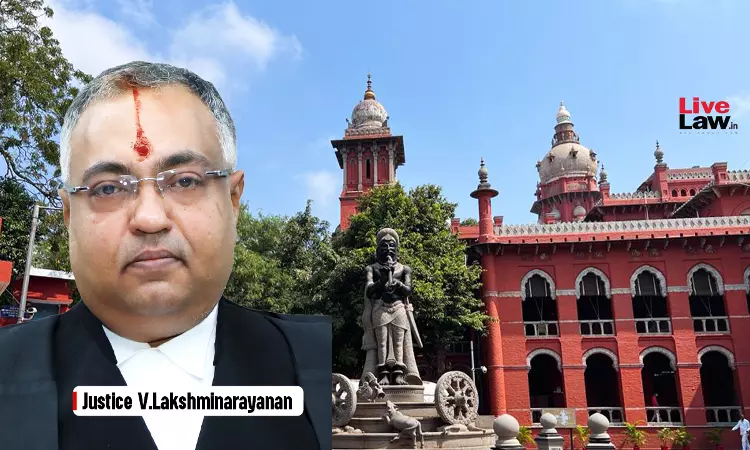
The Madras High Court recently observed that encroachment, even if having a religious character, cannot be permitted on a public place or land vested with the local body. The court added that it is the duty of the Municipal Commissioner to remove the encroachment after due notice. Justice V Lakshminarayana thus ordered the removal of a shrine of Mother Velankanni that had been installed...
This is a premium content
Available exclusively to
Our subscribers
Subscribe Premium 
INR 1099+GST
Your support helps us to bring you more content at
an affordable subscription scheme !!!
All payment options available
The Madras High Court recently observed that encroachment, even if having a religious character, cannot be permitted on a public place or land vested with the local body. The court added that it is the duty of the Municipal Commissioner to remove the encroachment after due notice.
Justice V Lakshminarayana thus ordered the removal of a shrine of Mother Velankanni that had been installed in a public road. Commenting that a road or street does not have religious character, the court noted that, irrespective of the nature of the superstructure, the encroachment had to be removed.
“A road or a street does not have any religious character. Irrespective of the nature of the superstructure, whether it is religious or irreligious, in case, it is an encroachment on a street or a public place or on a land vested to or belonging to a local body, the Commissioner is statutorily required to remove the same after due notice,” the court observed.
The court was hearing a plea by one Sarath, calling upon the Greater Chennai Corporation authorities to act upon his representation and remove a shrine of Mother Velankanni that had been installed in front of his property.
Sarath informed the court that he had bought the property in 2024, and after the purchase, while carrying out the repair works, he noticed that the shrine had been installed in a structure adjacent to the entrance of his property. Sarath argued that the structure was obstructing the main entrance of the house and causing inconvenience to the pedestrians using the public pathway. Moreover, it was also informed that electricity was being drawn illegally from a nearby house.
A private individual also got himself impleaded in the plea and submitted that he had installed the shrine in 1995 and ever since it had become a place of faith, hope, and emotional strength for a large number of devotees who were living in the locality. He also submitted that till date, there was no complaint against the shrine and argued that removing the shrine would affect the religious sentiments of devotees and breach communal harmony. He also alleged that the petition was unjust, arbitrary and motivated, as the petitioner had no issued with a similar structure erected by Hindus worshipping Lord Vinayaka.
The private individual also claimed that the petitioner had been using his property illegally, as a food court, as an illegal bar and for selling crackers and country bombs to be used during a death procession.
After perusing the materials, the court was convinced that the shrine was installed on a land that had been classified as sarkar poramboke street, on 8 sq.m of public road. The court noted that even though religious sentiments had been pleaded, the Supreme Court had observed that it was not open for any person to construct a religious structure on public road and religious feelings could not be used as a ground to resist the removal of such encroachment.
The court observed that as per Section 128 of the Local Bodies Act, it was the duty of the Commissioner to remove any encroachment from public place. The court noted that in the present case the Regional Deputy Commissioner had acted in compliance with the Act and issued notice.
Thus, noting that the structure was on public road, the court opined that the petitioner was entitled to relief and directed the authorities to proceeded with proceedings initiated by them to remove the encroachment.
With respect to the allegations that the property was being used for illegal purpose, the court made it clear that it was open for the private individual to initiate the appropriate proceedings under law. s
Counsel for Petitioner: Mr. B. Kaarvannan
Counsel for Respondent: Mr. E. C. Ramesh, Mr. R. Udaya Kumar for Mr. S. Baskar
Case Title: A Sarath v. The Commissioner and Others
Citation: 2026 LiveLaw (Mad) 43
Case No: WP No. 49192 of 2025
Tags

Upasana Sajeev
Upasana Sajeev is a Principal Correspondent with LiveLaw, covering Madras High Court

