



- Home
- /
- High Courts
- /
- Madras High Court
- /
- Peaceful Expression Cannot Be...
Peaceful Expression Cannot Be Criminalized Based On Vague Allegations: Madras High Court Quashes Case Against Hindu Munnani Workers
Upasana Sajeev
12 Dec 2025 9:00 AM IST
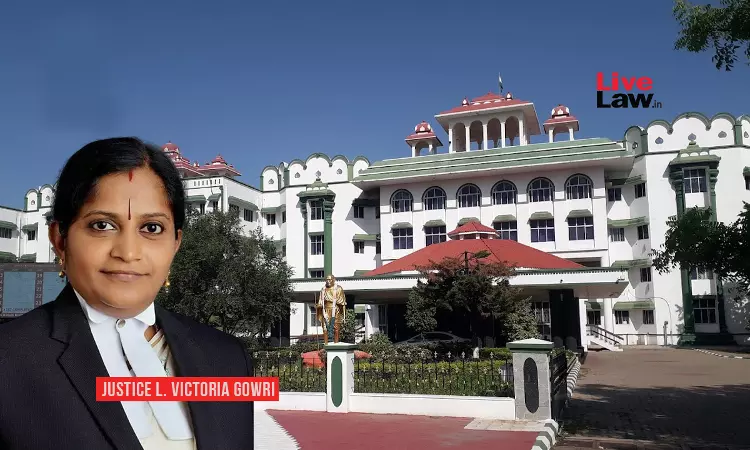
The Madras High Court has recently quashed a case registered against members of the Hindu Munnani for participating in an alleged unlawful protest. Justice Victoria Gowri noted that the FIR did not disclose any specific act against the members and merely alleged that they had participated in a protest organised by their political organisation. The court observed that criminal law...
This is a premium content
Available exclusively to
Our subscribers
Subscribe Premium 
INR 1099+GST
Your support helps us to bring you more content at
an affordable subscription scheme !!!
All payment options available
The Madras High Court has recently quashed a case registered against members of the Hindu Munnani for participating in an alleged unlawful protest.
Justice Victoria Gowri noted that the FIR did not disclose any specific act against the members and merely alleged that they had participated in a protest organised by their political organisation. The court observed that criminal law cannot be invoked on vague allegations, especially when it is to criminalise peaceful expression.
“Criminal law cannot be invoked on vague and omnibus allegations, particularly when the allegations seek to criminalise peaceful expression. The present FIR appears to have been registered mechanically and without application of mind,” the court observed.
The FIR against the petitioners was registered on August 10, 2020 alleging that they had participated in an unlawful protest. The FIR was registered for offences under Sections 145, 151, and 283 of the IPC.
The petitioners argued that the FIR was illegal and did not disclose the commission of any cognisable offence. They argued that the protest was conducted peacefully and such peaceful expression of opinion was guaranteed under Article 19(1)(a) of the Constitution.
The petitioners also argued that one the same day, the police had granted permission to a “Religious Harmony Group” to conduct their protest at the same venue, but had denied similar permission for the petitioner's party without any justification. The petitioners argued that the selective permission amounted to hostile discrimination and violated Article 14 of the Constitution.
The State objected to the plea and submitted that the investigation was in its nascent stage and that the petitioners had an effective remedy of participating in the investigation rather than seeking quashing at this stage.
The court, on perusing the FIR, noted that the ingredients for the offences alleged had not been made out. The court noted that Section 145 IPC required joining or continuing in an unlawful assembly after it had been commanded to disperse, Section 151 required knowledge or intention of committing a cognisable offence, and Section 283 IPC required actual obstruction and danger to the public. The court noted that none of the requirements were satisfied in the present case.
The court also noted that the State's action of selectively permitting protest by one group and denying it to the present party was discriminatory and violative of Article 14 of the Constitution.
Thus, noting that continuation of proceedings would be an abuse of process of law, the court exercised its inherent jurisdiction and quashed the FIR.
Counsel for Petitioner: Mr. Niranjan S.Kumar
Counsel for Respondent: Mr.S.Ravi, Additional Public Prosecutor
Case Title: Kalanithimaran and Others v. State of Tamil Nadu
Citation: 2025 LiveLaw (Mad) 483
Case No: Crl.O.P.(MD).No.21388 of 2025
Tags

Upasana Sajeev
Upasana Sajeev is a Principal Correspondent with LiveLaw, covering Madras High Court

