



- Home
- /
- High Courts
- /
- Madras High Court
- /
- Katchanatham Caste Killings: Madras...
Katchanatham Caste Killings: Madras High Court Upholds Life Sentence Of 26 Accused, Acquits One
Upasana Sajeev
7 April 2026 9:20 PM IST
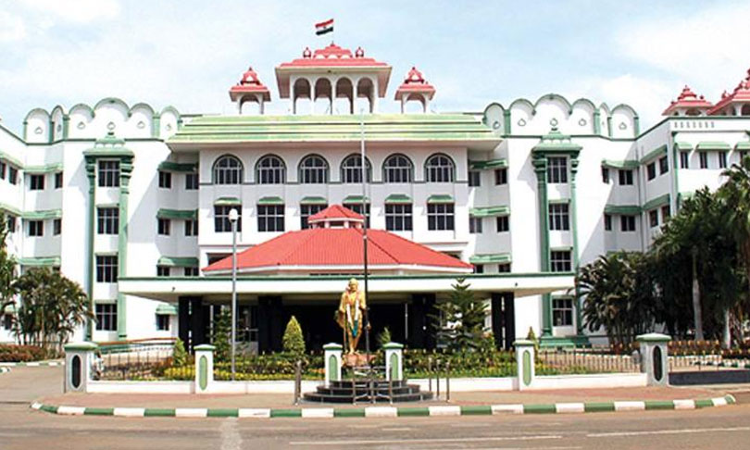
The Madras High Court has confirmed the conviction and sentence imposed on 26 men involved in the caste killings that happened in Katchnatham Village in Sivagangai District. The bench of Justice GK Ilanthiraiyan and Justice R Poornima acquitted one person, noting that his presence at the crime scene was highly improbable. The case relates to the violence that took place...
This is a premium content
Available exclusively to
Our subscribers
Subscribe Premium 
INR 1099+GST
Your support helps us to bring you more content at
an affordable subscription scheme !!!
All payment options available
The Madras High Court has confirmed the conviction and sentence imposed on 26 men involved in the caste killings that happened in Katchnatham Village in Sivagangai District.
The bench of Justice GK Ilanthiraiyan and Justice R Poornima acquitted one person, noting that his presence at the crime scene was highly improbable.
The case relates to the violence that took place in Katchnatham Village, which resulted in the death of three and left five injured. As per the prosecution, on May 25, 2018, during the annual temple festival in Karuppar Temple, ceremonial honours were exclusively accorded to the members belonging to the scheduled caste community. This decision offended the accused persons who belonged to other communities.
On May 26, 2018, one of the accused came to the Village Road where one of the deceased was standing and abused him in filthy language. A police officer, who happened to pass by at that time, took the accused into custody, and a case was registered against him. He was then released on bail. Following this, the accused conspired with others, entered the village on May 28, 2018, and attacked the villagers who belonged to the SC community. Based on complaint, a case was registered on May 29, 2018, for offences under Sections 147, 148, 294(b), 324, 307, 302, 379(NH) IPC, Section 3(3) of the TNPPDL (Prevention of Damage and Loss) Act, 1992, and Section 3(1)(r)(s), 3(2)(v-a) of the SC/ST (POA) Amendment Act, 2015 read with 149 IPC.
In August 2022, the Special Court had sentenced all 27 accused to life imprisonment. Against this, the present appeals were filed.
The appellants argued that the prosecution had not established the motive behind the crime beyond reasonable doubt. It was argued that the alleged first honour in the temple was not proved and the storyline put forth by the prosecution was unbelievable. The appellant also argued that there was no recovery of weapons from some of the accused that were allegedly involved in the offence. The appellants also argued that the earliest information is contrary to the case of the prosecution. It was thus argued that the prosecution had failed to prove conspiracy by the accused persons and had not proved the case beyond reasonable doubt.
The State, on the other hand, submitted that the evidence of eye-witnesses, corroborated by medicl and recovery evidence, clearly established the unlawful assembly by the accused with deadly weapons and the brutal violence and murder.
After perusing the materials, the court noted that the prosecution had clearly proved the motive for the crime. The court noted that all the accused persons had conspired together to commit the offence and entered the village of the victims. The court thus observed that even though some accused persons did not have specific overt act attributed to them, they could not escape from the liability.
The court further held that all the accused persons entered into a conspiracy to commit the offence against the victims' family. The court also noted that the accused were armed with deadly weapons and entered the village of the victims. Thus, the court held that the prosecution had proved the charges.
With respect to non-recovery of weapons, the court observed that in case of mob-attack, non-recovery of weapons and absence of specific overt acts against each accused was not required when the common object of the members of such unlawful assembly is proved.
“Courts do not merely function to ensure that no innocent person is punished, but also to ensure that a guilty person does not escape. Of course, minor variations in exhibits, medical, and ocular evidence cannot be ruled out. However, not every minor inconsistency would tilt the balance of justice in favor of the accused. Where the eyewitness accounts are found credible and trustworthy, other possibilities may not be accepted as conclusive,” the court observed.
However, with respect to one of the accused, the court noted that there was evidence to show that the accused was working as a cleaner in a lorry and had visited a petrol bunk, one hour after the alleged incident, which would show that he was not present in the unlawful assembly.
Thus, the court concluded that the prosecution had proved the charges against all the accused except one. The court thus confirmed the life sentence imposed on 26 accused persons but acquitted one.
Counsel for Appellant: Mr.G.Karuppasamy Pandian, Mr.P.Andiraj, Mr.S.Sivasuria Narayanan, Mr.M.Jegadeesh Pandian, Mr.V.Kathirvelu Senior Counsel, Mr.T.Gowthaman Senior Counsel for Mr.M.Dinesh Hari Sudarsan, Ms.S.Prabha, Mr.M.S.Jeyakarthik, Mr.N.Anantha Padmanabhan Senior Counsel for M/s.APN Law Associates, Mr.R.Venkatesan, Mr.G.Karuppiah, Mr.Yogesh Kannna
Counsel for Respondent: Mr.M.Ajmal Khan Additional Advocate General Assisted by Mr.T.Senthil Kumar Additional Public Prosecutor, Mr.R.Sankara Subbu for Mr.G.Bhagavath Singh, Mr.C.Mayil Vahana Rajendran
Case Title: M Suresh Kumar v. The Deputy Superintendent of Police and Others
Citation: 2026 LiveLaw (Mad) 152
Case No: Crl.A(MD)No.545 of 2022 & etc., batch cases

Upasana Sajeev
Upasana Sajeev is a Principal Correspondent with LiveLaw, covering Madras High Court

