



- Home
- /
- High Courts
- /
- Madras High Court
- /
- Manamadurai Custodial Death: Madras...
Manamadurai Custodial Death: Madras High Court Asks State To Ensure Dignified Disposal Of Mortal Remains After Family Refuses To Receive Body
Upasana Sajeev
16 Jun 2026 10:12 PM IST
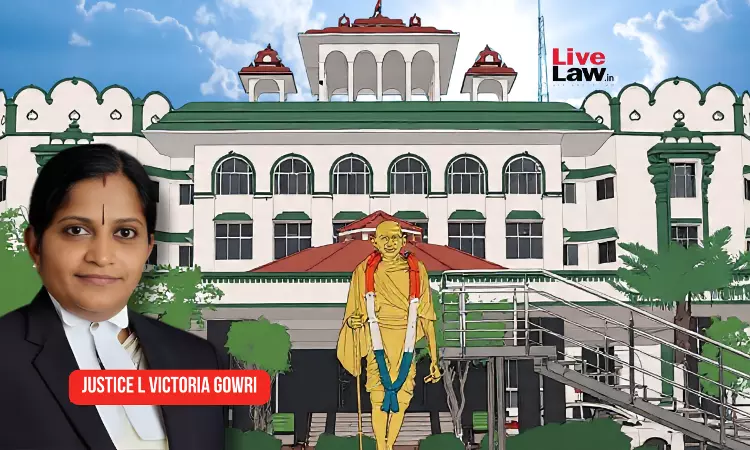
The Madras High Court has asked the District Collector of Madurai, the Commissioner of Madurai City Municipal Corporation, the Dean of Government Rajaji Hospital and other authorities to take immediate steps to ensure that the mortal remains of Akash, a 26-year-old who was allegedly killed in custodial violence, are disposed of in a dignified manner. Justice Victoria Gowri noted that...
This is a premium content
Available exclusively to
Our subscribers
Subscribe Premium 
INR 1099+GST
Your support helps us to bring you more content at
an affordable subscription scheme !!!
All payment options available
The Madras High Court has asked the District Collector of Madurai, the Commissioner of Madurai City Municipal Corporation, the Dean of Government Rajaji Hospital and other authorities to take immediate steps to ensure that the mortal remains of Akash, a 26-year-old who was allegedly killed in custodial violence, are disposed of in a dignified manner.
Justice Victoria Gowri noted that the body had been remaining unclaimed for almost 90 days and the family had not been receiving the mortal remains despite judicial orders. The court observed that when sufficient opportunity had been given to the family, the court was left with no other option but to ask the State to proceed in accordance with law.
“The refusal of the petitioner and his family to receive the body, despite sufficient opportunity and despite a specific judicial direction, leaves this Court with no alternative except to authorise the State authorities to proceed in accordance with law. Accordingly, the District Collector, Madurai District, the Commissioner, Madurai City Municipal Corporation, the Dean, Government Rajaji Hospital, Madurai, and all other competent authorities are permitted and directed to take immediate steps for the dignified disposal of the mortal remains of the deceased Akash Delison,” the court said.
The court also asked the authorities to ensure that the disposal is undertaken as per the religious faith, customs, and practices professed by Akash and his family. The court added that the District Administration should ensure adequate photographic and videographic documentation of the body is preserved as part of official record. The court added that the expenses incurred for the dignified disposal of mortal remains should be borne by the State.
The court also directed the CBCID to proceed with the investigation uninfluenced by the disposal of the body and to file the final report after completing investigation as expeditiously as possible.
The case relates to the death of a 26-year-old Akash, allegedly due to injuries suffered by him while in custody. Akash's father had approached the court previously, seeking registration of an independent criminal case under the BNS and the provisions of the SC/ST (Prevention of Atrocities) Act. The father had also sought for transferring the investigation to the CBCID and sought for court monitored investigation, to be completed within 60 days.
When the matter was previously taken up by the court, the court had directed the Director General of Police to appoint an officer not below the rank of Deputy Superintendent of Police of CB-CID to take over the investigation and proceed with the investigation by including appropriate provisions of the SC/ST Act.
The matter was again mentioned by the Additional Advocate General on June 15, who informed the court that though post mortem examination and evidence preservation had been completed, the Akash's family members had declined to receive his mortal remains for more than 3 months.
The court then ordered the family members to receive the mortal remains on the same day. However, this order remained uncompiled.
The family argued that there were serious apprehensions regarding the circumstances of Akash's death and there was a lack of transparency after the occurrence. The family submitted that they were withholding receiving the body in order to secure complete justice.
The State, on the other hand, submitted that the investigation had already been transferred to CBCID and a senior police officer had been appointed as Investigating Officer. The state also pointed out that offence had been altered to include appropriate sections under the BNS and the SC/ST (Prevention of Atrocities) Act. It was submitted that the body had remined unclaimed for more than 90 days and had undergone substantial decomposition. It was pointed out that continued preservation will not serve any purpose and dignity should be accorded to the deceased.
The court agreed with the submission and observed that while custodial death required highest degree of judicial sensitivity, dignity for the deceased should also be considered. The court noted that the right of a deceased person to have a decent burial was not just a matter of religious observance but an extension of human dignity itself.
"There can be no dispute that custodial death allegations require the highest degree of judicial sensitivity and institutional accountability. It was for precisely that reason that this Court intervened at the earliest point of time, directed appropriate alteration of offences, ensured independent investigation by CBCID and monitored the matter till the immediate concerns stood substantially addressed. Equally important, however, is the constitutional principle that dignity does not cease with death. The right to life guaranteed under Article 21 of the Constitution of India has repeatedly been interpreted to include the right to a decent and dignified treatment of mortal remains," the court said.
The court added that the mortal remains of Akash could not be indefinitely preserved as that would defeat the very dignity which was sought to be protected. Thus, the court directed the State to take appropriate steps to ensure that the mortal remains are disposed of in a dignified manner.
Counsel for Petitioner: Mr. C. M. Arumugam
Counsel for Respondents: Mr.B.Saravanan, Additional Advocate General, Assisted by M/s.Priyanka Jothi, Government Advocate(Civil Side), Mr.C.Susi Kumar, Government Advocate (Crl. side)
Case Title: A Rajeshkannan v The Home Secretary and Others
Citation: 2026 LiveLaw (Mad) 258
Case No: WP CRL (MD) No 1392 of 2026
Tags
Upasana Sajeev
Upasana Sajeev is a Principal Correspondent with LiveLaw, covering Madras High Court

