



- Home
- /
- High Courts
- /
- Madras High Court
- /
- Madras High Court Refuses To Recall...
Madras High Court Refuses To Recall Order Directing Micro/Nano Plastic Warning Labels On Water, Sugar, Salt; Says Consumer Has Right To Know
Upasana Sajeev
29 Sept 2026 6:13 PM IST
The Madras High Court has refused to review its decision mandating warning labels on plastic/PET drinking water bottles and salt/sugar packets with respect to the presence of microplastics and nanoplastics. The bench of Justice N Satish Kumar and Justice Bharatha Chakravarthy dismissed a review application filed by the Food Safety and Standards Authority of India (FSSAI), Pet...
This is a premium content
Available exclusively to
Our subscribers
Subscribe Premium 
INR 1099+GST
Your support helps us to bring you more content at
an affordable subscription scheme !!!
All payment options available
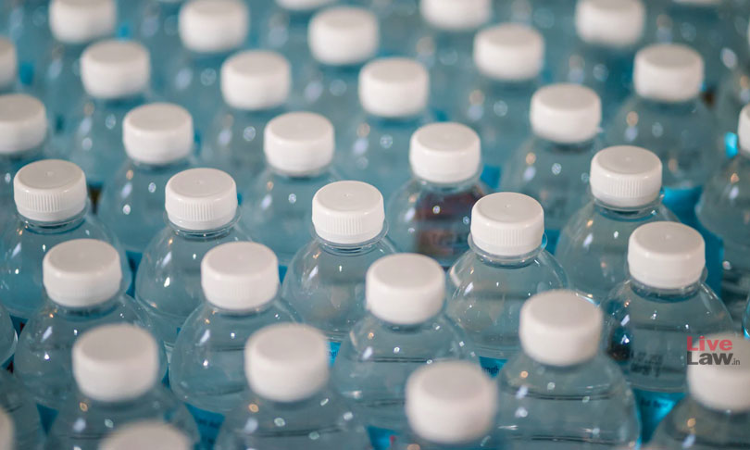
The Madras High Court has refused to review its decision mandating warning labels on plastic/PET drinking water bottles and salt/sugar packets with respect to the presence of microplastics and nanoplastics.
The bench of Justice N Satish Kumar and Justice Bharatha Chakravarthy dismissed a review application filed by the Food Safety and Standards Authority of India (FSSAI), Pet Packaging Association for Clean Environment (PACE), and the Federation of All India Packaged Drinking Water Manufacturers Association (FPDWMA).
The court noted that while studies were on the way to test how far the human body could withstand and tolerate micro/nano plastic, its adverse effects were not disputed. The court thus held that the direction was the barest essential requirement at the stage to enable the consumers to make an informed choice.
“Thus, only after considering the conspectus of facts, the order dated 06.02.2026, without causing any aspersions on safety or causing the least alarm, ordered only the barest essential minimum, namely informing the consumer that the food may contain micro/nano plastics,” the court said.
It may be noted that the bench has been specially constituted for hearing matters connected with the protection of the Western Ghats and has been issuing directions from time to time. While so, the bench noted that though single-use plastic has been banned in the State, these banned items still found their way to the Nilgiris in the form of single-use packaged water bottles, food packaging materials, eatables and other materials packed in these plastics/related items. The court noted that when these items were left in the forests, the microplastics present in them would find their way into animals which chew them.
The court also noted that this problem was not limited to animals but to humans also. The court noted that microplastics were found even in placentas of mothers. The court also took note of studies which found the presence of microplastics in drinking water samples collected from different states in the country.
Taking note of the seriousness of the situation and noting that the FSSAI had not issued any directions in this regard despite nudges from the court, the bench had directed the FSSAI to issue appropriate notification stating that all plastic/PET bottles selling water should contain the label stating that "This water may contain Micro/Nano Plastics" and similarly the sugar and salt that are sold in plastic packaged material stating that "This Sugar/Salt may contain Micro/Nano Plastics". The court had also directed the FSSAI to issue directions to all manufacturers and ensure that the direction is enforced. The parties had now sought to review this decision.
It was argued that such directions could have been issued only after further studies. It was argued that the direction was issued at a premature stage, with the potential to send shock waves among consumers and affect the business of the parties.
The parties argued that there was no conclusive or scientific proof showing that micro/nano plastic may cause harmful effects on the human body. It was argued that the studies were not final and the overall evidence to date does not show that the levels of micro/nano plastics found in food items pose a risk to human health. It was also argued that the quantity of micro/nano plastics that the human body could withstand was being tested, and no findings had been reached on the quantum.
It was also argued that though studies have found micro/nano plastics in packaged drinking water, it did not confirm whether the same was only due to packaging materials or due to sources of water and environmental factors. The parties argued that there was no requirement in any country to include such a label and the court's direction would impose additional burden on the food business operators.
The court held that micro/nano plastics have the potential to cause adverse health effects, and such potential was not denied. The court also noted that, as per studies, once the bio-non-degradable particles come inside the body, they pass through body barriers into the bloodstream and, as a contaminant, move through the blood vessels into other organs.
The court remarked that the hazard that was posed by the micro/nano plastic was identified and only the further steps remained. The court thus noted that where scientific uncertainty persists, provisional risk-management measures necessary to ensure an appropriate level of health protection had to be adopted.
The court also rejected the argument that such labelling did not exist in developed countries. The court remarked that in developed countries, even water in taps was potable and consumable but, in our country, it was unsafe. The court added that PET bottles were heavily consumed in our country and was a grave and important concern.
Thus, the court concluded that its order was a barest minimum and refused to review or recall the order.
Counsel for Applicants: Mr. AR. L. Sundaresan, ASGI for Mr. V. Chandrasekaran, SPC assisted by Mr. K. Aadhishankaran, Mr. Sathish Parasaran, Senior Counsel for Mr. Arun Karthik Mohan, Mr. Harishankar for Ms. Anusha Peri
Amici Curiae: Mr. C. Mohan, Mr. T. Mohan, Senior Advocate, Mr. M. Santhanaraman, Mr. Rahul Balaji
Case Title: Food Safety and Standards Authority of India (FSSAI) v G. Subramania Koushik
Citation: 2026 LiveLaw (Mad) 469
Case No: Rev. Aplw.No.253 of 2026
Tags

Upasana Sajeev
Upasana Sajeev is a Principal Correspondent with LiveLaw, covering Madras High Court

