



- Home
- /
- High Courts
- /
- Madras High Court
- /
- New Criminal Laws Mark...
New Criminal Laws Mark Constitutional Transformation, Made Process Victim-Centric, Citizen-Responsive & Justice-Oriented: Madras High Court
Upasana Sajeev
19 Dec 2025 10:50 AM IST
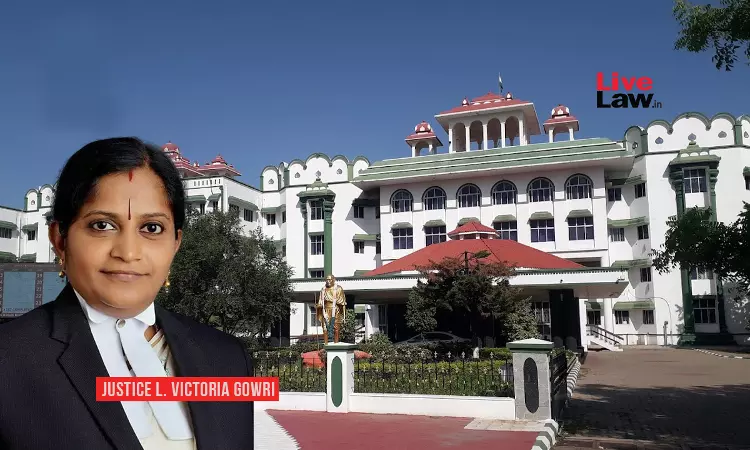
The Madras High Court recently remarked that the new criminal laws, the Bharatiya Nyaya Sanhita, the Bharatiya Nagarik Suraksha Sanhita, and the Bharatiya Sakshya Adhiniyam, transformed the criminal process and made it more victim-centric, citizen-responsive and justice-oriented. “The advent of the Bharatiya Nyaya Sanhita, 2023, the Bharatiya Nagarik Suraksha Sanhita, 2023, and...
This is a premium content
Available exclusively to
Our subscribers
Subscribe Premium 
INR 1099+GST
Your support helps us to bring you more content at
an affordable subscription scheme !!!
All payment options available
The Madras High Court recently remarked that the new criminal laws, the Bharatiya Nyaya Sanhita, the Bharatiya Nagarik Suraksha Sanhita, and the Bharatiya Sakshya Adhiniyam, transformed the criminal process and made it more victim-centric, citizen-responsive and justice-oriented.
“The advent of the Bharatiya Nyaya Sanhita, 2023, the Bharatiya Nagarik Suraksha Sanhita, 2023, and the Bharatiya Sakshya Adhiniyam, 2023 marks a constitutional transformation in India's criminal jurisprudence. For the first time since Independence, the criminal process has been consciously re-engineered to be victim-centric, citizen-responsive and justice-oriented, in contrast to the colonial enactments which were historically designed to subserve the interests of an imperial administration and to control its subjects,” the court said.
Justice L Victoria Gowri added that the new code emphasised timeliness, transparency, accountability, and proportionality. The court added that the BNSS codified timelines for investigating agencies, ensuring that the agencies could not keep the matters pending uncertainly, making victims languish without closure.
The court also added that the BNSS embodied a shift from the punitive colonial framework to a justice-centric democratic framework. The court remarked that timely investigation was the first guarantee of fairness to both the victim and accused and added that the investigating agencies should strictly adhere to the statutory timelines.
The court made the remarks on a plea filed by a woman, Pushpavalli, seeking direction to the Inspector of Police, Kalayarkovil Police Station, Sivagangai, to file a final report. The court noted that the case was that of a murder, committed on January 8, 2024, and for which the FIR was registered on January 11, 2024.
The court also noted that Pushpavalli had also filed a petition for transfer of investigation, in which the court had directed the Superintendent of Police, Sivagangai District to form a proper team, monitor the investigation and file detailed reports.
The court noted that after registering of FIR in January 2024, the final report was not filed in the case, even after the lapse of the period contemplated under Section 193(2) BNSS. The court also noted that no reasons for delay were recorded in writing and neither were the reasons intimated to the Magistrate under Section 193(3) of BNSS.
The court observed that such unexplained delay defeats the purpose of the statute, which mandates expeditious investigation so that criminal process becomes an instrument of justice and not a prolonged ordeal.
The court thus directed the police to complete the investigation and file a final report before the jurisdictional court within 4 weeks. The court added that if the investigation could not be completed within the 4 weeks period due to legally acceptable reason, the investigating officer was to comply with Section 193(3) BNSS and record the reasons in writing and place it before the Magistrate.
Counsel for Petitioner: Mr. Kumaravel
Counsel for Respondents: Mr. M. Sakthivel Government Advocate (Crl. Side)
Case Title: Pushpavalli @ Pushbam v. The Superintendent of Police and Others
Citation: 2025 LiveLaw (Mad) 489
Case No: Crl.O.P.(MD) No.982 of 2025
Tags

Upasana Sajeev
Upasana Sajeev is a Principal Correspondent with LiveLaw, covering Madras High Court

