



- Home
- /
- High Courts
- /
- Madras High Court
- /
- Hardship In Raising Mentally...
Hardship In Raising Mentally Disabled Child No Ground To Kill Her: Madras High Court Upholds Parents' Conviction For Poisoning Daughter
Upasana Sajeev
16 Feb 2026 2:45 PM IST
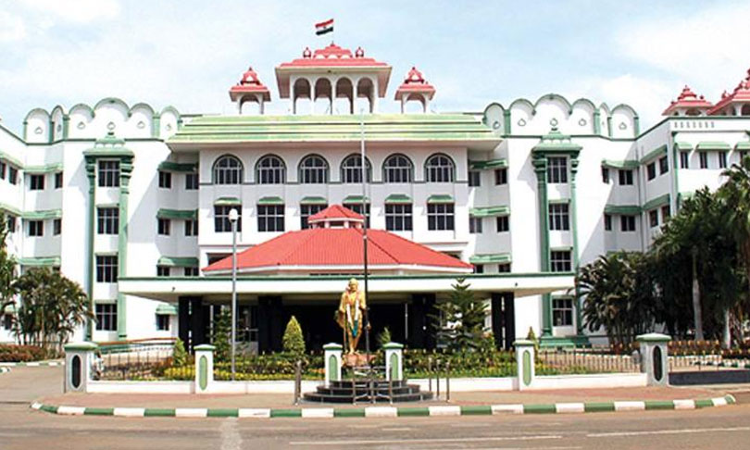
The Madras High Court recently upheld the conviction and sentence of a couple for administering poison and killing their child with mental disorder. While the bench of Justice G Jayachandran and Justice R Poornima sympathised with the parents and the difficulties that they may have faced to bring up the child, the court noted that the parents had a bounden duty to take care of their...
This is a premium content
Available exclusively to
Our subscribers
Subscribe Premium 
INR 1099+GST
Your support helps us to bring you more content at
an affordable subscription scheme !!!
All payment options available
The Madras High Court recently upheld the conviction and sentence of a couple for administering poison and killing their child with mental disorder.
While the bench of Justice G Jayachandran and Justice R Poornima sympathised with the parents and the difficulties that they may have faced to bring up the child, the court noted that the parents had a bounden duty to take care of their child whether the child was born with or without disabilities. The court also remarked that no one had the right to take law into their own hands and take another person's life.
“While this Court sympathizes with the accused parents for the difficulties they faced in bringing up the child, it must be borne in mind that the child did not come into this world on her own but was born to the accused themselves. If the law permits the parents to eliminate the children born with mental retardation, no such child would survive in this world. It is the bounden duty of the parents to take care of their child, whether the child is born with mental illness, physical disability, or without any disability at all,” the court observed.
The court was hearing the appeal filed by the parents against the conviction and sentence imposed by the Fast Track Mahila Court in Virudhunagar. The trial court had found the couple guilty for offences under Section 342 and Section 302 IPC and sentenced them to undergo life imprisonment along with fine.
According to the prosecution, the couple had a girl child on May 2009 who was suffering from a mental disorder since birth and was unable to maintain herself. The mother had also resigned from her position as a professor at a private college to look after the child. The family suffered from mental distress as they were unable to maintain the child. Thereafter, the parents decided to murder the child.
The parents took the child to the Kathappasamy Temple and administered Tafgor to the child. When the child raised noise, public intervened and prevented the accused from administering further poison. The child was immediately taken to the Government Hospital and later to Government Rajaji Hospital for higher medical care. However, the child died 5 days later. FIR was registered, trial proceeded and ultimately the parents were found guilty.
The appellants (parents) argued that there eye witnesses had turned hostile but despite the same, the trial court convicted them solely on circumstantial evidence without connecting them to the alleged crime. It was argued that as per the medical report, the cause of death was not due to poisoning and there was no material to show that the child was administered organophosphorus poison. It was also argued that though the prosecution examined the owner of fertiliser shop to show that the father had purchased the pesticide, the bill did not have his signature and was thus not an admissible document.
The appellants also argued that there was delay in lodging the FIR and even though there were serious infirmities, the trial court had mechanically convicted the accused.
The court however noted that the Accident Register had clearly recorded that the parents had administered the poison to the child and that the child was brought in semi-conscious with constricted pupils, which is consistent with organophosphorus poisoning. The court also took note of the evidence of the Doctor who treated the child and who had clearly deposed that the poison had spread throughout the child's body.
The court further noted that though there was absence of poison in the viscera report, it would not automatically be fatal to the prosecution case especially when the deceased had undergone prolonged medical treatment. The court noted that in these kind of cases, it must place reliance on the clinical diagnosis and the testimony of the doctors who treated the victim, rather than solely on the post-mortem report.
In the present case, the court also noted that it was undisputed that the child was in the exclusive custody of the parents and thus, they had a legal duty to explain the circumstances leading to the death. The court noted that the parents had failed to offer any plausible explanation.
Thus, noting all the evidence and witness statements, the court opined that the trial court had righty convicted the accused for the offence of murder and there was no perversity or illegality in the order. Thus, the court upheld the sentence and dismissed the appeal.
Counsel for Appellant: Mr. M. Jegadeesh Pandian
Counsel for Respondents: Mr. R. M. Anbunithi Additional Public Prosecutor
Case Title: S Muneeswaran and Another v. State
Citation: 2026 LiveLaw (Mad) 70
Case No: Crl.A (MD)No.76 of 2023

Upasana Sajeev
Upasana Sajeev is a Principal Correspondent with LiveLaw, covering Madras High Court

