



- Home
- /
- High Courts
- /
- Madras High Court
- /
- Exclusive Possession, Receipt Of...
Exclusive Possession, Receipt Of Income Supports Presumption Of Other Co-Owners' Ouster: Madras High Court
Upasana Sajeev
24 Sept 2026 1:30 PM IST
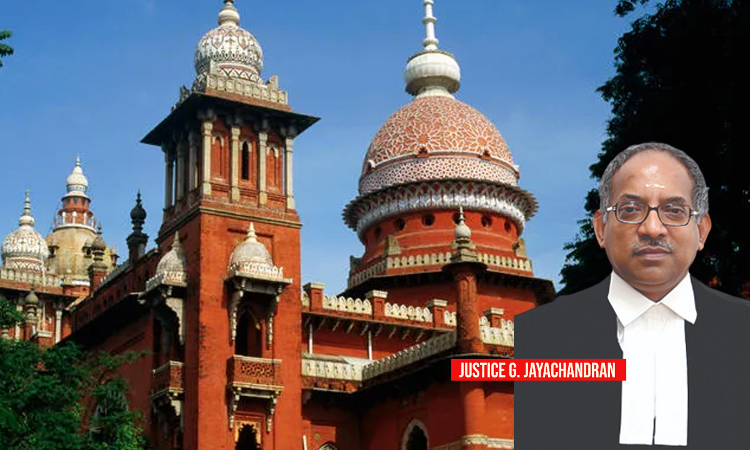
The Madras High Court recently held that exclusive possession of property by one co-owner and enjoyment of rent and income from the property would lead to a presumption of ouster with respect to the other co-owners. [2026 LiveLaw (Mad) 459] Justice G Jayachandran relied upon the decisions of a division bench of the Madras High Court in 1970 and the decision of the Privy Council in 1919...
This is a premium content
Available exclusively to
Our subscribers
Subscribe Premium 
INR 1099+GST
Your support helps us to bring you more content at
an affordable subscription scheme !!!
All payment options available
The Madras High Court recently held that exclusive possession of property by one co-owner and enjoyment of rent and income from the property would lead to a presumption of ouster with respect to the other co-owners. [2026 LiveLaw (Mad) 459]
Justice G Jayachandran relied upon the decisions of a division bench of the Madras High Court in 1970 and the decision of the Privy Council in 1919 and held that if the co-owner has been in exclusive possession, it would be legitimate for the court to raise the presumption of ouster.
The court thus denied relief to two women in a suit for partition, claiming 1/3rd share each in the family properties. The court noted that the women had mentioned the properties incorrectly in the plaint, as some properties had been sold by their father during his lifetime. The court also noted that the parties had failed to implead the granddaughters (their brother's daughters) to whom some property had been divided. All these facts, in the court's opinion, added force to the plea of ouster by the brother.
“In this case, apart from the admission of P.W.1, the plaint as such suffers factual incorrectness in respect of properties available for partition which also lends a strong inference of ouster. The properties were never with their parents and sold by the father during his lifetime and the properties of the daughters of the defendant are also shown as properties to be divided even without impleading them as parties, despite knowledge of those facts through the pre-suit notice and the written statement, this adds force to the plea of ouster,” the court noted.
The court was hearing a second appeal filed by the brother, Pandiarajan, challenging the concurrent findings of the courts below in the partition suit filed by his sisters, Andal and Ambika, against him.
The parties were the children of Sundaratchi and Murugaiah Pillai. The mother, Sundaratchi, died intestate in 1991, leaving 12 properties. The father, Murugaiah Pillai died intestate in 2009, leaving 26 properties. According to the sisters, the property was in joint enjoyment of the parties till the demise of the father.
After the father's demise, the sisters, through a notice, sought a 1/3rd share in the property as per Hindu Succession Law. This was refused by the brother. Thus, the sisters instituted the suit for partition, claiming 1/3rd share each.
The trial court noted that some properties had already been sold and some properties were purchased in the names of the minor children of the brother. Excluding these properties, the trial court allowed the suit and held that the parties were entitled to 1/3rd share each. This judgment and decree upheld the decision of the trial court.
The court noted that the first sister, Andal, had deposed that after her marriage in 1971, they were not in joint enjoyment of the property for more than 40 years. The court also noted Andal's deposition that she had not attended the father's funeral since she was not informed of the same. Thus, the court concluded that the parties were ousted from claiming any share in the property.
With respect to the father's property, the court noted that the father had given some properties to his grandchildren, who were the brother's daughters. The court noted that when the grandchildren were beneficiaries of the will executed by the father, not including them as parties despite knowledge and notice was fatal to the case. The court thus held that the decree, passed without giving an opportunity to the necessary parties, would affect the suit.
Thus, the court was inclined to allow the appeal and set aside the trial court's order, which was confirmed by the First Appellate Court.
Counsel for Appellant: Mr. S. Nagarajan
Counsel for Respondent: Mr. S. Vigneshwaran, for Mr. S. Arivazhagan
Case Title: M Pandiarajan v Andal and Others
Citation: 2026 LiveLaw (Mad) 459
Case No: SA No 1093 of 2015

Upasana Sajeev
Upasana Sajeev is a Principal Correspondent with LiveLaw, covering Madras High Court

