



- Home
- /
- High Courts
- /
- Madras High Court
- /
- Person's Religion Can't Be...
Person's Religion Can't Be Determined From Name Or Govt Records Like Aadhar, Voter ID: Madras High Court
Upasana Sajeev
21 Nov 2026 7:30 AM IST
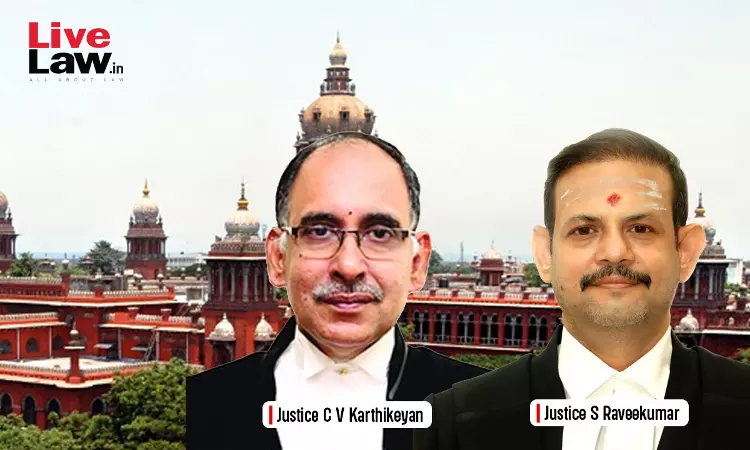
The Madras High Court recently remarked that a person's religion cannot be determined from his name or government records like Aadhaar, Ration card or Voter ID. The bench of Justice CV Karthikeyan and Justice N Raveendran made the remark while hearing a man's plea to nullify a marriage registered between him and a woman under the Hindu Marriage Act. The court noted that merely...
This is a premium content
Available exclusively to
Our subscribers
Subscribe Premium 
INR 1099+GST
Your support helps us to bring you more content at
an affordable subscription scheme !!!
All payment options available
The Madras High Court recently remarked that a person's religion cannot be determined from his name or government records like Aadhaar, Ration card or Voter ID.
The bench of Justice CV Karthikeyan and Justice N Raveendran made the remark while hearing a man's plea to nullify a marriage registered between him and a woman under the Hindu Marriage Act.
The court noted that merely because a person has a name which is commonly associated with a particular religion, the same cannot be a ground to presume his religious identity. The court added that in a country like India, where different religions co-exist, it was common for people to have names associated with different religions.
“Similarly, it is pertinent to state that merely because a person bears a name commonly associated with a particular religion or faith, the same cannot, by itself, be a ground to determine or presume the religious identity of such person. In a country like India, where people belonging to different religions and faiths coexist, it is not uncommon for persons professing different religions to have names that are common across religions or are traditionally associated with a particular faith. Therefore, the name of a person, by itself, cannot be relied upon to reject or disbelieve the claim made by such person regarding the religion professed by him,” the court said.
The court also added that merely because a person's government records contained a particular name, his claim regarding religious identity cannot be disregarded. The court remarked that none of the government records contain an entry relating to religion.
“Similarly, merely because Government records, such as the Aadhaar Card, Ration Card or Voter Identity Card, contain a particular name, the claim of a person regarding his or her religious identity cannot be discarded on that basis. It is also pertinent to note that none of the aforesaid Government records produced in the present case contains any entry relating to the religion of the plaintiff,” the court said.
The man had argued that the marriage was registered fraudulently without his knowledge. He submitted that he was a Christian and had undergone baptism and thus, the marriage between him and the woman, who was a Hindu, could not have been solemnised under the Hindu Marriage Act.
The trial court had rejected the man's plea to nullify the marriage and disbelieved his argument that he was a Christian. Challenging the same, the man had approached the High Court.
The High Court took note of the baptism certificate of the man and his parents. The court noted that the records revealed that the man was a Christian and the trial court had not considered the documents properly.
Holding that the marriage between a Hindu and a Christian could not have been solemnised under the Hindu Marriage Act, the court set aside the order of the trial court and allowed the man's plea.
Counsel for Appellant: Mr. N. Easwaran and Mr. R. Veeramani
Tags

Upasana Sajeev
Upasana Sajeev is a Principal Correspondent with LiveLaw, covering Madras High Court

