



- Home
- /
- High Courts
- /
- Madras High Court
- /
- Preventing SC Person's Temple Entry...
Preventing SC Person's Temple Entry On Caste Grounds Constitutes 'Untouchability', Perpetrators Can Be Prosecuted: Madras High Court
Upasana Sajeev
2 Sept 2026 4:29 PM IST
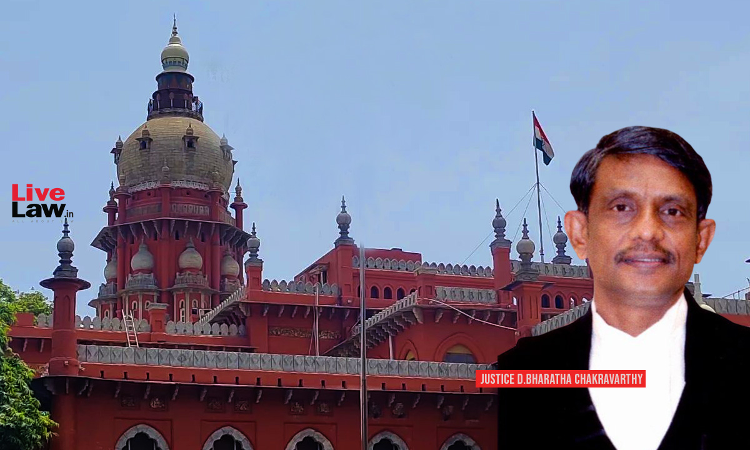
The Madras High Court recently held that preventing a person from the Scheduled Caste community from entering temples would amount to practicing untouchability and would be violative of fundamental rights guaranteed under Article 17 of the Constitution. [2026 LiveLaw (Mad) 421] Justice Bharatha Chakravarthy held that any person perpetrating such a practice would be liable to be...
This is a premium content
Available exclusively to
Our subscribers
Subscribe Premium 
INR 1099+GST
Your support helps us to bring you more content at
an affordable subscription scheme !!!
All payment options available
The Madras High Court recently held that preventing a person from the Scheduled Caste community from entering temples would amount to practicing untouchability and would be violative of fundamental rights guaranteed under Article 17 of the Constitution. [2026 LiveLaw (Mad) 421]
Justice Bharatha Chakravarthy held that any person perpetrating such a practice would be liable to be prosecuted in accordance with law.
“Therefore, if any person prevents another person from entering the temple on casteist grounds, particularly if a person belonging to a Scheduled Caste is prevented from entering the temple, such an act would amount to the practice of untouchability and would constitute a violation of the fundamental right guaranteed under Article 17 of the Constitution of India. The person perpetrating such an act would be liable for prosecution in accordance with law,” the court said.
The court was hearing a petition filed by v Sundaram from Salem. Sundaram had approached the court seeking direction to the District Collector (Salem), the Revenue Divisional Officer (Attur) and the Tahsildar (Attur) to monitor and ensure that due representation is provided to the Milagu Kattan Adidravidar Community and to allow them to take part in the Arulmigu Muthu Mariamman Temple Chariot Festival.
When the matter was taken up for hearing, the Special Government Pleader informed the court that a peace committee meeting was held and everyone would be permitted to take part in the festival. Thus, the state argued that the petition had become infructuous.
To this, the petitioner submitted that even though the people were permitted this year, steps should be taken to ensure that such a situation does not arise in future and that everyone is allowed to participate in the temple festival.
The court observed that the Tamil Nadu Temple Entry Authorisation Act itself clearly states that no person should be restrained on the basis of caste. The court also took note of repeated orders where it had held that no person should be denied temple entry based on caste. The court thus held that any person denying another person from entering a temple could be prosecuted as per law.
With respect to the present case, the court noted the submission of the State that there wouldn't be any discrimination. The court also noted that for deciding the right to perform any festival or administration, the parties would approach the civil court and seek appropriate remedy.
Taking note of the submissions, the court closed the plea.
Counsel for Petitioner: Mr. S. Hajanazirudeen Senior counsel for Mr. M.Rajendiran
Counsel for Respondents: Mrs. Inthu Karunakaran Special GP, Mr. Durai Gunasekaran Govt Advocate, Mr. G. Mohammed Aseef
Case Title: V Sundaram v The District Collector and Others
Citation: 2026 LiveLaw (Mad) 421
Case No: WP No 33121 of 2026
Tags

Upasana Sajeev
Upasana Sajeev is a Principal Correspondent with LiveLaw, covering Madras High Court

