



- Home
- /
- High Courts
- /
- Madras High Court
- /
- Madras High Court Permits Sri...
Madras High Court Permits Sri Lankan Couple To Undergo IVF Though Wife Crossed 50 Yrs, Says Age Limit Based On Living Conditions In India
Upasana Sajeev
23 Sept 2026 12:40 PM IST
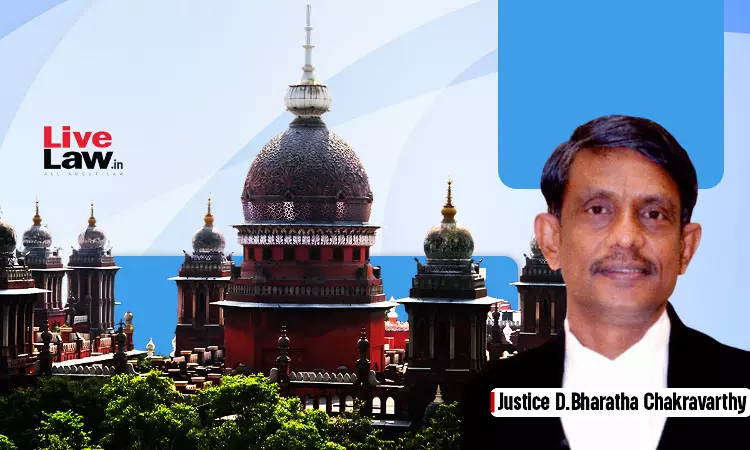
The Madras High Court has permitted a Sri Lankan couple, settled in the United Kingdom to undergo In Vitro Fertilization treatment (IVF) in India even though the wife had crossed 50 years of age. [2026 LiveLaw (Mad) 456] Justice Bharatha Chakravarthy noted that the upper age limit of 50 years under the Assisted Reproductive Technology (Regulation) Act was fixed, considering the...
This is a premium content
Available exclusively to
Our subscribers
Subscribe Premium 
INR 1099+GST
Your support helps us to bring you more content at
an affordable subscription scheme !!!
All payment options available
The Madras High Court has permitted a Sri Lankan couple, settled in the United Kingdom to undergo In Vitro Fertilization treatment (IVF) in India even though the wife had crossed 50 years of age. [2026 LiveLaw (Mad) 456]
Justice Bharatha Chakravarthy noted that the upper age limit of 50 years under the Assisted Reproductive Technology (Regulation) Act was fixed, considering the average life expectancy in India and the living conditions in the country.
The court noted that in the present case, the couple had come to India only for performing the medical procedure and intended to go back to their own country where they were going to bring up the child.
“Firstly, in this case, the petitioners are foreign nationals even though the Act per se would apply, it must be seen that the upper age limit was fixed by the Parliament of India taking into account the average life expectation of life in India and the condition of life in India and taking into consideration the welfare of the minor children to be born and brought up in India. In the present case, the petitioners have come only under the medical tourism to avail the services of the fifth respondent and they are going back to their own Country where they are bringing up the child to be born, that has to be kept in mind,” the court said.
The court was hearing a plea filed by a couple seeking directions to the Union Ministry of Health and Family Welfare, State Health and Family Welfare Department, Directorate of Medical and Rural Health Service, and the Joint Director of Health Service District Medical Board to permit the couple to undergo the IVF treatment at a hospital in Chennai.
The court was informed that the couple were Sri Lankan nationals permanently settled in the UK. Since the couple was not blessed with a child, they started treatment and, in 2013, had frozen their embryos. However, since the treatment resulted in miscarriages, the parties came to India in 2023 to avail IVF treatment.
After medical examination, it was found that the wife was diagnosed with fibroids and underwent Laparoscopic Myomectomy and Hysteroscopy. After healing from the surgery, the parties came back to India to continue IVF treatment. However, when they arrived in India, the wife had crossed the 50-year mark by 18 days, and the hospital refused treatment. Thus, the parties approached the High Court.
The parties took the court through judgments by various High Courts wherein couples were permitted to undergo treatment when one of the persons was eligible as per the Act. In the present case, since the husband was within the age limit, the parties sought to permit them to continue treatment.
The respondent authorities, on the other hand, submitted that even though some courts have taken liberal views, the upper age limit should be followed without any exception. It was also submitted that the upper age limit fixed by the Act was under challenge and pending before various High Courts and since a challenge was pending, the relief could not be granted.
While the court agreed that the upper age limit fixed by the Parliament had to be followed and that the wife had crossed the upper age limit in the present case, the court took note of two extraordinary situations.
Firstly, the court noted that the couple had come to India only as part of medical tourism and intended to go back with the child once the treatment was over.
Secondly, the court noted that the Supreme Court had held that if the intention of the couple was crystallised before commencement of the Act and they were continuing treatment at the time of enactment of the Act, relaxation could be granted. Though the court noted that such relaxation was granted only when the same embryos frozen before enactment of the Act were used, in the present case, the couple had decided to commence the procedure in 2013 itself by freezing their embryos. The court also noted that the couple had come to India in 2023 itself, but the procedure attempt was aborted only due to the medical condition of the wife.
The court also noted that the oocyte of a third-party donor would be used, who was within the age limit prescribed under the Act, and it was only going to be implanted in the wife. The court also noted that at the time of applying for a medical visa to come to India post-surgery, the wife was within 50 years of age, but by the time the visa was granted and she landed in India, she had crossed the upper age limit by 18 days.
“Now it must also be seen that the petitioners intended to return to India and had applied for visa well within her age of 50, but however, unwittingly, even though visa was granted on 30.06.2026, she landed in India only after 18 days after the completion of the 50th year. This unfortunate human error gives rise to an extraordinary circumstances whereby I am of the view that the law laid down by the Hon'ble Supreme Court of India in the case of Vijay Kumari can be applied by taking into account the spirit of the said judgment and an opportunity can be granted and applying the age limit of 50 can be held to be retroactive / retrospective in the case of the petitioners,” the court said.
Thus, the court ordered that the upper age limit of 50 should not be applied to the wife and the hospital could perform the procedure. The court also made it clear that the order was passed considering the peculiar facts and circumstances of the case and the parties would be undergoing treatment at their own risk.
Counsel for Petitioner: Ms. A. Shabnam Banu
Counsel for Respondent: Dr. K. Kannan Senior Panel Counsel, Mr. J. V. Sakthi Baalakrishnan Government Advocate, Mr. D. Senthur Kugan
Case Title: A v Union of India
Citation: 2026 LiveLaw (Mad) 456
Case No: WP No 37683 of 2026
Click Here To Read/Download Order
Tags
Upasana Sajeev
Upasana Sajeev is a Principal Correspondent with LiveLaw, covering Madras High Court

