



- Home
- /
- High Courts
- /
- Madras High Court
- /
- Can't Direct Equal Recitation Of...
Can't Direct Equal Recitation Of Tamil Hymns Alongside Sanskrit At Meenakshi Temple Consecration In Absence Of Law: Madras High Court
Amruta Gangajaliwale
8 Sept 2026 10:00 AM IST
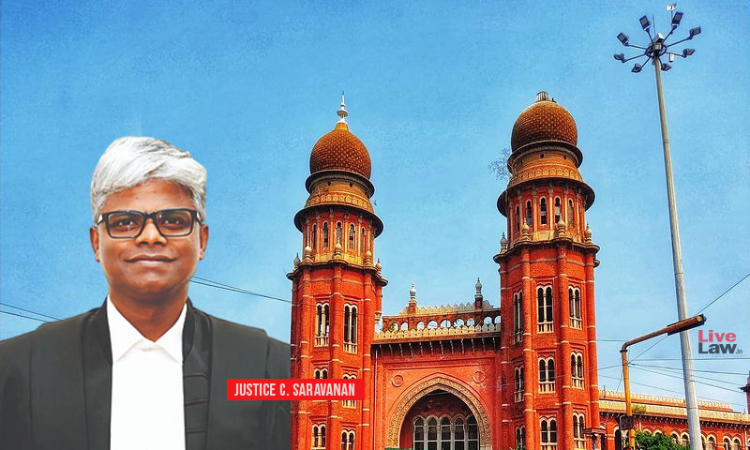
The Madurai Bench of the Madras High Court dismissed pleas seeking permission to perform Velvi Kunda Nigalvugal (sacred fire ritual) and permit recitation of Tamil spiritual hymns on an “equal footing” with Sanskrit during the upcoming Kumbabishegam (consecreation ceremony) at Arulmigu Meenakshi Sundareswarar Temple. [2026 LiveLaw (Mad) 430]Justice C. Saravanan held that a writ court...
This is a premium content
Available exclusively to
Our subscribers
Subscribe Premium 
INR 1099+GST
Your support helps us to bring you more content at
an affordable subscription scheme !!!
All payment options available
The Madurai Bench of the Madras High Court dismissed pleas seeking permission to perform Velvi Kunda Nigalvugal (sacred fire ritual) and permit recitation of Tamil spiritual hymns on an “equal footing” with Sanskrit during the upcoming Kumbabishegam (consecreation ceremony) at Arulmigu Meenakshi Sundareswarar Temple. [2026 LiveLaw (Mad) 430]
Justice C. Saravanan held that a writ court acting under Article 226 of the Constitution cannot make laws in the absence of an enabling statutory or delegated framework, observing that “it is for the Legislature or the Executive to take a call” on whether people from outside of the temple be allowed to participate in such events.
The Kumbabishegam— a temple consecration ceremony ordinarily conducted once in twelve years— at the Madurai temple is scheduled for September 17, 2026.
"As far as the request of the petitioner in W.P.(MD) No. 11386 of 2026 is concerned, the recitation of Tamil spiritual mantras, including Tamil hymns by Othuvars, has already been address and implemented in the temples and has been in practice. Therefore, insofar as the request for recitation of the same along with Sanskrit, equally, in the rituals at Yaga Salai, Karuvarai and Gopura Vimanam is concerned, as mentioned above, unless there is a law by the Legislature or delegated Legislation, the petitioner cannot seek for such a relief, as the Writ Court is intended to implement the law and declare the law, and not to make the law"
The Court observed that an outsider cannot seek permission to recite hymns during the Velvi Kundam Nigalvugam in absence of statutory Rules.
“That apart, unless Rules are framed, a person who is not an employee of any of the temples cannot independently seek a prayer for recitation of hymns during the Velvi Kundam Nigalvugam (raising of the sacred fire), which forms part of the Kudamuzhukku (Kumbabishegam) scheduled to be held on 17.09.2026. However, like all devotees, the petitioner, can participate in the Kudamuzhukku (Kumbabishegam) scheduled to be held on 17.09.2026 at Arulmigu Meenakshi Sundareswarar Tirukovil, Madurai,” the Court held.
It added, “It is for the Legislature or the Executive to take a call as to whether the time has come to allow others to participate in events such as Kudamuzhukku (Kumbabishegam), keeping in view the progress made since the Constitution was adopted on 26.11.1949.”
The Court further noted that the issue of recitation of hymns in non-Sanskrit languages, including Tamil, is under consideration of a government-appointed panel, formed pursuant to a Division Bench order dated August 19, 2021, in W.P.(MD) No.19115 of 2020. The recitation of Tamil hymns will be subject to that committee's recommendations, the Court said.
Tamil hymns already being recited by Othuvars
The Court noted that Tamil hymns are already being recited by Othuvars (who recites these hymns) in the temples.
“The recitation of Tamil hymns including the Tamil spiritual mantras by the Othuvars has already been implemented and is in practice,” the Court said.
However, a direction granting Tamil hymns an equal status alongside Sanskrit in Yaga Salai, Karuvarai and Gopura Vimanam spaces cannot be issued under Article 226, the Court held, reiterating that the writ court's role is to implement and declare the law, rather than create it.
Temple rituals based on Agamas
Opposing the petitioners' prayers, the respondents submitted that the temple strictly follows the Agamas in performing all ritual, including Kumbabishegam, which can only be performed by Sthanika Battars of the temple. The counsel also submitted that during the 2009 Kumbabishegam, the temple administration invited Othuvars from various other temples to recite Tamil hymns during the ceremony, by providing them a separate place adjacent to the Yagasalai.
“The petitioner cannot, as a matter of right, claim permission to perform Velvi Kundam Nigalvugal in Tamil at the third respondent temple and that the petitioner has no legal right to compel the temple administration to permit him to conduct such Nigalvugal during the Temple Kudamuzhuku (Kumbabisegam) and that the petitioner is attempting to create a new right in his favour, which cannot be entertained in a proceeding under Article 226 of the Constitution of India,” the counsel for respondents argued.
The High Court observed that temples constructed as per Agamas must strictly adhere to the Agamic rituals, placing reliance on the Supreme Court ruling in Seshammal vs. State of Tamil Nadu. The Apex Court had observed that prescribing a standardised ritual by the government in all temples by ignoring the Agamic requirements and allowing the Archaks from other denomination to be appointed as temple priest would lead to “defilement of the image” and interfere with religious freedom guaranteed under Articles 25 and 26 of the Constitution of India.
Justice Saravanan, however, said that whether a particular temple was constructed as per the Agamas must be determined by the committee constituted by an earlier order of the High Court.
“It emerges that as on date, the law is that in the case of temples which have been constructed in accordance with the Agamas, the rituals in such temples have to be strictly followed in accordance with the Agamas. However, whether a particular temple has been constructed in accordance with the Agamas or not is to be determined by the Committee constituted by the First Bench of the Madras High Court (Principal Bench of this Court), vide its order dated 22.08.2022 in W.P.No.17802 of 2021,” the Court said.
The High Court, accordingly, dismissed both the petitions.
Case Title: Tamil Rajendiran @ R.Rajendiran v/s The Principal Secretary to Government of Tamil Nadu & ors
Citation: 2026 LiveLaw (Mad) 430
Case No: WP (MD) No.11386 of 2026
Tags


