



- Home
- /
- High Courts
- /
- Madras High Court
- /
- 'Using Children For Election...
'Using Children For Election Campaign Bad': Madras High Court Orally Remarks In PIL Alleging Use Of Children By TVK, Others In Assemly Polls
Upasana Sajeev
29 May 2026 1:43 PM IST
While hearing a PIL alleging use of children for election campaign by political parties including TVK in the recently concluded 2026 Tamil Nadu assembly polls, the Madras High Court on Friday (May 29) orally remarked that use of children for election campaign was bad.Notably, the TVK formed an alliance government pursuant to the assembly polls, with actor Vijay being sworn-in as the State's...
This is a premium content
Available exclusively to
Our subscribers
Subscribe Premium 
INR 1099+GST
Your support helps us to bring you more content at
an affordable subscription scheme !!!
All payment options available
While hearing a PIL alleging use of children for election campaign by political parties including TVK in the recently concluded 2026 Tamil Nadu assembly polls, the Madras High Court on Friday (May 29) orally remarked that use of children for election campaign was bad.
Notably, the TVK formed an alliance government pursuant to the assembly polls, with actor Vijay being sworn-in as the State's Chief Minister.
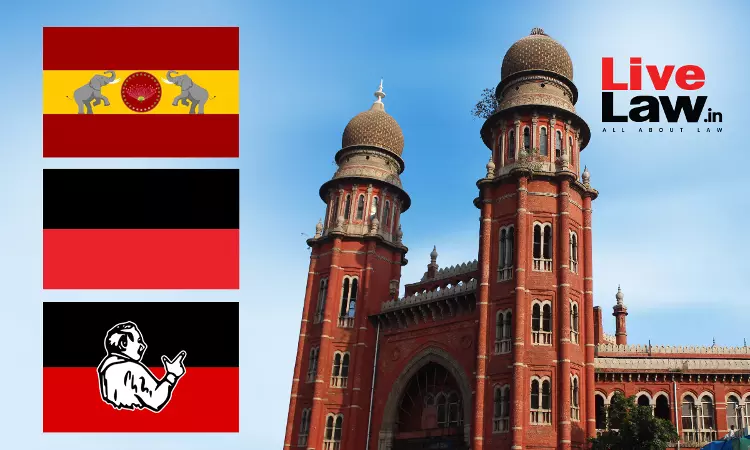
The PIL alleges corrupt practices by Tamilaga Vettri Kazhagam (TVK) party, Dravida Munnetra Kazhagam (DMK) party and the All India Anna Dravida Kazhagam (AIADMK) party during the 2026 Tamil Nadu Legislative Assembly elections. Last week, the bench had issued notice to the political parties, TVK, DMK and AIADMK. Today, another plea has been filed seeking similar relief.
The bench of Justice GR Swaminathan and Justice V Lakshminarayanan adjourned the hearing in the case after Senior Advocate S Muralidhar, appearing for the TVK party, and Advocate Niranjan Rajagopal, standing counsel for the Election Commission of India, sought time to file counter.
During the hearing, the court orally remarked that using children for such a campaign was bad. Justice Swaminathan orally reminiscened that recently, when he was sick, he jad visited a doctor who told him how, at the time of election polling, while he was leaving to cast his vote, his grandchild had asked him to vote for Vijay.
"This is bad right...Use of children.I'll tell you something. When I went to a doctor recently, he was telling me how while he was going to vote, his grandchild was saying, ' Thaatha, you have to vote for Vijay only'," the court orally said.
When the matter was taken up on Friday, Muralidhar argued that the petition was filed entirely based on news reports. He submitted that the matter was an interest case where the court would have to essentially look into the powers of the ECI to interfere after the conclusion of elections for an alleged violation that took place during the time of election, when Model Code of Conduct was in place.
Muralidhar also submitted that the present case will require discussion on the provisions of the Model Code of Conduct, and definition of "undue influence" under the Representation of People Act. He said that at present there was no provision for disqualifying a political party but only for deregistering a party. He added that the court will have to consider whether a party could be deregistered in the present case.
Senior Advocate NR Elango, appearing for the DMK party said that if the petitioners were alleging corrupt practices during the elections, they should have made the particular returning candidates as parties to the case.
The plea has been filed by an Advocate L Vasuki. In her plea, Vasuki alleged that during the assembly elections, there were various illegal activities including electoral bribery, cash-for-votes, undue influence on voters and alleged use of minor children for electoral propaganda and indirect voter influence.
The petitioner alleged that during the election campaign, CM Joseph Vijay, who is also the president of TVK party, had called upon children to emotionally influence or pressure their parents to vote for TVK. It was argued that the said act raises serious concern relating to undue influence under Section 123 of the RP Act.
The petitioner also pointed out that there were serious allegations relating to distribution of money to voters and cash-for-votes emerging in various constituencies. It was also argued that no action had been taken by the Election Commission of India, though the complaints were widely circulated. The petitioner argued that this inaction by the ECI affected free and fair elections, thus violating Article 14, 19, and 21 of the Constitution and strikes at the basic structure doctrine.
Thus, the petitioner had sought a time-bound, independent inquiry into the allegations of corrupt practices committed by the three prominent parties within a time frame fixed by the court.
Case Title: Vasuki L v Election Commission of India
Case No: WP 20247 of 2026
Tags
Upasana Sajeev
Upasana Sajeev is a Principal Correspondent with LiveLaw, covering Madras High Court

