



- Home
- /
- High Courts
- /
- Orissa High Court
- /
- 'Medical Evidence Alone Can't Prove...
'Medical Evidence Alone Can't Prove Authorship Of Crime': Orissa High Court Acquits Man In 2002 Witchcraft Murder
LIVELAW NEWS NETWORK
25 Jun 2026 10:15 AM IST
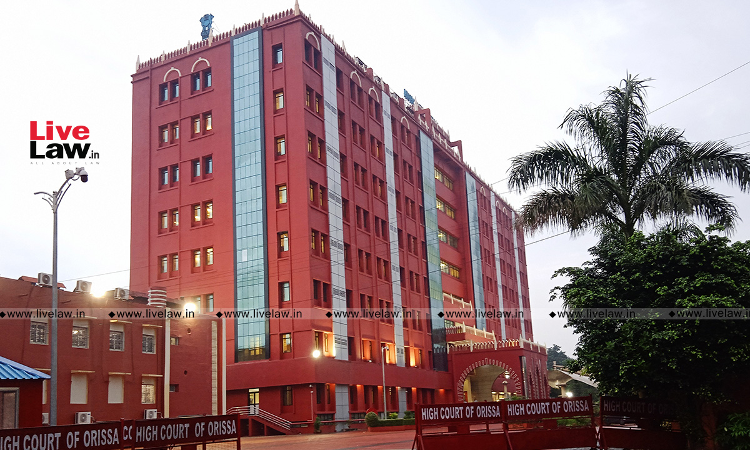
The Orissa High Court on Tuesday (June 23) acquitted a man who was convicted by a Sessions Court in 2003 for committing murder of a person suspecting him to be practising witchcraft.Finding lack of evidence against the appellant/convict and significant gaps in the prosecution case, the Bench of Justice Manash Ranjan Pathak and Justice Sashikanta Mishra held–“Defence has not disputed...
This is a premium content
Available exclusively to
Our subscribers
Subscribe Premium 
INR 1099+GST
Your support helps us to bring you more content at
an affordable subscription scheme !!!
All payment options available
The Orissa High Court on Tuesday (June 23) acquitted a man who was convicted by a Sessions Court in 2003 for committing murder of a person suspecting him to be practising witchcraft.
Finding lack of evidence against the appellant/convict and significant gaps in the prosecution case, the Bench of Justice Manash Ranjan Pathak and Justice Sashikanta Mishra held–
“Defence has not disputed the nature of death being homicidal but then the authorship of the crime cannot be proved by medical evidence alone. As discussed above, the medical evidence does not find any support from the ocular so as to point the needle of guilt at the accused...Perusal of the impugned judgment reveals that the trial Court has not taken note of the aforementioned vital aspects and the apparent gaps in evidence. On the other hand, the trial Court has shifted the burden at times to the defence, which cannot be countenanced in law.”
As per the prosecution allegation, at about 06:00 PM on 28.05.2002, the deceased Natabara Gouda was returning to his village on the bicycle of one Bijaya Behera (PW-11). On the way to his village, the appellant intercepted them and allegedly dealt blows to the deceased by means of a lathi on the suspicion that the deceased was practising witchcraft against him and his brother.
Out of fear, PW-11 fled away from the spot leaving behind the deceased and informed the son of the deceased (PW-12) about the incident. The son of the deceased immediately rushed to the spot and found the appellant assaulting and dragging his father/the deceased towards a lane. The deceased thereafter fell down near the backyard of a villager and succumbed to his injuries.
On the basis of aforesaid information, the police registered an FIR and upon completion of investigation, a charge-sheet was filed against the appellant for commission of offence under Section 302, IPC. After meticulously examining the testimonies and evidence, the Additional Sessions Judge (Fast Track Court), Chatrapur found the appellant guilty for committing murder of the deceased and sentenced him to imprisonment for life. Against such order, the appellant preferred this criminal appeal under Section 374(2) of the CrPC.
The appellant confronted the prosecution case by arguing that PW-11, who was accompanying the deceased at the time of assault, did not support its allegations. Further, PW-12, being the son of the deceased, is an interested and related witness whose evidence cannot be solitarily relied upon.
Apart from that, the discovery of the lathi (weapon of offence) on the basis of leading to discovery evidence (under Section 27, Evidence Act) of the appellant cannot be taken into account since the seizure witnesses turned hostile. Moreover, the appellant contended that in absence of proof of blood stain of the deceased on the weapon of offence, the prosecution case falls to the ground.
On the other hand, the State argued that the testimony of PW-12 (son the of the deceased) cannot be discarded merely because he is a related witness since it is very difficult to presume that a related witness will falsely implicate innocent person while letting the true culprit go scot-free. Further, it was pointed out that the medical evidence corroborated the type of injuries alleged to have been inflicted upon the deceased.
Upon hearing the parties, the Court underlined a discrepancy in the testimonies of PWs-11 and 12. PW-12 stated that the appellant assaulted his father while he was coming with PW-11 on his bicycle. He again stated that when he reached the spot, he found the appellant taking the deceased towards the Bauri sahi/lane assaulting him with his lathi. The Court, however, was of the opinion that such statement is contrary to the statement of PW-11 who deposed that the deceased was missing when he and PW-12 reached the spot. Therefore, the Bench denied to hold them as reliable witnesses.
The Court further noted that the nature of death was proved to be homicidal, which was never contradicted by the appellant. The doctor, who conducted autopsy on the dead-body of the deceased, opined that the injuries are possible by successive blows by a hard and blunt object. Notwithstanding such clear medical opinion, the Bench was of the view that such evidence cannot determine criminality of the appellant, especially in the absence of other corroborative evidence.
Above all, the Court found fault with the trial Judge for relying upon leading to discovery evidence in the absence of independent corroboration and despite hostility of the seizure witnesses. Moreover, the last-seen theory was rejected due to the inconsistencies in the statements of PWs-11 and 12.
Therefore, the Court was of the opinion that the prosecution case had several apparent gaps and it created reasonable doubts of its veracity in the mind of the Court. Resultantly, the benefit of doubt was conferred upon the appellant and he was acquitted of the charge under Section 302, IPC, by reversing the 23-year-old conviction judgment.
Case Title: Babu Das v. State of Orissa
Case No: CRLA No. 316 of 2003
Date of Judgment: June 23, 2026
Counsel for the Appellant: Mr. B.R Mohanty, Advocate Amicus Curie
Counsel for the State: Ms. Suvalaxmi Devi, Addl. Standing Counsel
Citation: 2026 LiveLaw (Ori) 63
Tags


