



- Home
- /
- High Courts
- /
- Orissa High Court
- /
- Magistrate Must Disclose 'Substance...
Magistrate Must Disclose 'Substance Of Information' While Issuing S.126 BNSS Notice To Execute Bond For Keeping Peace: Orissa High Court
LIVELAW NEWS NETWORK
10 July 2026 6:01 PM IST
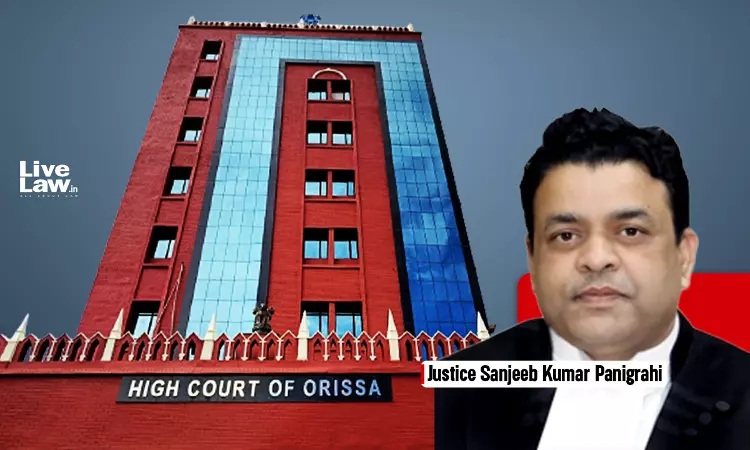
The Orissa High Court has ruled that an Executive Magistrate is duty-bound to disclose the 'substance of information' received by him while issuing show-cause notice to a person to explain why he should not be ordered to execute a bond or bail bond for keeping peace under Section 126 BNSS. [2026 LiveLaw (Ori) 76]As per Section 126 BNSS when an Executive Magistrate receives information that...
This is a premium content
Available exclusively to
Our subscribers
Subscribe Premium 
INR 1099+GST
Your support helps us to bring you more content at
an affordable subscription scheme !!!
All payment options available
The Orissa High Court has ruled that an Executive Magistrate is duty-bound to disclose the 'substance of information' received by him while issuing show-cause notice to a person to explain why he should not be ordered to execute a bond or bail bond for keeping peace under Section 126 BNSS. [2026 LiveLaw (Ori) 76]
As per Section 126 BNSS when an Executive Magistrate receives information that any person is likely to commit a breach of peace or disturb public tranquillity or do any wrongful act that may probably occasion a breach of the peace, and is of opinion that there is sufficient ground for proceeding, he may require such person to show cause why he should not be ordered to execute a bond or bail bond for keeping the peace for such period, not exceeding one year, as the Magistrate thinks fit.
Stressing on the importance of the aforesaid critical legal requirement as mandated under Section 130 of the BNSS, the Bench of Dr. Justice Sanjeeb Kumar Panigrahi held–
“Section 130 of the BNSS mandates that before calling upon a person to show cause under Section 126, the Magistrate shall set forth in writing the substance of the information received. The requirement is intended to disclose the basic grounds on which preventive action is considered necessary…Although the provision speaks of the “substance of the information”, it does not mean that the order should not be comprehensive. The order need not reproduce the information verbatim; however, it must give proper notice of what moved the Magistrate to initiate the proceedings.”
The petitioners received a show-cause notice dated 14.04.2026 issued by the Executive Magistrate, Tihidi. From the said notice, they learned that a criminal miscellaneous case had been initiated against them under Section 126 of the BNSS by the Executive Magistrate, Tihidi, on the basis of information received from the IIC, Tihidi Police Station.
The said notice indicated that, a proceeding under Section 126 of the BNSS had been initiated against them for keeping peace and tranquillity in the locality. The petitioners were directed to submit their show-cause reply and appear before the Executive Magistrate to explain as to why they should not be ordered to execute a bond of Rs. 5,000/- each with one local surety for the like amount for keeping peace and tranquillity in the locality for a period of one year.
Impugning the said notice, the petitioner filed this petition under Section 528 of the BNSS, primarily on the ground that the Magistrate neither gave any opinion as to sufficiency of ground to believe that the petitioners are disturbing or creating a law and order situation in the locality, nor has the substance of the information been disclosed, which is mandatory under Section 126 read with Section 130 of the BNSS.
Therefore, they alleged since the notice does not disclose the substance of the information received, it reflects non-application of mind at the stage of initiation of the proceeding itself. It was further contended that the notice is mechanical in nature and does not indicate any material justifying apprehension of breach of peace.
By placing reliance upon Madhu Limaye & Others v. Sub-Divisional Magistrate, Monghyr & Others (1970), Justice Panigrahi held that the person, against whom proceedings are sought to be initiated, must be made aware of the grounds for apprehending a breach of peace or disturbance of public tranquillity at his hands. The order need not reproduce the verbatim information, but it must give “substance” or “material parts” of information which moved the Magistrate to initiate the proceedings.
“In the facts of the present case, this Court finds that the impugned notice fails to satisfy the minimum statutory threshold under Section 130 BNSS, as no substance of information has been set forth and the impugned notice does not disclose any basic factual foundation for the apprehension recorded. Consequently, the initiation of proceedings under Section 126 BNSS cannot be sustained in law,” the Court observed.
Accordingly, the show-cause notice was set aside, giving liberty to the authority to proceed in compliance with the statutory requirements.
Case Title: Sumitra Dhal & Ors. v. State of Odisha
Case No: CRLMC No. 1410 of 2026
Counsel for the Petitioners: Mr. Sukanta Kumar Nayak, Advocate
Counsel for the State: Mr. Tej Kumar, Addl. Standing Counsel
Citation: 2026 LiveLaw (Ori) 76
Tags


