



- Home
- /
- High Courts
- /
- Orissa High Court
- /
- Vague Allegation Of 'EVM Selfie'...
Vague Allegation Of 'EVM Selfie' Doesn't Constitute Corrupt Practice To Nullify MLA's Election: Orissa High Court
Jyoti Prakash Dutta
12 Feb 2026 5:23 PM IST
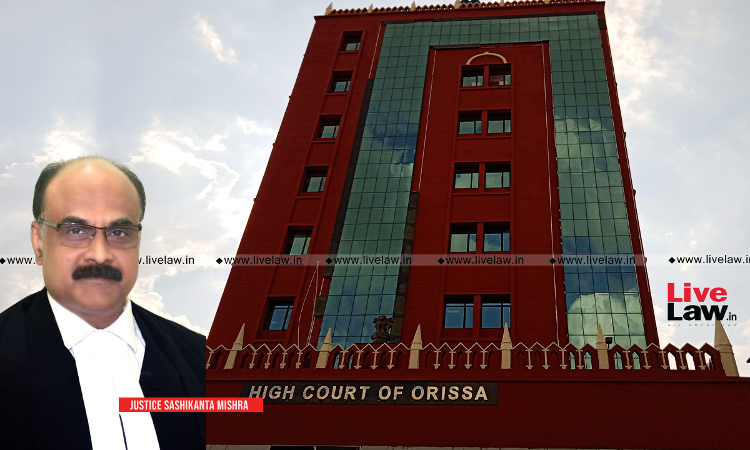
The Orissa High Court has dismissed an election petition filed against the election of Biju Janata Dal's (BJD) Sarada Prasad Nayak as the Member of Legislative Assembly (MLA) from the Rourkela Legislative Assembly constituency in the 2024 Assembly Election. A Bench of Justice Sashikanta Mishra categorically held that the fact that an official allegedly posted a selfie with an open...
This is a premium content
Available exclusively to
Our subscribers
Subscribe Premium 
INR 1099+GST
Your support helps us to bring you more content at
an affordable subscription scheme !!!
All payment options available
The Orissa High Court has dismissed an election petition filed against the election of Biju Janata Dal's (BJD) Sarada Prasad Nayak as the Member of Legislative Assembly (MLA) from the Rourkela Legislative Assembly constituency in the 2024 Assembly Election.
A Bench of Justice Sashikanta Mishra categorically held that the fact that an official allegedly posted a selfie with an open Electronic Voting Machine (EVM) or Voter Verified Paper Audit Trial (VVPAT) machine does not per se amount to a corrupt practice under Section 123 of the Representation of People Act, 1951 ('the 1951 Act') to nullify the election of the MLA, especially when proof of such post was neither annexed to the petition nor supplied to the respondent. While allowing an interim application (IA) filed by the respondent-MLA, it held –
“The allegations are sweeping and general in nature, lacking any clear indication as to how the Facebook photographs, if at all, influenced the election result. The petition is also silent as to if any objection was ever raised before the Returning Officer in this regard… this Court finds that the allegation of corrupt practice in the Election Petition lacks substance, inasmuch as the Facebook photographs in question despite forming an integral part of the pleading, have not been included in the election petition while serving a copy of it along with the copy of the Election Petition upon the Respondent.”
An election petition was filed by one Radheshyam Yadav against the election of the BJD MLA in 2024 Assembly Elections inter alia on the ground that one Ajaya Kumar Pradhan, a government official and allegedly a close associate of the respondent-MLA posted a 'selfie' on Facebook displaying an open EVM and VVPAT machine during the election.
The election petitioner thus pleaded that such act of the said person, who allegedly was also a part of a closed-door meeting with the MLA, amounts to corrupt practice under Section 123 of the 1951 Act warranting nullification of the election, as the same suggests collusion, partisanship, and breach of neutrality mandated of election officials.
From the pleadings of the election-petitioner it was apparent for the Court that he based his allegation on certain Facebook photographs, which forms an integral part of the allegation of corrupt practice. However, such photographs were not annexed to the election petition at the time of its presentation before the Court. Further, the election petition served upon the respondent/MLA did not contain the said photographs on which the election petitioner sought to rely.
“Thus, where the very foundation of the allegation rests upon such photographs, the Respondent obviously cannot not effectively meet or counter the same in their absence. The said documents ought to have been annexed to the Election Petition at the time of presentation and a copy thereof served upon the Respondent along with the petition,” the Court opined.
Relying upon the dictum laid down by the Apex Court in U.S. Sasidharan v. K. Karunakaran (1989), the Court held –
“In the absence of such pleadings, the photographs cannot be treated as supplementary pieces of evidence of material facts pleaded to be produced at a later stage; rather, they form an integral part of the Election Petition itself. Consequently, failure to annex and serve the said photographs at the time of presentation of the petition is fatal and cannot be cured by subsequent filing.”
The Court was also of the view that the allegations are vague and non-specific in nature, without disclosing the material facts in support of the same. It accordingly observed –
“Further, the pleadings are conspicuously silent as to the date, time and place where the alleged photographs were taken. There is no averment as to whether the photographs were taken before, during or after polling, or whether they were taken during a mock poll or any authorized demonstration…. Another infirmity relates to the complete absence of pleadings disclosing the relationship or nexus between the Respondent and Ajaya Kumar Pradhan….The pleading is silent in the manner in which the Respondent is stated to have exercised any influence and control over him.”
Further relying upon C.P. John v. Babu M. Palissery (2014), Hari Shanker Jain v. Sonia Gandhi (2001) and Senthilbalaji v. A.P. Geetha & Ors., 2023 LiveLaw (SC) 471, Justice Mishra held that no amount of evidence can cure a basic defect in pleadings, and that vague or general allegations, particularly concerning corrupt practices, cannot be entertained. Therefore, he was of the view –
“Even though the Election Petitioner alleges the commission of corrupt practices by the Respondent, the pleadings fail to disclose the factual foundation necessary to bring the case within the ambit of Section 123 of the Act, which defines and highlights what constitutes 'corrupt practice.' Consequently, this Court finds the contention raised by the Election Petitioner on this ground untenable.”
Resultantly, the Court held that the election petition is liable to be dismissed on the ground that the copy served upon the respondent was incomplete and did not constitute a “true copy” within the meaning of Section 81(3) of the 1951 Act. It binned the election petition remarking –
“The Supreme Court has consistently held that the right to elect, be elected, and dispute an election are purely statutory, existing only within the limits of the statute, with no basis in fundamental or common law. An election petition is a special statutory proceeding governed strictly by the Act, not by common law or equity. The mandate of the returned candidate cannot be unsettled on flimsy grounds, wild allegations, or conjectures, as doing so would undermine the democratic will of the people.”
Case Title: Radheshyam Yadav v. Sarada Prasad Nayak
Case No: I.A. No. 26 of 2025 in ELPET No. 14 of 2024
Date of Judgment: February 06, 2026
Counsel for the Election Petitioner: Mr. K.K Mohapatra, S.R. Swain, D. Nayak, M. Deo, B. Das, S. Das, & U.K. Mohapatra, Advocate
Counsel for the Respondent: M/s. U K Samal, M.R. Mohapatra, S.P. Patra, N. Samal & A.B. Tarini, Advocates
Citation: 2026 LiveLaw (Ori) 18
Tags


