



- Home
- /
- High Courts
- /
- Orissa High Court
- /
- Civil Court Can Order Police...
Civil Court Can Order Police Assistance To Enforce Injunction Orders U/S 151 CPC: Orissa High Court
Jyoti Prakash Dutta
22 Dec 2025 5:45 PM IST
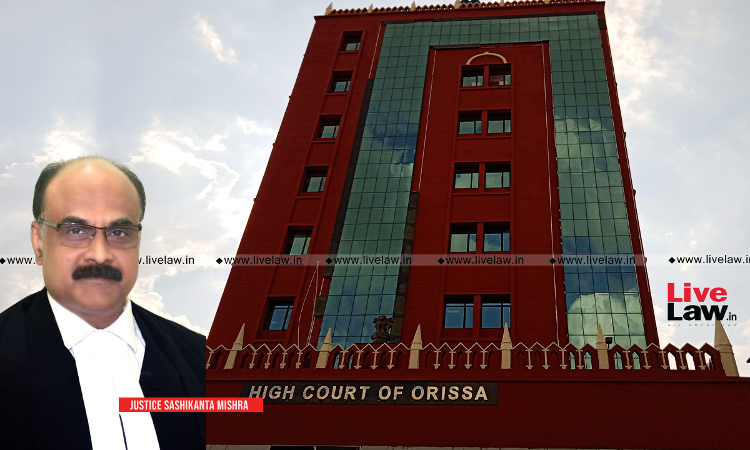
The Orissa High Court has held that even though the Code of Civil Procedure (CPC) does not contain a specific provision enabling police assistance for enforcing and implementing an order of injunction, still a Civil Court can invoke the inherent power vested in it under Section 151 to order police assistance, if other express provisions are found inadequate to give effect to an...
This is a premium content
Available exclusively to
Our subscribers
Subscribe Premium 
INR 1099+GST
Your support helps us to bring you more content at
an affordable subscription scheme !!!
All payment options available
The Orissa High Court has held that even though the Code of Civil Procedure (CPC) does not contain a specific provision enabling police assistance for enforcing and implementing an order of injunction, still a Civil Court can invoke the inherent power vested in it under Section 151 to order police assistance, if other express provisions are found inadequate to give effect to an injunction order.
While setting aside the order of a Civil Court denying police assistance, the Single Bench of Justice Sashikanta Mishra ruled –
“True, the CPC does not specifically provide for police assistance for implementation of the order of the Court but the power under Section 151 of CPC is wide enough to be exercised for protection of the rights of the parties if the available provisions are found to be inadequate.”
The petitioner instituted a suit before the Court of Civil Judge (Jr. Division), Bhadrak for partition and permanent injunction claiming 1/3rd share of the suit property. He claimed to be in possession of a specific portion of the suit land occupied by him as per mutual arrangement and convenience of the parties, though the property has not yet been partitioned by metes and bounds. Subsequently, he began constructing a house over the suit land.
At the time of casting of the roof, the opposite parties raised serious objection and did not allow him to proceed with the construction and also threatened to demolish the half-constructed building. In view of the threat of demolition of the half-constructed house, the petitioner filed an application for injunction under Order XXXIX Rules 1 and 2 of CPC.
The trial Court allowed the injunction application by temporarily restraining the opposite parties from creating any disturbance and permitted the petitioner to construct the house. Despite the injunction order, the opposite parties created serious disturbances and did not allow the petitioner to continue with the construction.
The petitioner approached the jurisdictional police seeking implementation of the order but the IIC refused any assistance on the ground that no communication in this regard was made by the Civil Court. Therefore, the petitioner filed an application under Section 151 of the CPC, praying for an order to the police for necessary assistance to implement the injunction order in letter and spirit. However, such application was rejected, impugning which he came before the High Court.
The question which cropped up for consideration was whether a Civil Court can order police assistance to implement an injunction order, especially when there is no express provision in the CPC empowering the Court to provide such assistance.
Justice Mishra noted that the trial Court found all the three ingredients namely, prima facie case, balance of convenience and irreparable loss to be in existence and in favour of the plaintiff. It was also satisfied that an order restraining the opposite parties from creating disturbance in the construction work was necessary to be passed and along with it a positive order permitting the plaintiff to construct the house was also passed.
Against such backdrop, why the trial Court chose to dismiss the application seeking police assistance was inquired into by the High Court. The trial Court basically cited three grounds while dismissing the application (i) an appeal against the order of injunction was pending; (ii) the petitioner had not applied for local inspection under Order XXXIX Rule 7; and (iii) the remedy under Order XXXIX Rule 2-A was not resorted to.
Referring to Order XLI Rule 5, the Court brushed aside the ground of pendency of appeal against the injunction order. It held that mere filing of an appeal does not operate as a stay of the order appealed against. So, merely because the order of injunction has been challenged before a higher forum does not imply that the order appealed against no longer exists, unless an order of stay operation of the same has been passed.
Similarly, the reference made by the trial Court to local inspection under Order XXXIX Rule 7 was found irrelevant altogether. So far as the third ground, i.e. resorting to the remedy under Order XXXIX Rule 2-A was concerned, the Court held that even though the disturbance made by the opposite parties shall indeed constitute violation of the injunction order as enunciated in the said Rule, yet it has to be seen whether the remedy provided thereunder shall be sufficient to give effect to the order.
Placing reliance upon the ruling of the Supreme Court in Meera Chauhan v. Harsh Bishnoi & Anr. (2006) and numerous other precedents from the High Court, Justice Mishra was of the firm opinion that directing police assistance would undoubtedly be an extreme step but then if the situation so warrants, the Court can exercise such power.
Therefore, the Court held that as long as the petitioner is unable to construct his house, the injunction order of the trial Court would remain infructuous. It thus observed –
“It is the duty of the Court to ensure that the fruits of the order passed by it is are actually reaped by the party for whom it is intended. Otherwise, the order would be rendered a dead letter. This would militate against the fundamental canons of justice, as, despite a favourable order, the party concerned would be deprived from its benefits. The trial Court appears to have proceeded on a misconceived notion and in the process, has reduced itself to a mute spectator, while its order remains unimplemented.”
Accordingly, the trial Court was directed to order the concerned police authority to render assistance to the petitioner in construction of his house.
Case Title: Sayed Ekram Saha v. Haroon Khan & Ors.
Case No: CMP No. 140 of 2023
Date of Judgment: December 12, 2025
Counsel for the Petitioner: Mr. P.K. Satapathy, Advocate
Counsel for the Opposite Parties: Mr. P.K. Khuntia, Advocate
Citation: 2025 LiveLaw (Ori) 168


