



- Home
- /
- High Courts
- /
- Orissa High Court
- /
- 'Privacy An Inherent Human Right':...
'Privacy An Inherent Human Right': Orissa High Court Orders Govt To Allow Students/Guardians To Voluntarily Opt Out Of 'APAAR ID'
LIVELAW NEWS NETWORK
13 Dec 2025 11:25 AM IST
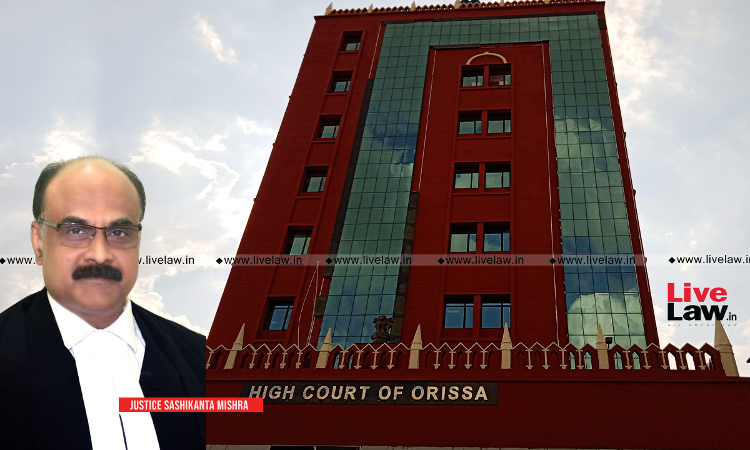
Addressing an important legal issue touching upon the right to privacy of students and guardians, the Orissa High Court on Friday (December 12) asked the Union Ministry of Education (MoE) to amend the consent form, appended to 'Automated Permanent Academic Account Registry' (APAAR) portal, allowing the students and guardians to refuse consent for their enrolment in such ID.The Single Bench...
This is a premium content
Available exclusively to
Our subscribers
Subscribe Premium 
INR 1099+GST
Your support helps us to bring you more content at
an affordable subscription scheme !!!
All payment options available
Addressing an important legal issue touching upon the right to privacy of students and guardians, the Orissa High Court on Friday (December 12) asked the Union Ministry of Education (MoE) to amend the consent form, appended to 'Automated Permanent Academic Account Registry' (APAAR) portal, allowing the students and guardians to refuse consent for their enrolment in such ID.
The Single Bench of Justice Sashikanta Mishra highlighted that enrolment in such portal was always held to be voluntary by the government and therefore, a clear option for 'opting out' must be given. The Judge further held –
“If it is intended to be a voluntary act, appropriate provisions clearly specifying such fact ought to have been incorporated in the form by providing option to the parents to refuse to submit their consent or to opt out of it entirely.”
The Government of India under the aegis of MoE introduced the APAAR scheme on 29.07.2023 to start 'one student, one unique ID' initiative. It aims to assign students unique IDs linked to their Aadhaar numbers to track lifelong educational records and consolidate all academic achievements in one place. However, the government made such enrolment voluntary.
Pursuant to such instructions of the MoE, the State Project Director, Odisha School Education Programme Authority (OSEPA) directed all District Education Officers (DEOs) to accelerate and expand the APAAR ID creation process by setting up special Aadhaar camps. In such process, the father of Petitioner No. 2 (a minor student of KG-1) received a letter from her school on 28.12.2024 to give his consent for generation of an APAAR ID for his daughter.
The father, who is also the Petitioner No. 1 in this case, wrote to the school authorities raising concern over potential violation of privacy since such enrolment not only required his Aadhaar card but also aimed to store all the academic records of his daughter, which are prone to be shared with third parties. He was specifically aggrieved by the absence of a clause to refuse consent. When he received no response from the school, he challenged it before the High Court.
It was the main contention on behalf of the petitioners that absence of a clause empowering the guardians to opt out of such scheme is violative of the dictum laid down by the Apex Court in Justice (Retd.) KS Puttaswamy v. Union of India (2018), since Aadhaar card is a precondition for enrolment in APAAR portal. Further, they argued that such mandatory enrolment of students in a government ID runs contrary to Section 6(1) of the Digital Personal Data Protection Act, 2023.
On the other hand, it was the consistent stand of the MoE that such scheme has been initiated with an objective to provide a unique, lifelong 12-digit identifier for all school students to accumulate and store their academic accomplishments. It vehemently submitted that the enrolment was never a mandatory measure and thus, the students/guardians are always free to opt out of such scheme.
However, the petitioners countered the above stance of the MoE by submitting that even though the scheme is projected as voluntary, in the absence of an option to deny consent to not to submit to the scheme, it, in effect, becomes mandatory in nature.
In order to determine the veracity of such claim, the Court perused the model 'consent form'. It gave an option to withdraw the consent at any time after it is accorded, but there was no express provision to not give the consent from the very beginning. The Court was also satisfied that there is a silence regarding the consequence that would ensue upon refusal of a parent to submit the consent form.
“The withdrawal of consent as per the last paragraph of the consent form cannot be treated as giving an effective right to the parent to protect his privacy because by such time the consent would already have been given. What the Petitioners are concerned with is the right to refuse consent altogether at the outset,” it observed.
Therefore, the Court was of the opinion that if the scheme is meant to be purely voluntary in nature, there ought to have been a clear provision enabling the guardians to opt out of such scheme from the very beginning.
Accordingly, the opposite party-authorities were directed to amend the model consent form to include an opt out/refusal of consent option. Such amendment was ordered to be made within a period of two months.
Case Title: Rohit Anand Das & Anr. v. State of Odisha & Ors.
Case No: W.P.(C) No. 8285 of 2025
Date of Judgment: December 12, 2025
Counsel for the Petitioners: Mr. A. Jebraj, Ms. R. Shruti & Ms. A. Kar, Advocates
Counsel for the Respondents: Mr. S. Behera, Addl. Govt. Advocate for the State; Mr. P.K. Parhi, DSGI with Mr. D. Gochhayat, CGC for the MoE; Mr. S.K. Sarangi, Sr. Advocate with Mr. S. Sarangi, Advocate for the School
Citation: 2025 LiveLaw (Ori) 164


