



- Home
- /
- High Courts
- /
- Orissa High Court
- /
- Supreme Court's 'Mihir Rajesh Shah'...
Supreme Court's 'Mihir Rajesh Shah' Directive Mandating Written Grounds Of Arrest Applies Prospectively: Orissa High Court
Jyoti Prakash Dutta
28 March 2026 11:00 AM IST
The Orissa High Court has recently clarified that the mandate of providing written grounds of arrest to the accused, which was made mandatory by the Supreme Court in Mihir Rajesh Shah v. State of Maharashtra & Anr., 2025 LiveLaw (SC) 1066, applies prospectively and thus, non-compliance thereof before the date of judgment does not render the arrest illegal per se. Denying bail to an...
This is a premium content
Available exclusively to
Our subscribers
Subscribe Premium 
INR 1099+GST
Your support helps us to bring you more content at
an affordable subscription scheme !!!
All payment options available
The Orissa High Court has recently clarified that the mandate of providing written grounds of arrest to the accused, which was made mandatory by the Supreme Court in Mihir Rajesh Shah v. State of Maharashtra & Anr., 2025 LiveLaw (SC) 1066, applies prospectively and thus, non-compliance thereof before the date of judgment does not render the arrest illegal per se.
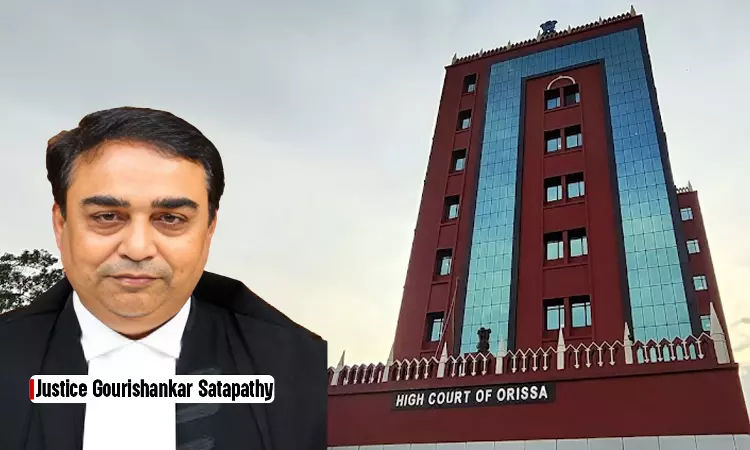
Denying bail to an accused who raised the aforesaid sole ground, the Bench of Justice Gourishankar Satapathy said–
“On a plain reading of the aforesaid law laid down by Apex Court, it appears that the written communication of grounds of arrest to the arrestee is applied prospectively from the date of delivery of judgment in Mihir Rajesh Shah (supra) which has been rendered on 06.11.2025, but the arrest in the present case relates back to 31.10.2024 and, therefore, the contention/plea of the petitioner is found unmerited.”
The petitioner was accused of committing offence under Section 103 (murder) of the Bharatiya Nyaya Sanhita (BNS) for allegedly committing murder of the deceased by assaulting him with crowbar, along with co-accused persons. Subsequently, he was taken into custody by the police on 31.10.2024.
The arrest of the petitioner was challenged before the High Court on the ground of non-compliance of Section 47 of Bharatiya Nagarik Suraksha Sanhita (BNSS) read with Article 22(1) of Constitution. Section 47 of BNSS provides that the police officer shall forthwith communicate to the arrestee full particulars of the offence for which he is arrested or other grounds for such arrest. In the instant case, the arrest memo read–
“As prima facie evidence U/S. 103(1) of BNS well established against the above noted accused person, his arrest is made.”
However, the Court rejected the argument suggesting non-compliance of the statutory directive, and observed–
“The aforesaid arrest memo was not only signed by the arresting officer, but also by the arrestee and, therefore, the communication of grounds of arrest to the petitioner is in the line of Sec. 47 of BNSS.”
It was the contention on behalf of the petitioner that since the police failed to furnish the written grounds of arrest to the petitioner, he is entitled to be enlarged on bail. Justice Satapathy was not in agreement with such contention, especially considering the language employed by the Apex Court in Para 58 of its judgment in Mihir Rajesh Shah (supra). The said para read as follows –
“We are cognizant that there existed no consistent or binding requirement mandating written communication of the grounds of arrest for all the offences. Holding as above, in our view, would ensure implementation of the constitutional rights provided to an arrestee as engrafted under Article 22 of the Constitution of India in an effective manner. Such clarity on obligation would avoid uncertainty in the administration of criminal justice. The ends of fairness and legal discipline therefore demand that this procedure as affirmed above shall govern arrests henceforth.”
Putting emphasis on the term “henceforth”, the Judge was of the view that such mandate operates prospectively from the date of the said judgment, i.e. November 06, 2025. Since the arrest in this case was done on 31.10.2024, the petitioner cannot rely upon Mihir Rajesh Shah (supra) to nullify his arrest. Therefore, the bail petition was rejected both on procedure and merit.
“Even otherwise on merit, the petitioner is allegedly found to have committed the offence U/s. 103(1) of BNS and there is prima facie materials against the petitioner for such offence in view of the submission of charge sheet by the investigating officer. Besides, the trial is yet to commence and material witnesses are yet to be examined. In the aforesaid facts and situation, this Court does not consider it proper to grant bail to the petitioner on merit at this stage,” the Court noted.
Case Title: Lacha Madi v. State of Odisha
Case No: BLAPL No. 1447 of 2026
Date of Order: March 25, 2026
Counsel for the Petitioner: Mr. Satyanarayan Mishra, Advocate
Counsel for the State: Mr. S.C. Pradhan, Additional Public Prosecutor
Citation: 2026 LiveLaw (Ori) 34


